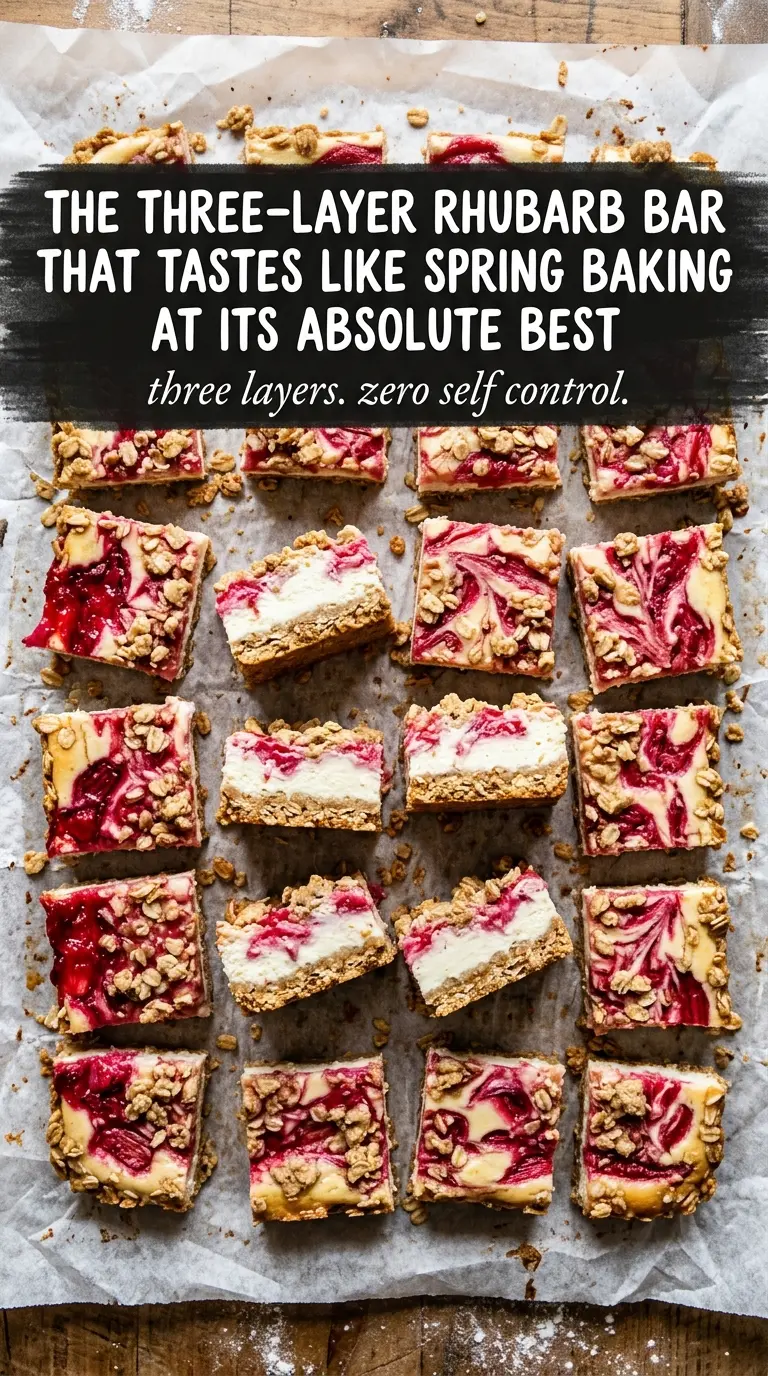
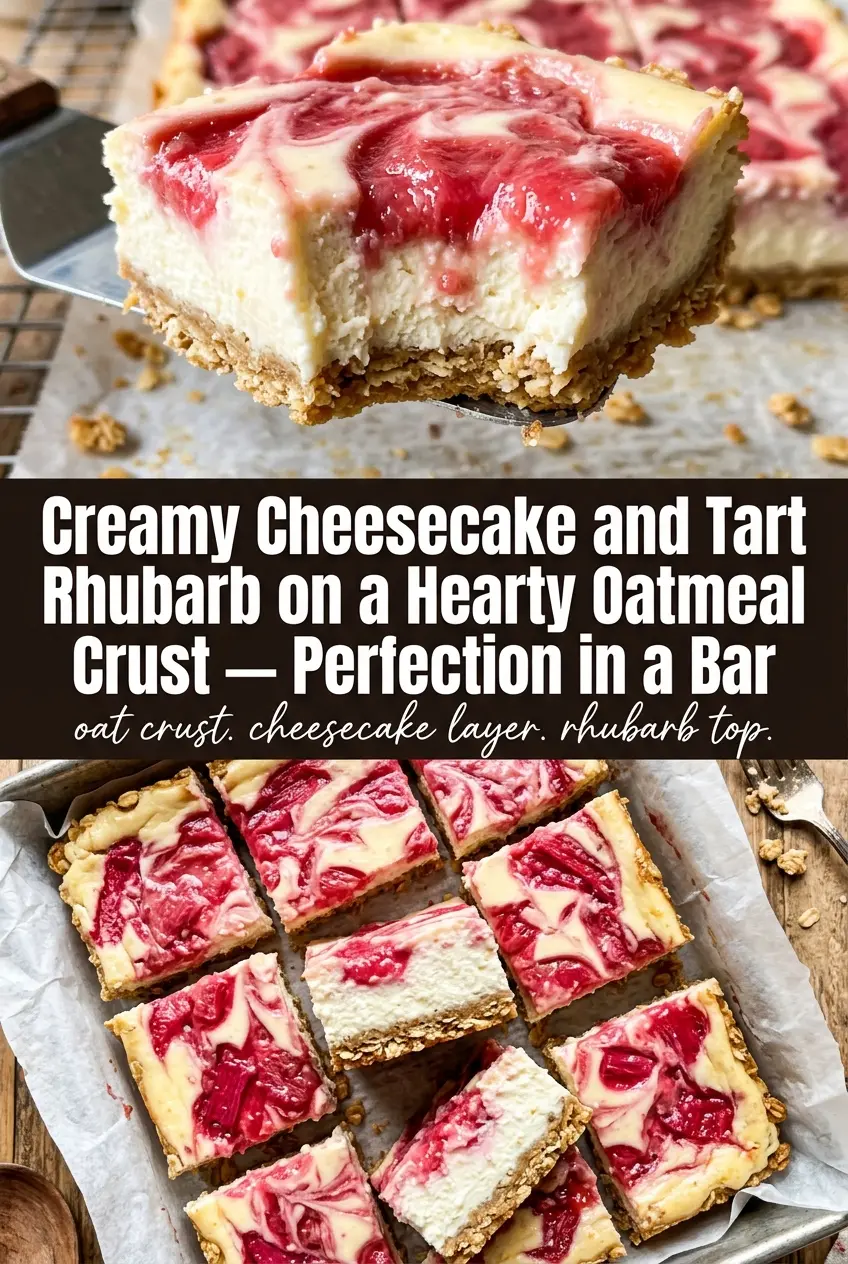
Rhubarb cheesecake bars hit that sweet spot between creamy and tangy, with a buttery oat crust that stays sturdy enough to cut into clean squares. The rhubarb swirl gives each bite a bright, jammy edge that keeps the filling from tasting heavy, and the whole pan slices into bars that look as good as they taste.
What makes these work is the contrast. The crust gets a short head start in the oven so it doesn’t turn soft under the cheesecake layer, and the rhubarb is cooked down just enough to thicken before it goes on top. That keeps the swirl from bleeding into the filling and gives you distinct layers instead of a pink blur.
Below you’ll find the small details that matter here: how thick the rhubarb mixture should be, why the cheesecake batter should stay smooth but not overmixed, and how long the bars need to chill before they cut cleanly. Those are the differences between messy squares and a dessert you can lift out of the pan with confidence.
The rhubarb thickened up beautifully and stayed in swirls instead of sinking into the cheesecake. I chilled them overnight, and the bars cut into perfect squares with that oatmeal crust holding together really well.
Save these rhubarb cheesecake bars with oatmeal crust for when you want a creamy dessert with a clean swirl and a sturdy, nutty base.
The Trick to Keeping the Rhubarb Swirl Separate From the Cheesecake
The rhubarb layer needs to be thick before it hits the pan. If it’s still loose and glossy like sauce, it will sink and streak through the filling instead of sitting on top where you can see it. Cooking it with a little cornstarch gives you a spoonable compote that swirls cleanly and bakes into distinct ribbons.
The other point that matters is temperature. A smooth cheesecake batter spreads evenly over the crust, but if you beat in too much air, the bars can puff and crack as they bake. Keep the mixer on low once the eggs go in, and stop as soon as the mixture looks uniform.
What Each Ingredient Is Actually Doing in These Bars
- Old-fashioned oats — These give the crust its chew and that toasty, rustic texture you can’t get from flour alone. Quick oats will work in a pinch, but the crust will be softer and less defined.
- Brown sugar — It brings moisture and a light molasses note that plays nicely against the tangy filling. White sugar works, but the crust tastes flatter.
- Butter, melted — This is what binds the crust and helps it bake into a firm base. Use real butter here; margarine won’t give the same clean set or flavor.
- Cream cheese — Full-fat cream cheese is worth it for the smoothest texture and the richest finish. Let it soften all the way or you’ll end up with little lumps that never beat out.
- Fresh rhubarb — Fresh rhubarb gives the brightest color and the sharpest tang. Frozen rhubarb can work, but cook off the extra moisture a little longer so the swirl doesn’t turn watery.
- Cornstarch — This is what turns the rhubarb into a thick swirl instead of a runny topping. Stir it in only after the fruit has softened, or it can stay chalky.
Building the Layers So the Bars Bake Up Cleanly
Pressing and Prebaking the Crust
Mix the flour, oats, brown sugar, and melted butter until every dry bit looks moistened, then press it firmly into the lined pan. The crust should feel packed, not fluffy, because loose crumbs will fall apart when you cut the bars. Bake it until the surface looks dry and the edges just start to deepen in color, which gives the cheesecake a base that won’t go soggy.
Whipping the Cheesecake Filling
Beat the cream cheese and sugar until the mixture turns completely smooth before the eggs go in. Once you add the eggs and vanilla, mix only until the batter looks silky and unified. If you keep beating after that, you’ll trap extra air, and the filling can rise too much and crack as it cools.
Cooking the Rhubarb Until It Spreads, Not Runs
Simmer the diced rhubarb with sugar and water until the fruit breaks down and the pan looks thick and jammy. When you stir in the cornstarch mixture, the filling should tighten within a minute or two and hold its shape on a spoon. If it still looks loose, keep it on the heat a little longer; a thin swirl won’t stay on top during baking.
Swirling and Baking to the Right Set
Drop spoonfuls of the rhubarb mixture over the cheesecake layer, then drag a knife through the top in slow passes. Don’t over-swirl or you’ll muddy the layers; two or three figure-eight motions are enough. Bake until the edges are set and the center still has a slight wobble when you nudge the pan, then cool it completely before chilling so the filling doesn’t sweat under the wrap.
How to Change These Bars Without Losing the Texture
Gluten-Free Crust Swap
Use a 1:1 gluten-free all-purpose flour blend in place of the regular flour, and make sure your oats are certified gluten-free. The texture stays close to the original, though the crust may be a touch more delicate when warm, so chill the bars fully before slicing.
Dairy-Free Version
Swap in a plant-based cream cheese that bakes well and use dairy-free butter for the crust. The filling won’t be quite as rich or tangy, but the bars still set nicely if you keep the oven time conservative and chill them long enough.
Frozen Rhubarb Shortcut
Frozen rhubarb works when fresh isn’t available, but don’t thaw it first. Cook it straight from frozen, and give it a few extra minutes so the excess water evaporates before the cornstarch goes in. That keeps the swirl thick instead of watery.
Storage and Reheating
- Refrigerator: Store covered for up to 5 days. The crust stays firm and the cheesecake gets even cleaner as it chills.
- Freezer: These freeze well. Cut into bars, wrap each one tightly, and freeze in a container for up to 2 months.
- Reheating: Serve them cold or let them sit at room temperature for 15 to 20 minutes. Don’t microwave them, or the cheesecake can turn soft and the swirl can weep.
Answers to the Questions Worth Asking
Rhubarb Cheesecake Bars with Oatmeal Crust
Ingredients
Equipment
Method
- Preheat oven to 350°F and line a 9x13-inch pan with parchment paper, leaving overhang for easy lifting.
- Mix all-purpose flour, old-fashioned oats, brown sugar, and melted butter until the mixture looks evenly moistened, then press firmly into the bottom of the pan.
- Bake at 350°F for 15 minutes until the crust is lightly golden around the edges (visual cue: the surface looks set and fragrant).
- Beat cream cheese and sugar until smooth and glossy, with no visible lumps.
- Add eggs one at a time and mix until just combined, then stir in vanilla extract.
- Pour the cheesecake mixture over the baked crust and spread to an even layer.
- Simmer diced fresh rhubarb with sugar and water until the pieces are tender and the mixture looks syrupy, about 10 to 15 minutes (visual cue: rhubarb softens).
- Stir cornstarch with water, add to the simmering rhubarb, and cook until thickened, about 1 to 2 minutes (visual cue: it coats a spoon).
- Drop spoonfuls of the rhubarb mixture over the cheesecake, then swirl with a knife for a marbled pattern (visual cue: pink streaks across the surface).
- Bake at 350°F for 35 to 40 minutes until the center is set but still slightly jiggly (visual cue: edges look firm, middle moves like soft custard).
- Cool the bars completely at room temperature before chilling to prevent condensation.
- Refrigerate for 4 hours to fully set before cutting into bars.