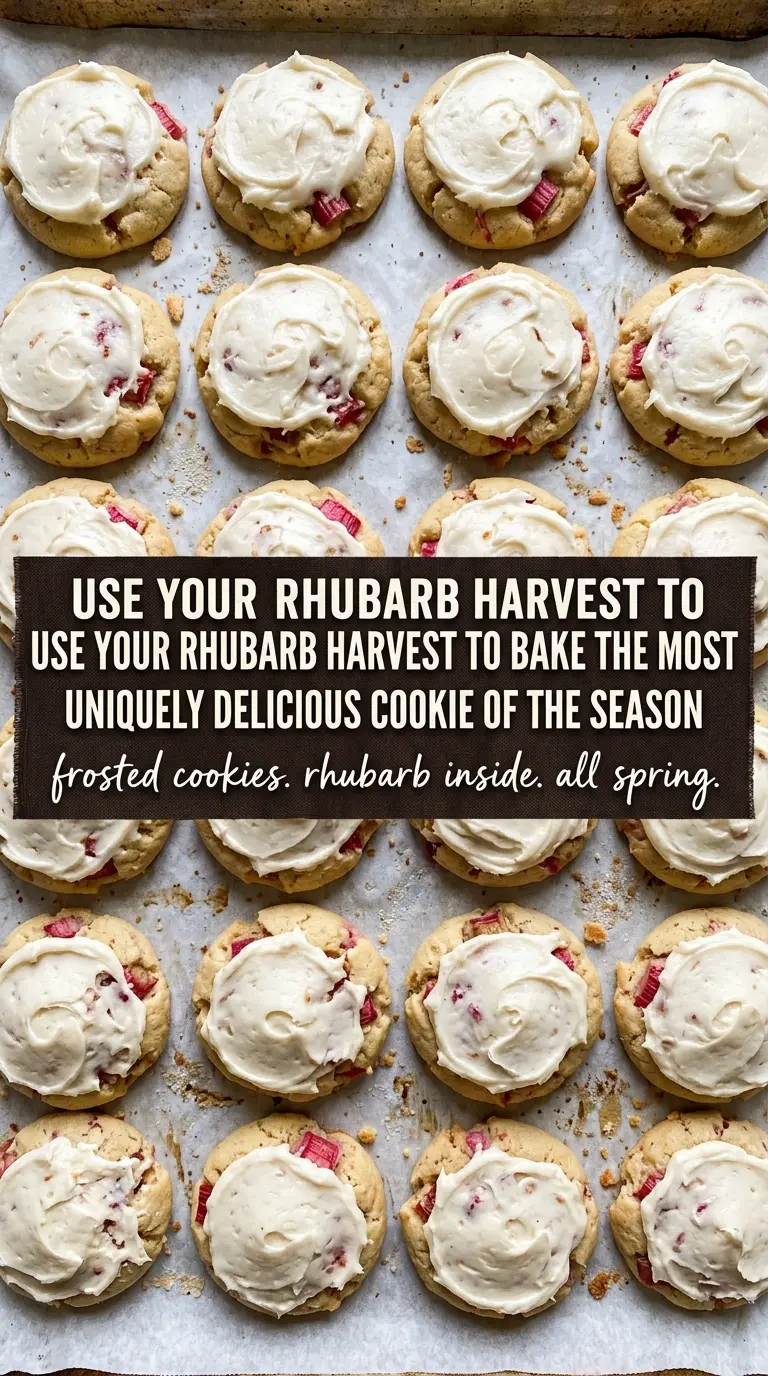
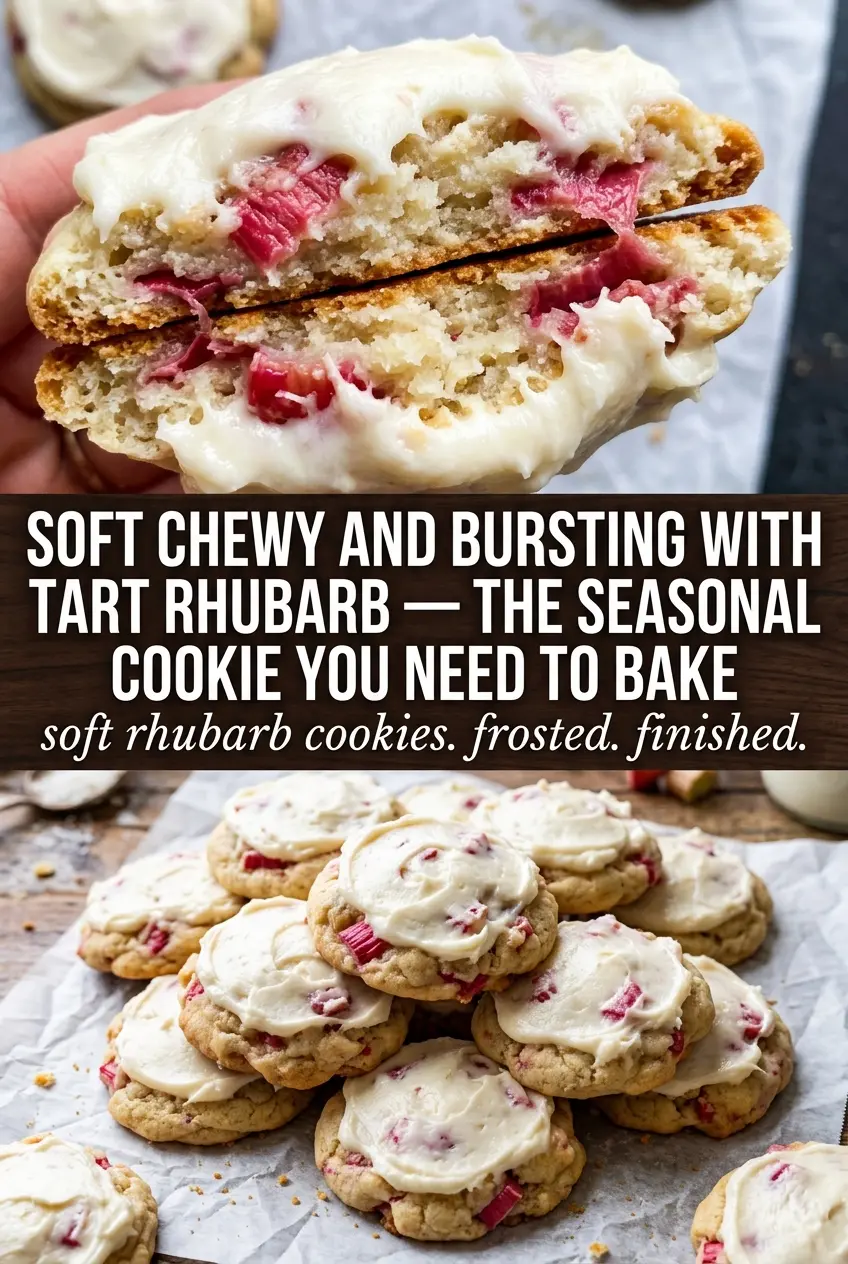
Soft rhubarb cookies have a way of disappearing before they’ve even cooled. The dough bakes up tender and cake-like at the center, with little pops of tart rhubarb tucked through each bite and a sugared top that gives just enough crunch. They’re the kind of cookie that feels familiar the first time you make them, but still manages to stand out from the usual chocolate chip rotation.
What makes this version work is the balance. Brown sugar brings a deep, caramel note that keeps the rhubarb from tasting sharp, and the butter base stays soft without turning heavy. The rhubarb is diced small so it softens during baking instead of tearing through the dough, and the short bake time keeps the centers pillowy instead of dry. A quick sugar sprinkle on top finishes them with a little sparkle and helps the tops set in the oven.
Below you’ll find the one detail that keeps these cookies tender, why fresh rhubarb matters here, and a few practical ways to adapt the batch if you want to make them a little different without losing that soft texture.
The rhubarb stayed bright and the cookies baked up soft in the middle with those little sugar-crackly tops. I chopped the rhubarb pretty fine like you suggested and it made all the difference.
Save these soft rhubarb cookies for when you want a tender spring cookie with tart fruit and sugared tops.
The Trick That Keeps Rhubarb from Punching Through the Dough
Rhubarb is wet and acidic, and both things matter here. If the pieces are too large, they can make the dough patchy and pull the cookies apart as they bake. Dice it small enough that it softens quickly, but not so fine that it disappears; you want little pink-green flecks that stay distinct after baking.
The other thing people miss is bake time. These cookies should come out when the edges are set and the centers still look soft. If you wait for the middle to look fully done in the oven, they’ll end up dry by the time they cool. Let them finish on the baking sheet for a few minutes, where the residual heat does the last bit of work without overbaking them.
What the Butter, Brown Sugar, and Rhubarb Each Bring to the Table
- Butter — Softened butter gives these cookies their plush texture and helps the sugar cream properly, which is what creates a lighter crumb. Cold butter won’t trap enough air, and melted butter will make the dough spread too much.
- Brown sugar — This does more than sweeten. It adds moisture and a light caramel note that rounds out rhubarb’s sharp edge, and it keeps the cookies tender even after they cool.
- Fresh rhubarb — Fresh is the right choice here. Frozen rhubarb releases too much water and can make the dough streaky or gummy, so if you use it, thaw it first and pat it dry very well before folding it in.
- All-purpose flour — This gives the cookies enough structure to hold the fruit without turning cakey in a bad way. The balance of flour to butter matters here; too little and the cookies spread, too much and they turn dry.
- Sugar for sprinkling — The topping is small, but it matters. It adds a faint crunch and helps the tops look finished instead of flat.
Building the Dough So the Cookies Stay Soft
Creaming the Base
Start by beating the softened butter and brown sugar until the mixture looks pale and a little fluffy. That step matters because it gives the cookies their lift and keeps the crumb from feeling dense. If the butter is too soft and greasy, the mixture won’t hold air well, and the cookies will spread more in the oven.
Bringing in the Dry Ingredients
Add the flour mixture and mix only until the dough comes together. Once the flour is fully incorporated, stop. Overmixing builds too much structure and can make the cookies tough instead of tender, especially once the rhubarb goes in.
Folding in the Rhubarb
Use a spoon or spatula to fold in the diced rhubarb at the end. That keeps the pieces intact and prevents the dough from turning pink all over. If the rhubarb is very juicy, toss it lightly with a spoonful of the flour before adding it, which helps keep the dough from becoming wet around the fruit.
Baking to the Right Finish
Drop the dough in rounded tablespoons and give them space; these cookies need room to spread. Bake until the edges are set and just beginning to color, but the centers still look soft and slightly underdone. Pulling them at that stage is what gives you a pillowy middle after cooling instead of a dry, crumbly cookie.
How to Adjust These Cookies Without Losing the Soft Texture
Make Them Gluten-Free
Use a 1:1 gluten-free baking blend that includes xanthan gum. The cookies will still be soft, but the texture may be a little more delicate, so let them cool fully on the pan before moving them.
Use Frozen Rhubarb When Fresh Isn’t Available
Thaw the rhubarb completely, then pat it dry with paper towels before folding it into the dough. Frozen rhubarb can work, but the extra moisture means the dough may need a minute or two more in the oven and the cookies won’t look quite as cleanly defined.
Add a Little Citrus
A teaspoon of lemon zest plays nicely with the rhubarb and brightens the dough without changing the texture. Don’t add lemon juice; the extra liquid can make the cookies spread and soften the structure too much.
Storage and Reheating
- Refrigerator: Store in an airtight container for up to 5 days. The cookies soften a little as they sit, but they stay pleasantly tender.
- Freezer: Freeze baked cookies for up to 2 months in a sealed container with parchment between layers. You can also freeze the unbaked dough scoops and bake them straight from frozen, adding 1 to 2 minutes.
- Reheating: Warm a cookie for 10 to 15 seconds in the microwave if you want the centers soft again. Don’t overheat them or the rhubarb will turn mushy and the edges will dry out fast.
Answers to the Questions Worth Asking
Rhubarb Cookies
Ingredients
Equipment
Method
- Preheat oven to 350°F and line baking sheets with parchment paper.
- Whisk together all-purpose flour, baking soda, and salt until evenly combined.
- Cream butter and brown sugar until fluffy, then beat in eggs and vanilla extract.
- Mix in dry ingredients until just combined, then fold in finely diced fresh rhubarb.
- Drop rounded tablespoons of dough onto prepared sheets, spacing about 2 inches apart.
- Sprinkle the tops with sugar, then bake at 350°F for 10-12 minutes until edges are set but centers still look soft with a slightly underdone center.
- Cool on the baking sheet for 5 minutes before transferring to a wire rack to finish setting.