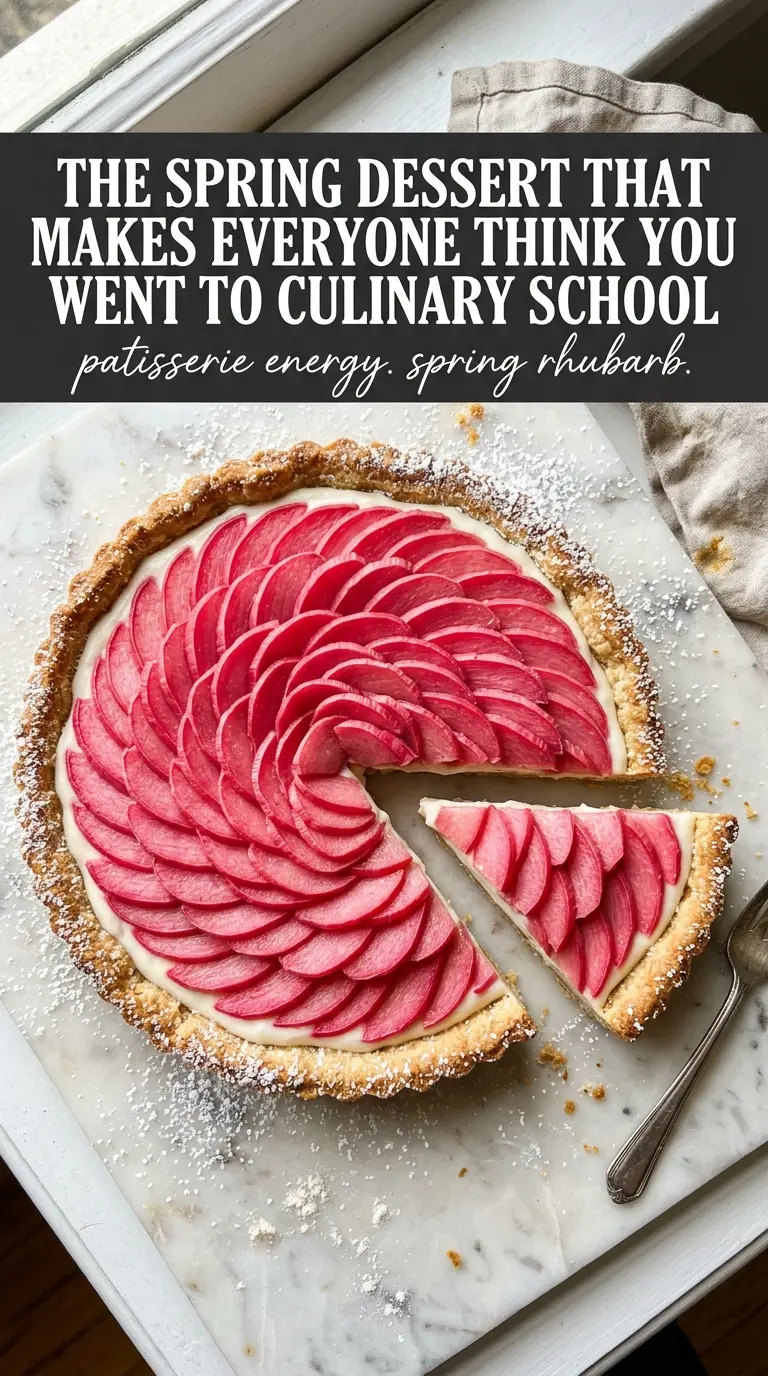
Buttery tart shell, vanilla pastry cream, and jewel-bright rhubarb make this tart taste as polished as it looks. The crust stays crisp under the cream, the filling sets into a silky layer, and the roasted rhubarb gives you that soft-tender bite with just enough sharpness to keep each forkful from feeling heavy.
What makes this version work is the balance. The tart shell gets a little powdered sugar for tenderness, then bakes fully before the cream goes in, which keeps the bottom from turning damp. The pastry cream is cooked until it thickens on the stove, then chilled with plastic wrap pressed right on the surface so it stays smooth instead of forming a skin. Roasting the rhubarb with sugar and honey pulls out its juices and softens the edges without turning it to mush.
Below, I’ve broken down the parts that matter most: how to keep the crust crisp, how to know when the pastry cream has cooked long enough, and what to do if your rhubarb is especially tart or thick-stemmed.
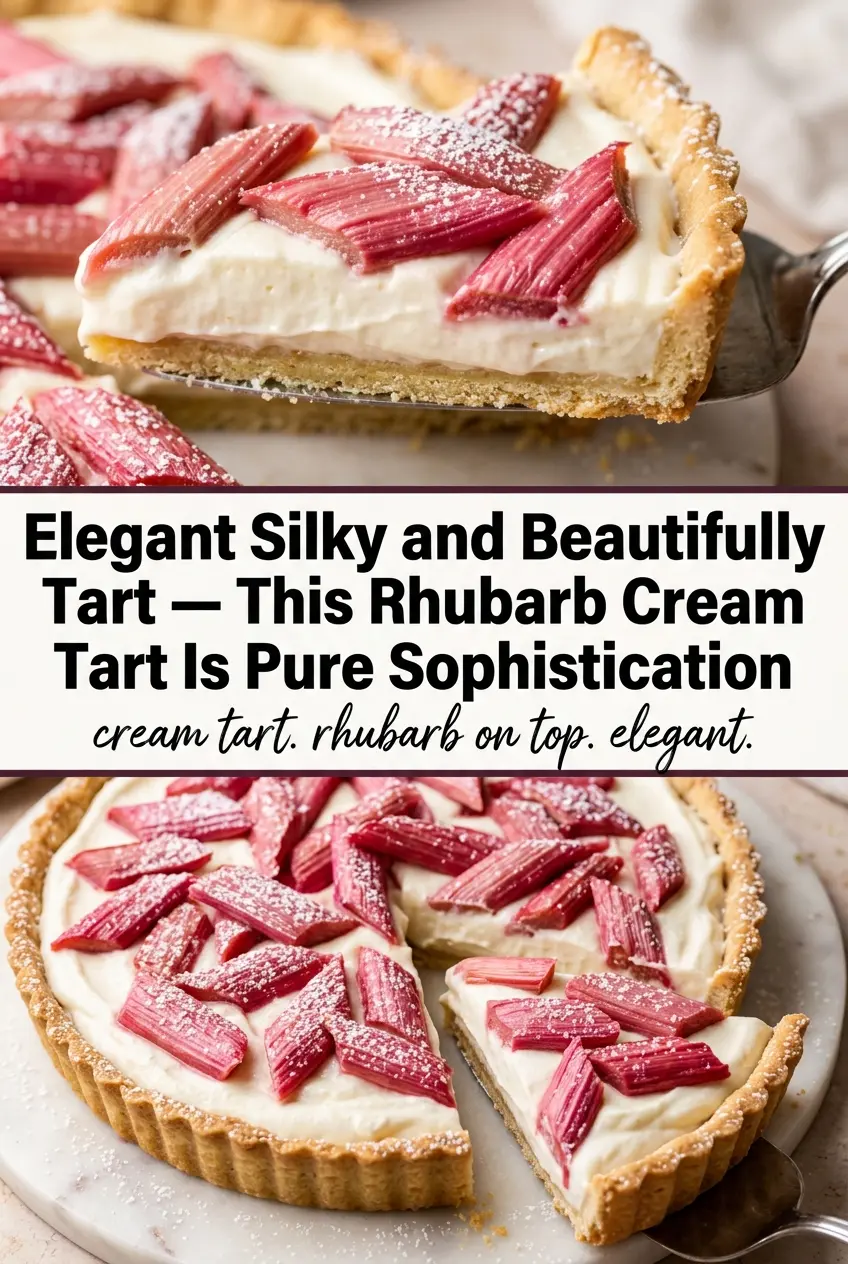
The tart shell stayed crisp even after chilling overnight, and the vanilla cream was set enough to slice cleanly without squishing out. I roasted the rhubarb a minute or two longer and it still held its shape beautifully.
Like this rhubarb cream tart? Save it for the next time you want a crisp tart shell, vanilla pastry cream, and roasted rhubarb in one elegant dessert.
The Trick Is Keeping the Tart Shell Dry Before the Cream Goes In
A cream tart only looks effortless if every layer holds its own shape. The part that usually causes trouble is the crust, because a soft filling can soak into an underbaked shell and turn the bottom pasty by the time you slice it. Baking the shell until it’s set and lightly golden gives you a barrier that stands up to the pastry cream.
Let the shell cool completely before filling it. A warm crust starts sweating under the cream, and that moisture works its way into the pastry cream too. If the shell shrinks in the pan, it was either overworked or not chilled long enough before baking. Press the dough in firmly, chill it well, and dock the base so steam doesn’t puff the center.
What Each Layer Is Doing in This Tart
- All-purpose flour — This gives the shell structure without making it tough. Pastry flour works too if you have it, but all-purpose is reliable and still tender once the powdered sugar and butter are worked in gently.
- Powdered sugar — It sweetens the crust and helps keep the texture delicate. Granulated sugar makes a firmer, more cookie-like shell, which isn’t what you want here.
- Cold butter — This is the flavor backbone of the crust. Keep it cold and cut it in until you still see small pieces; those bits melt in the oven and create a more tender, flaky crumb.
- Egg yolk — The yolk enriches the dough and helps it bind without extra water. If you skip it, the crust loses some of its sandiness and baked-in color.
- Cornstarch — This is what gives the pastry cream its clean slice. Flour will thicken a custard too, but the result tastes heavier and won’t set as smoothly.
- Fresh rhubarb — Fresh stalks hold their shape better when roasted. If yours are thick and stringy, trim the outer strings and cut the pieces evenly so they cook at the same rate.
- Honey — Honey rounds out rhubarb’s sharp edge and gives the topping a softer, glossier finish. Use it with the sugar rather than instead of it; the two together create the right balance of sweetness and texture.
Building the Cream and Rhubarb Without Ruining the Texture
Mixing the Tart Dough
Start by cutting the cold butter into the flour and powdered sugar until the mixture looks sandy with a few pea-size bits still visible. Those little pieces matter; they melt in the oven and keep the crust tender instead of dense. Add the egg yolk and just enough cold water for the dough to come together, then stop as soon as it holds when pressed. If you work it until smooth, the crust bakes up tough.
Blind Baking the Shell
Press the dough into the tart pan evenly, including the corners and the sides, then chill it before baking so the shape sets. Bake it until the surface looks dry and the edges have a light golden color. If the middle still looks pale and soft, it hasn’t baked long enough to stand up to the cream. Let it cool completely before you even think about filling it.
Cooking the Pastry Cream
Heat the milk and sugar until steaming, then temper it into the egg yolks and cornstarch in a slow stream while whisking. That keeps the eggs from scrambling. Pour the mixture back into the pan and cook it over medium heat, whisking constantly, until it bubbles and becomes glossy and thick enough to mound on itself for a second before settling. Pull it off the heat and stir in the butter and vanilla while it’s still hot so everything melts in smoothly.
Roasting the Rhubarb
Toss the rhubarb with sugar and honey, then spread it in a single layer so the pieces roast instead of steam. You want it tender with its shape intact, not collapsed into a jammy heap. Watch the pan closely near the end; rhubarb goes from perfectly softened to falling apart fast. Let it cool before topping the tart or the heat will thin the cream underneath.
Assembling and Chilling
Spread the chilled pastry cream into the tart shell in an even layer, then arrange the rhubarb on top in whatever pattern looks nicest to you. Cover the surface and chill the tart for at least three hours so the cream firms up enough to slice cleanly. If you cut it too soon, the filling will slump and the rhubarb will slide. A long chill is what gives you those neat bakery-style wedges.
How to Adapt the Tart When You Need a Different Finish
Gluten-Free Crust
Use a 1:1 gluten-free baking blend that includes xanthan gum and treat the dough gently. The crust will be a little more fragile, but chilling it well before baking helps it hold together, and the flavor still stays buttery and clean.
Dairy-Free Version
Swap the butter in the crust and pastry cream for a good plant-based butter block, and use unsweetened oat milk or soy milk in the custard. The cream will be slightly less rich, but it still sets well if you cook it fully and chill it thoroughly.
Strawberry-Rhubarb Topping
Replace one cup of the rhubarb with sliced strawberries for a softer, sweeter topping. Roast just until the fruit starts to release its juices; strawberries break down faster than rhubarb, so they’ll give you a more jammy finish.
Storage and Reheating
- Refrigerator: Store covered for up to 3 days. The crust softens a little under the cream, but the tart still slices neatly if it’s well chilled.
- Freezer: I don’t recommend freezing the assembled tart. The pastry cream can separate after thawing, and the rhubarb loses its clean texture.
- Reheating: Don’t reheat the assembled tart. Serve it cold straight from the refrigerator, and wipe the knife between slices for the cleanest cut.
Answers to the Questions Worth Asking
Rhubarb Cream Tart
Ingredients
Equipment
Method
- Preheat the oven to 375°F, then combine all-purpose flour and powdered sugar in a mixing bowl and cut in cold butter until the mixture looks sandy. Add egg yolk and cold water and press the dough together.
- Press the dough into a tart pan, smoothing the bottom and edges, then bake at 375°F for 20 minutes until lightly set and golden at the edges.
- Heat milk and sugar in a saucepan over medium heat until steaming and hot, about 3–5 minutes. In a separate bowl, whisk egg yolks with cornstarch until smooth and slightly thick.
- Temper the egg yolk mixture by slowly whisking in hot milk, then return everything to the saucepan and cook until thick, 6–8 minutes, whisking constantly so it coats the back of a spoon.
- Remove from heat and stir in butter and vanilla extract until glossy and smooth. Press plastic wrap directly onto the surface and cool the cream completely.
- Remove the plastic wrap and spread the cooled pastry cream into the baked tart shell in an even layer. Level the surface with a spatula for clean edges.
- Toss fresh rhubarb, cut into 2-inch pieces with sugar and honey, then spread on a sheet pan and roast at 400°F for 15 minutes until tender and glossy. Cool completely before topping.
- Arrange the roasted rhubarb on top of the cream in an artful pattern. Refrigerate the tart for at least 3 hours before serving so the cream slices cleanly.