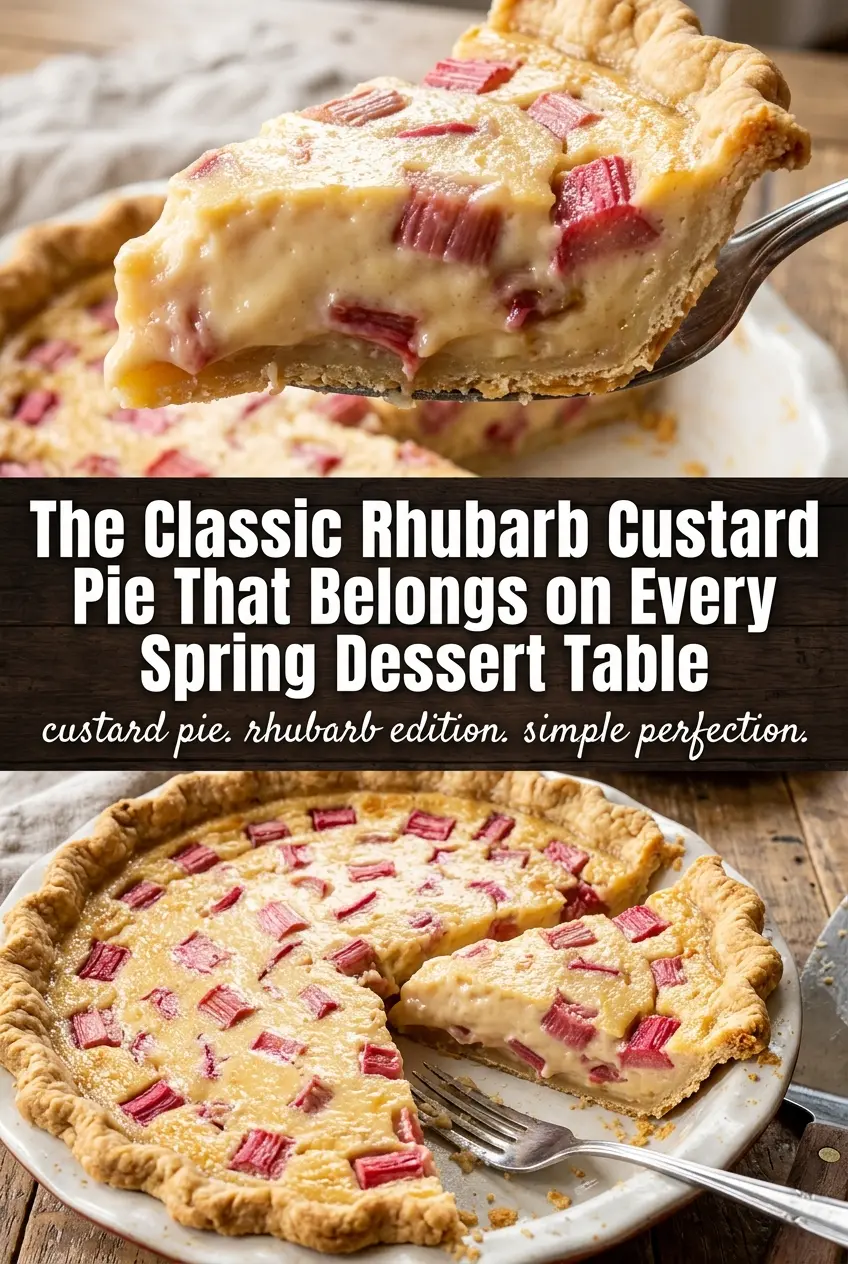
Rhubarb Custard Pie lands somewhere between a fruit pie and a classic baked custard, which is exactly why it earns a permanent place in the dessert rotation. The rhubarb softens just enough in the oven to turn tender and jammy, while the custard sets around it in a sliceable layer that stays silky instead of getting rubbery. The flaky crust gives you the contrast every good pie needs: crisp edges, creamy center, tart fruit in every bite.
The trick is keeping the filling simple and letting the oven do the work. Rhubarb brings all the sharp, bright flavor here, so the custard only needs enough sugar to balance it and enough flour to hold everything together. A quick high-heat start helps the crust set before the filling overcooks, then the lower temperature finishes the custard gently. That two-temperature bake makes the difference between a pie that slices cleanly and one that turns watery.
Below you’ll find the little details that matter most, including how to keep the custard smooth, what to watch for when it’s done, and a few smart ways to adapt the pie if you need a swap or two.
The custard set up beautifully and the rhubarb stayed tender without turning mushy. I chilled it overnight, and the slices came out clean with that creamy center everyone wanted.
Save this Rhubarb Custard Pie for the days when you want a flaky crust, creamy filling, and bright tart rhubarb in one clean slice.
The Custard Sets Cleanly Only When You Treat the Oven in Two Stages
Most custard pies fail in one of two ways: the center stays loose, or the eggs overcook and turn grainy. The two-temperature bake solves both problems. The hot start helps the crust begin setting right away, which keeps the bottom from going soggy under all that filling, then the lower temperature finishes the custard slowly so it turns silky instead of curdled.
The other thing that matters here is the amount of rhubarb. It gives off juice as it bakes, and that juice has to mix with the sugar and eggs without flooding the pie. Cutting the stalks into 1/2-inch pieces keeps them tender while still distinct, and baking until the center is just set gives you clean slices after the long cooling time.
What Each Ingredient Is Doing in This Pie
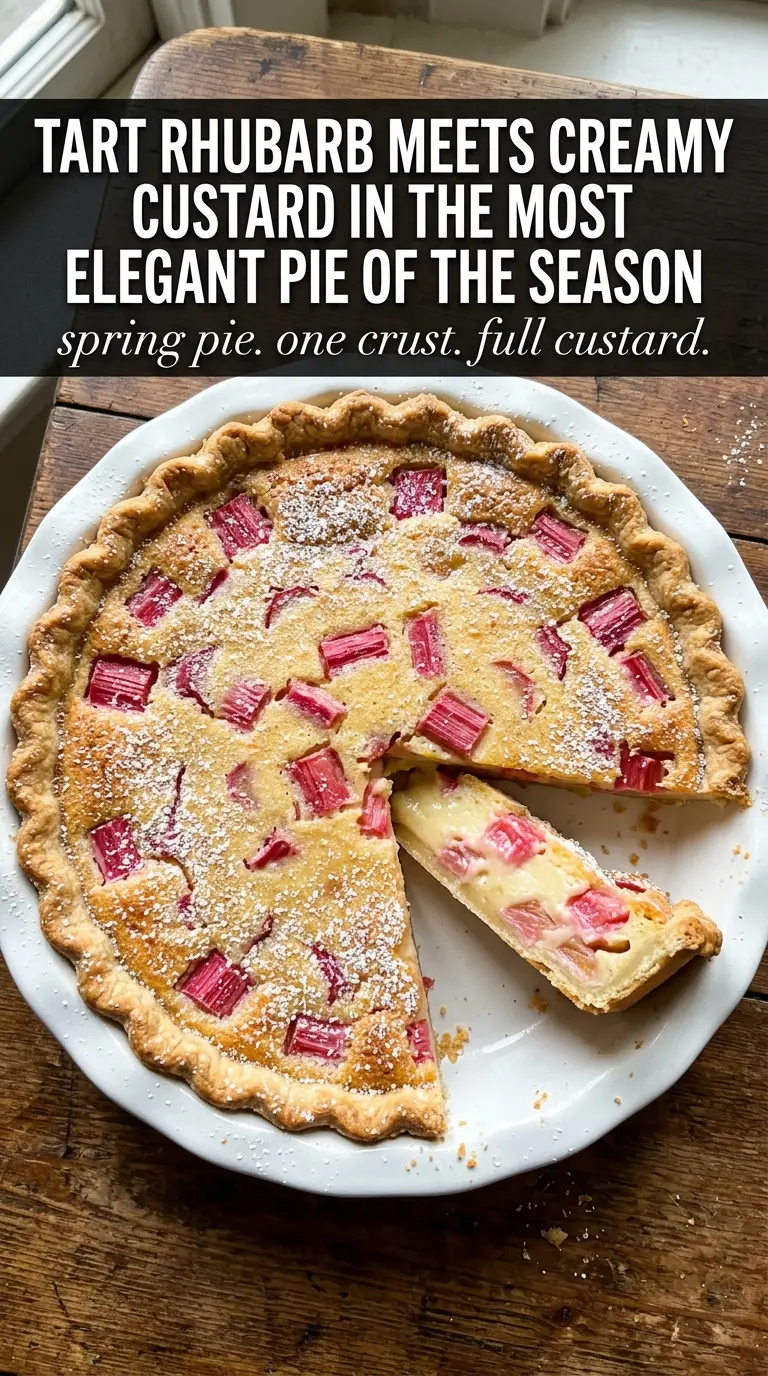
- Fresh rhubarb — This is the whole point of the pie. Fresh stalks hold their shape better than frozen, which can leak extra water and thin the custard. If frozen is all you have, thaw it completely and drain it well before using it.
- Eggs — They set the custard. You need the full three eggs here for a sliceable texture that still feels soft at the center. If you use fewer, the pie bakes up too loose.
- Flour — Just enough flour thickens the filling without making it heavy. That small amount helps the custard hold the rhubarb juices, which is why this pie slices cleanly after cooling.
- Milk — It keeps the filling light and smooth. Whole milk gives the best texture, but 2% will work if that’s what you keep on hand. Skip skim milk if you can; the filling can taste thin.
- Nutmeg — It rounds out the tart rhubarb and makes the pie taste like a true old-fashioned custard pie instead of just sweet fruit and eggs. A small pinch is enough.
- Unbaked pie crust — A chilled, sturdy crust gives you the flakiest base. Store-bought works fine if it’s rolled and fitted well, but a homemade crust with a little extra fat usually browns and layers better under the custard.
Building the Pie So the Custard Stays Smooth
Filling the Crust First
Set the rhubarb pieces in the unbaked crust before you pour in the custard. That keeps the fruit distributed through the pie instead of clumping at the bottom. If you dump everything in at once, the rhubarb tends to settle unevenly and the filling bakes up patchy.
Whisking the Custard Until It Looks Uniform
Whisk the sugar, eggs, flour, milk, nutmeg, and salt until the mixture looks completely smooth and a little foamy around the edges. Any pockets of flour left behind can bake into little soft lumps. You don’t need to beat air into it; just get it fully combined and pour it right away.
Watching for the Set
After the temperature drops to 350°F, bake until the edges are set and the center still has the slightest wobble when you nudge the pan. If the middle sloshes, it needs more time. If the top starts to brown too fast before the center is done, lay a loose piece of foil over it and keep baking until the custard no longer looks wet in the middle.
Cooling All the Way
Give the pie at least 3 hours to cool before slicing, and longer if you can. The custard finishes setting as it cools, which is why a warm slice can look underbaked even when it isn’t. Cutting too soon is the fastest way to end up with a runny pie on the plate.
Make It With Frozen Rhubarb
Frozen rhubarb works if fresh isn’t available, but it releases more liquid. Thaw it completely, drain it well, and pat it dry before adding it to the crust. The pie will taste the same, though the texture can be a touch softer.
Swap in a Dairy-Free Milk
Unsweetened almond milk or oat milk can stand in for the milk, but the custard won’t be quite as rich. Oat milk gives the closest texture, while almond milk makes the filling a little lighter. Use an unflavored version so the rhubarb stays front and center.
Gluten-Free Version
Use a gluten-free 9-inch pie crust and replace the all-purpose flour with a 1:1 gluten-free baking blend. The filling still sets nicely, though the crust is the part that changes the most. Bake until the center is just set and let it cool completely so the slice holds together.
Lighter Sugar Balance
If your rhubarb is especially tart, the full amount of sugar is the safest choice. You can trim it slightly if you like a sharper pie, but cutting too much will make the custard taste flat and the fruit taste harsher. I wouldn’t reduce it by more than 1/4 cup.
Storage and Reheating
- Refrigerator: Store covered for up to 4 days. The custard will firm up more as it chills, which actually helps the slices hold their shape.
- Freezer: This pie freezes better than a lot of custard desserts, but the texture softens a bit after thawing. Wrap individual slices tightly and freeze for up to 2 months.
- Reheating: Serve it cold or let it sit at room temperature for 15 to 20 minutes. If you warm it, use a low oven for just a few minutes. High heat can make the custard weep.
Questions I Get Asked About This Recipe
Rhubarb Custard Pie
Ingredients
Equipment
Method
- Preheat the oven to 400°F and place the pie crust in a pie plate. Keep the crust ready in the plate so it bakes evenly.
- Arrange the rhubarb pieces in the bottom of the pie crust. Spread them out in an even layer so pink pieces distribute through the custard.
- Whisk together the sugar, eggs, all-purpose flour, milk, nutmeg, and salt until smooth. Stop when no flour lumps remain for a silky custard texture.
- Pour the custard mixture over the rhubarb. The liquid should flow across the fruit to form one consistent set layer.
- Bake for 15 minutes at 400°F. Look for early setting around the edges while the center is still slightly loose.
- Reduce the oven temperature to 350°F and bake for 30-35 minutes more until the custard is set. The filling should jiggle slightly in the center but not look liquid.
- Cool completely for at least 3 hours before slicing. Chill-held structure helps the custard cut cleanly without weeping.
- Serve the pie chilled. Add whipped cream on top for a soft, creamy contrast to the set custard.