Rhubarb pudding bars land somewhere between a cream pie and a chilled dessert bar, with a buttery shortbread base, a smooth vanilla middle, and a glossy pink rhubarb topping that sets up just enough to slice cleanly. The contrast is what makes them work: crisp at the bottom, soft and cool in the center, and tart on top so every bite stays interesting.
The crust needs to be baked until it turns lightly golden before anything else goes on it. That gives the bars structure, which matters because the pudding and rhubarb layers are both soft. The rhubarb topping is cooked on the stove first, not poured on raw, so the fruit breaks down and the cornstarch can thicken the juices into something spoonable instead of runny.
Below you’ll find the timing that keeps the layers distinct, the one step that prevents a soggy crust, and a few swaps that help if your rhubarb is extra tart or you need to make these a day ahead.
The crust stayed crisp under the pudding, and the rhubarb layer set up beautifully after chilling. I cut clean squares after two hours and the vanilla with that tart top was spot on.
Save these rhubarb pudding bars for the days when you want a creamy vanilla layer, a tart rhubarb topping, and a shortbread crust that slices cleanly.
The Reason the Layers Stay Clean Instead of Sliding Apart
The biggest mistake with layered dessert bars is rushing the chilling time. If the crust is even a little warm when the pudding goes on, the filling loosens and the bottom starts to soften before the bars ever hit the fridge. If the rhubarb topping is poured over a loose pudding layer, the two blend together and you lose that sharp, bakery-style cut.
Each layer here needs to be set enough to support the next one. The crust cools completely, the pudding gets spread on in a thin, even layer, and the rhubarb is cooled just enough that it won’t melt the pudding underneath. That careful pacing is what gives you tidy squares instead of a messy spoon dessert.
What Each Ingredient Is Actually Doing in These Bars
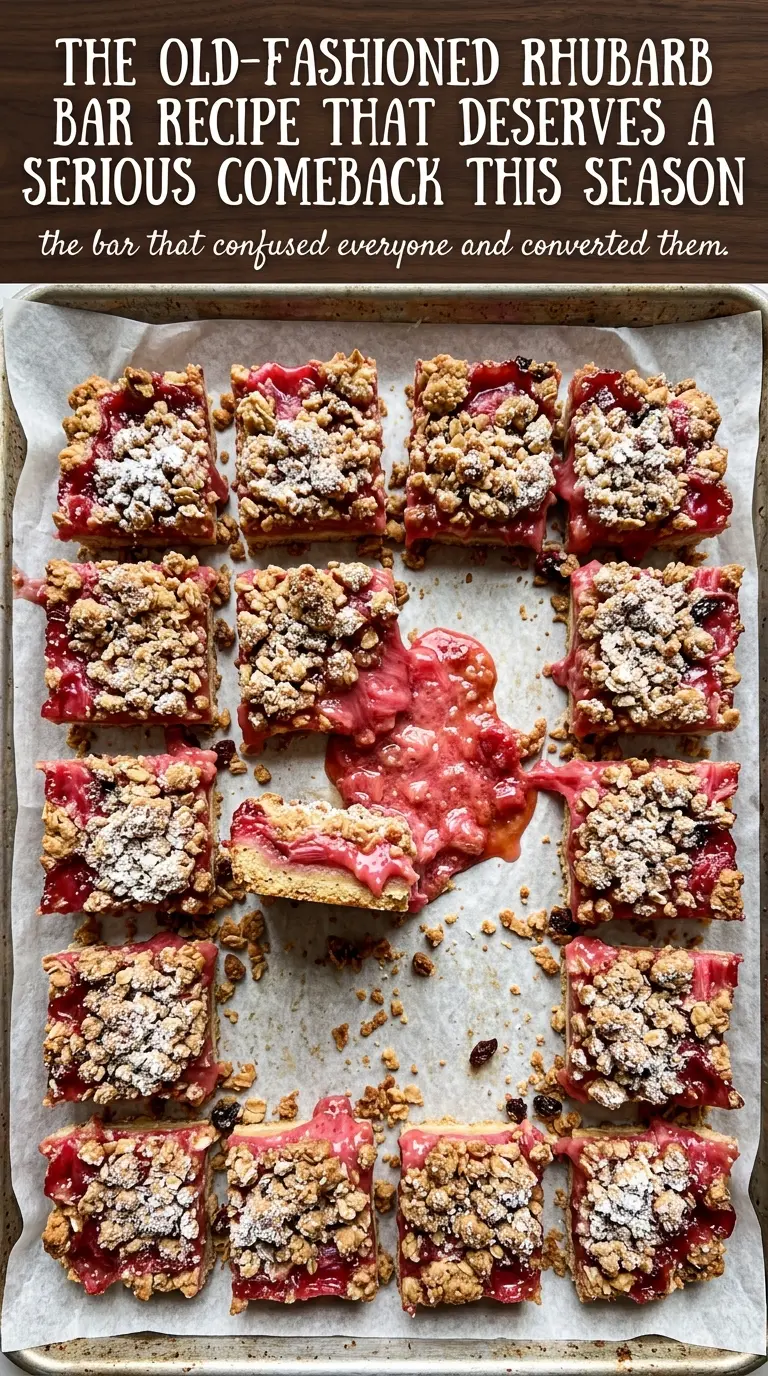
- Cold butter — This is what gives the crust its shortbread texture. Cold butter cuts into the flour instead of blending in completely, so the base bakes up tender and crumbly rather than dense. If the butter softens too much before baking, the crust can turn greasy and lose its clean snap.
- Instant vanilla pudding — This keeps the middle layer stable without extra cooking. Use the instant kind here, not cook-and-serve, because it sets fast and stays smooth under the warm fruit topping. A homemade pastry cream can work, but it takes more precision and needs to be fully chilled before layering.
- Fresh rhubarb — Fresh rhubarb matters because it softens into a bright, tangy topping that still tastes lively after cooking. Frozen rhubarb can work if that’s what you have, but thaw and drain it first so the topping doesn’t turn watery. Dice it evenly so it cooks at the same rate.
- Cornstarch — This is what turns the rhubarb juices into a thick topping instead of a loose compote. Whisk it with a little water before adding it to the pan so it disperses cleanly and doesn’t clump. Cook it just until the mixture turns glossy and thickened; overcooking can make it dull and gummy.
Building the Crust, Pudding, and Rhubarb in the Right Order
Baking the Shortbread Base
Mix the flour and powdered sugar first, then cut in the cold butter until the mixture looks sandy with a few pea-size pieces left. Press it into the parchment-lined pan firmly and evenly so the crust bakes into one level layer instead of patchy spots. Bake until the edges are lightly golden and the center no longer looks pale and wet. If you pull it too early, the bottom stays fragile and won’t hold the pudding cleanly.
Spreading the Pudding Layer
Let the crust cool all the way before the pudding goes on. Prepare the pudding according to the package directions with cold milk, and spread it gently over the crust with an offset spatula or the back of a spoon. Go slow so you don’t tear up the crust underneath. If the pudding seems thin, let it sit for a minute or two before spreading; that short rest helps it thicken enough to stay in place.
Cooking the Rhubarb Topping
Simmer the diced rhubarb with sugar and water until the pieces soften and release their juices. Stir in the cornstarch slurry and keep cooking until the mixture turns thick and glossy, not cloudy. Pull it from the heat as soon as it holds a spoon, because overcooking can break the fruit down too much and make the topping loose again. Let it cool slightly before it meets the pudding layer.
Chilling Before Slicing
Once the rhubarb is spread over the pudding, refrigerate the pan for at least two hours. That time lets the pudding firm up and gives the rhubarb topping enough structure to slice without oozing. If you cut too early, the layers smear and the bars won’t hold their shape. Use a sharp knife wiped clean between cuts for the neatest squares.
Three Ways to Adjust These Bars Without Losing the Texture
Make Them Gluten-Free
Use a cup-for-cup gluten-free flour blend in the crust. The texture will be a little more delicate and less sandy than the original, but it still bakes into a solid base as long as you press it firmly and let it cool completely before adding the filling.
Use Frozen Rhubarb When Fresh Isn’t Available
Frozen rhubarb works, but thaw it first and drain off excess liquid before cooking. If you skip that step, the topping can turn soupy and take longer to thicken. The flavor stays bright, though the color can be a little softer than with fresh stalks.
Make Them a Little Less Tart
If your rhubarb is especially sharp, add a couple extra tablespoons of sugar to the topping. That softens the edge without muting the rhubarb flavor, and it keeps the bars balanced against the sweet pudding layer. Don’t cut the sugar too far or the topping will taste flat instead of bright.
Storage and Reheating
- Refrigerator: Store covered for up to 4 days. The crust will soften a bit under the filling, but the bars still slice well.
- Freezer: These freeze better than you might expect if you wrap the cut bars tightly and freeze them in a single layer first. Thaw in the refrigerator overnight; the pudding texture may soften slightly after freezing, but the flavor holds up.
- Reheating: No reheating needed. Serve them cold from the fridge, because warming them up makes the pudding loose and the rhubarb topping slippery.
Questions I Get Asked About This Recipe
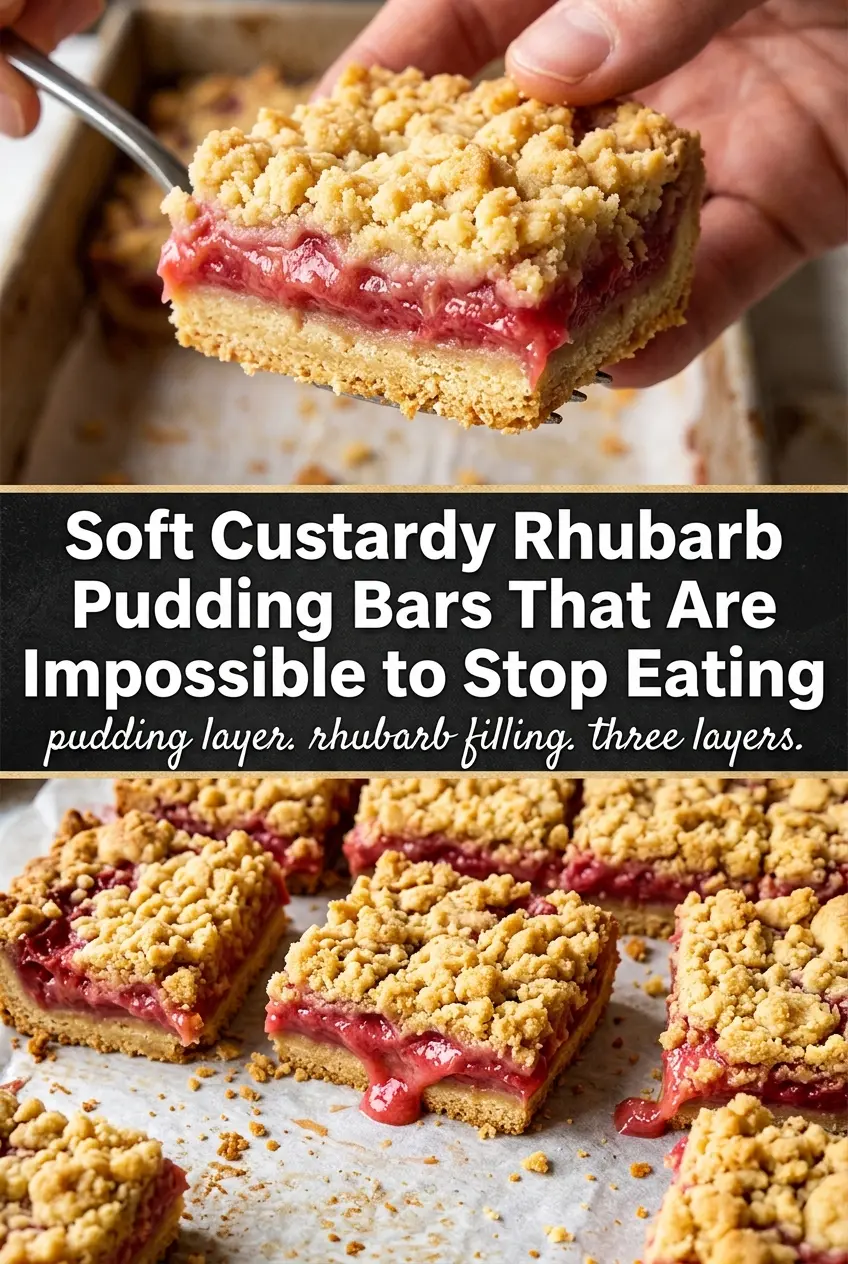
Rhubarb Pudding Bars
Ingredients
Equipment
Method
- Preheat the oven to 350°F and line a 9x13-inch pan with parchment paper. Make sure the paper overhangs for easier lifting.
- Mix all-purpose flour and powdered sugar, cut the cold butter in, then press the crumbly mixture into the pan. Press firmly to form an even base.
- Bake the crust for 18-20 minutes at 350°F until golden. Look for light browning on the edges.
- Cool the crust completely before adding the pudding. The surface should feel firm and no longer warm.
- Prepare instant vanilla pudding according to package directions using the cold milk. Stir until thick and smooth.
- Spread the pudding over the cooled crust. Smooth the top with a spatula so it reaches the corners.
- Simmer diced rhubarb with sugar and water until tender. Stir occasionally until the rhubarb breaks down.
- Mix cornstarch with a little water, then add it to the simmering rhubarb. Cook until thick enough to coat the back of a spoon.
- Cool the rhubarb mixture slightly, then spread it over the pudding layer. Avoid adding it hot so the pudding stays set.
- Refrigerate the pan for at least 2 hours to fully set. The bars should jiggle minimally when gently shaken.
- Cut into bars and serve chilled. Add whipped cream on top just before eating.