Silky, spoonable rhubarb butter turns a handful of chopped stalks into something with real staying power. The flavor lands somewhere between jam and fruit curd, but smoother, deeper, and a little more old-fashioned in the best way. Spread it on toast and it melts into the bread. Spoon it over yogurt or swirled into oatmeal, and it brings that sharp, pink rhubarb brightness without any extra fuss.
The trick is giving the rhubarb enough time to cook down past the watery stage. Sugar draws out the juice at first, then the mixture needs an uncovered simmer so the excess moisture can cook off and the fruit can concentrate. Once it’s thick, an immersion blender makes the texture fully smooth, which is what gives rhubarb butter that glossy, spreadable finish instead of a chunky compote feel.
Below, I’ve included the details that matter most: how thick it should look before you stop cooking, why the vanilla goes in at the end, and what to do if your batch still seems loose after blending.
I let it simmer the full 30 minutes and the texture was perfect after blending — smooth, thick, and not a bit stringy. The vanilla at the end made the rhubarb taste rounder without losing that tart kick.
Save this smooth pink rhubarb butter for toast, yogurt, and the prettiest spring breakfast spread.
The Part That Keeps Rhubarb Butter From Turning Watery
Rhubarb is full of water, and that’s the main reason fruit butters can stay loose longer than you expect. If you stop cooking when it still looks saucy in the pot, it will set much softer once it cools, sometimes softer than you want for spreading. The goal is not just softened rhubarb. It’s a thick, reduced puree that mounds slightly on a spoon before you blend it.
Cooking it uncovered matters more than people realize. Covered pans trap steam, which works against the texture you’re trying to build. Stir occasionally so the sugar doesn’t catch on the bottom, but let the liquid evaporate at its own pace. If you rush this part, the final butter tastes fine but won’t have that dense, silky body that makes it feel finished.
What the Ingredients Are Doing in the Pan
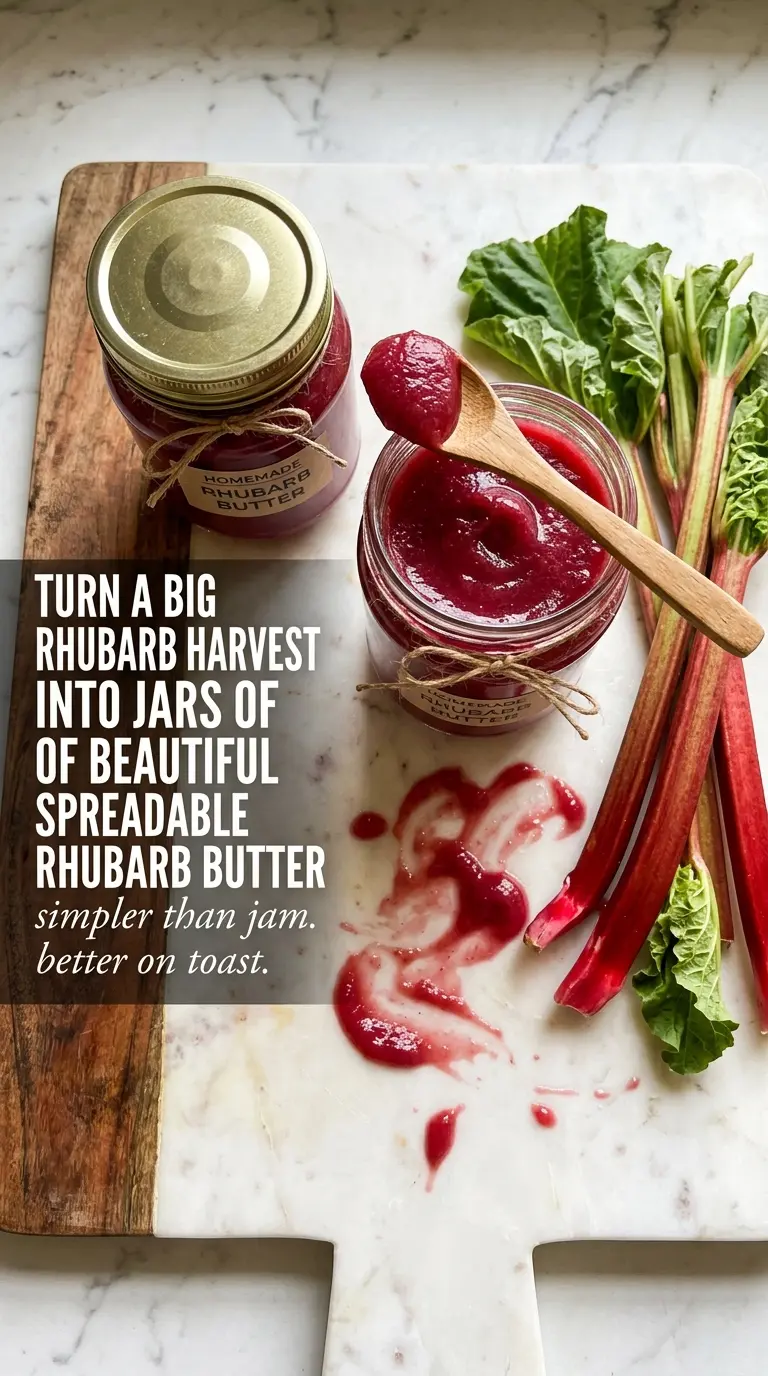
- Fresh rhubarb — This is the whole point of the recipe. Fresh stalks give you the bright tart flavor and natural pectin-like body that frozen rhubarb can also bring, but fresh tends to cook down with a cleaner flavor and a little less excess water. Trim off any leaves completely; only the stalks belong in the pot.
- Sugar — Sugar doesn’t just sweeten here. It helps draw moisture from the rhubarb at the start and supports the glossy, jammy texture as the mixture reduces. Cutting it much lower changes the balance fast, so if you want less sweetness, reduce in small steps rather than slashing it in half.
- Water — The water gets the mixture moving before the rhubarb starts releasing its own juice. That small amount keeps the sugar from scorching at the bottom in the first few minutes. Once the fruit breaks down, the pot should be uncovered so the extra liquid can cook away.
- Vanilla extract — Vanilla rounds out the sharp edge of rhubarb and makes the final butter taste fuller without covering up the fruit. Add it after the pureeing stage so the flavor stays bright. If you cook vanilla too long, some of that top note disappears.
Reducing, Blending, and Knowing When It’s Done
Cooking the Rhubarb Down
Combine the rhubarb, sugar, and water in a large pot and bring it to a boil, then drop the heat to a steady simmer. The fruit will soften first, then collapse into a loose, bubbling mash before it starts thickening. Keep the pan uncovered and stir every few minutes so the bottom doesn’t scorch, especially once the mixture turns darker and more concentrated. If the bubbles look big and lazy and the spoon leaves a trail for a second or two, you’re close.
Turning It Smooth
Use an immersion blender and puree the mixture until it’s completely smooth. This step changes the texture from rustic compote to true fruit butter, and it’s worth doing while the mixture is still warm because it blends more evenly. If you don’t have an immersion blender, a countertop blender works too, but blend in batches and vent the lid so steam can escape safely.
Finishing the Thickness
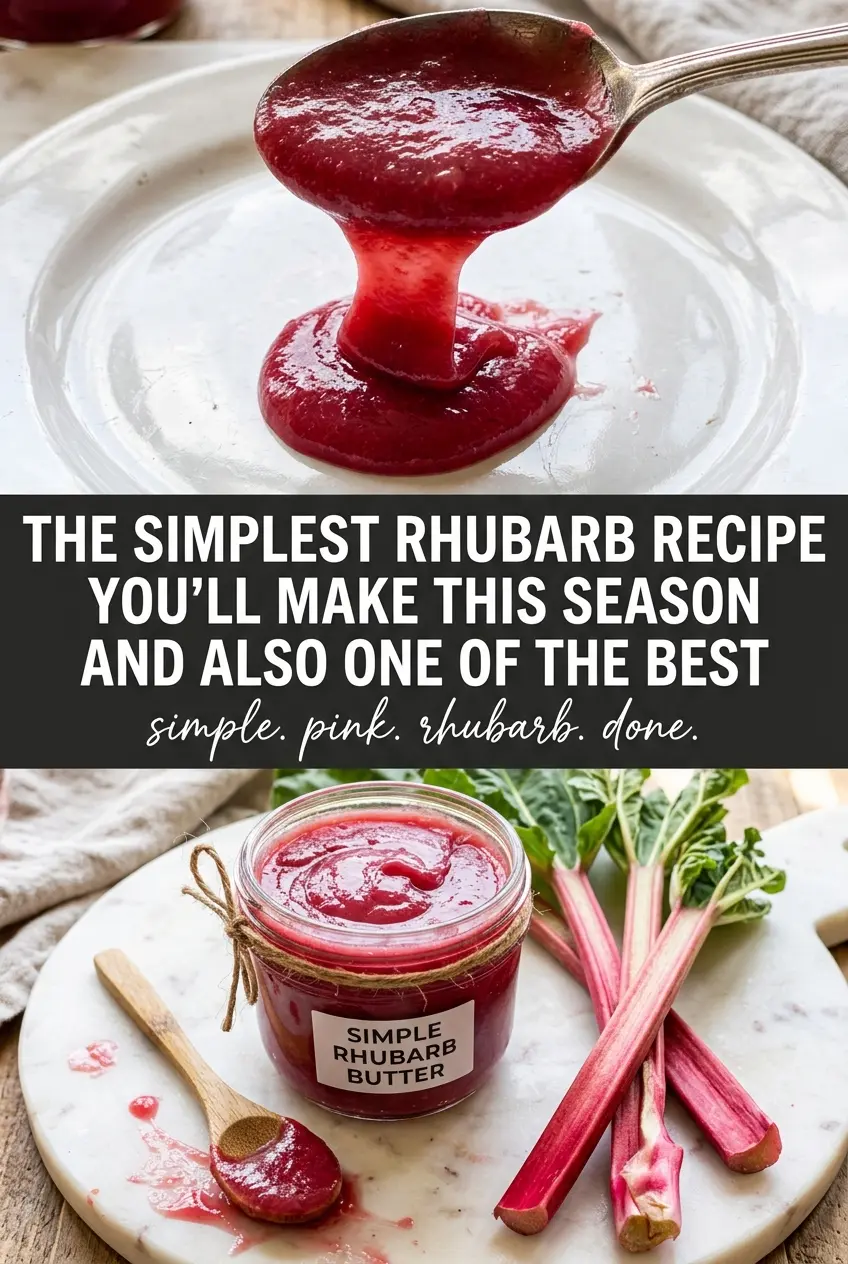
Stir in the vanilla extract, then cook the puree for about 5 minutes more if it still looks a little loose. The finished butter should be thick enough to hold a line when you drag a spoon through it, and it will tighten a bit more as it cools. If it still seems thin in the pot, it’s not fixed by chilling alone; give it a few more minutes on the stove before jarring it.
How to Change the Sweetness, Texture, or Batch Size
Make It Less Sweet Without Losing Body
You can cut the sugar a little, but don’t drop it too far or the butter loses that rounded, jam-like finish. Start by reducing it by 1/4 cup and cook the mixture down fully so the fruit has time to concentrate. The flavor stays sharper and more tart, which is great on toast, but the texture will set a touch softer.
Use Frozen Rhubarb
Frozen rhubarb works, and there’s no need to thaw it first. It will release more liquid, though, so expect a longer simmer before it reaches the same thickness. The flavor is still good, but the final butter may need a few extra minutes uncovered to get rid of the extra moisture.
Add Warm Spices
A small pinch of cinnamon or ginger fits this recipe nicely if you want a warmer spread. Add it near the end so the flavor stays balanced and doesn’t turn muddy during the long simmer. Too much spice covers the rhubarb, so keep it subtle.
How to Store It
Refrigerator: Store in clean jars for up to 3 weeks. The butter thickens as it chills, so don’t judge the final texture until it’s completely cold. Freezer: It freezes well in freezer-safe containers, leaving a little headspace for expansion. Reheating: You usually don’t need to reheat it, but if it gets too firm, let the jar sit at room temperature for a few minutes before spreading; microwaving tends to make the texture uneven.
Answers to the Questions Worth Asking
Simple Rhubarb Butter
Ingredients
Equipment
Method
- Combine chopped rhubarb, sugar, and water in a large pot and bring to a boil over medium-high heat with visible bubbling around the edges.
- Reduce heat to low and simmer uncovered for 25-30 minutes, stirring occasionally, until the mixture is very thick and clings to the spoon.
- Use an immersion blender to puree the cooked mixture until completely smooth, with no visible fibrous bits.
- Stir in vanilla extract and continue cooking for 5 minutes more if needed, until it reaches your desired thickness and looks glossy.
- Pour the hot rhubarb butter into clean jars and let cool before refrigerating.
- Refrigerate for up to 3 weeks so the spread firms up and stays smooth.