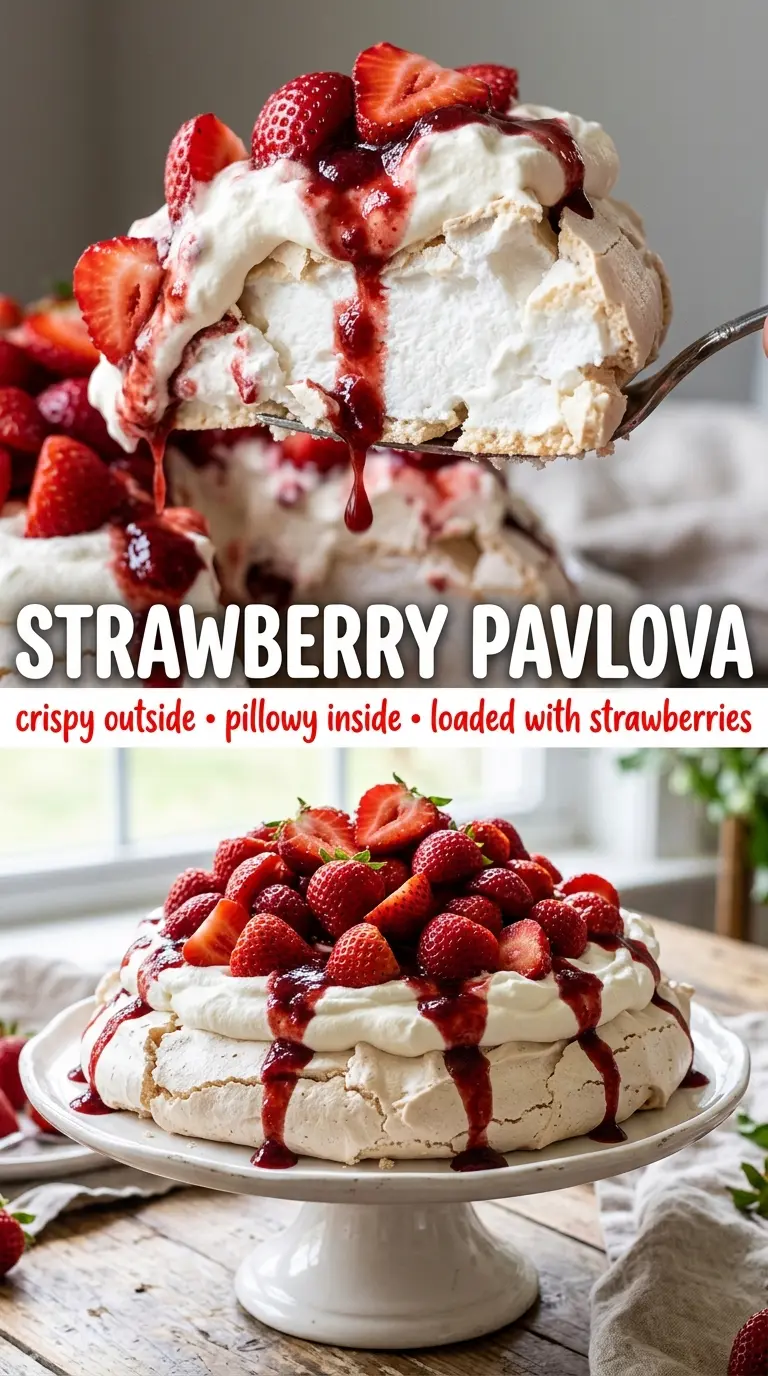
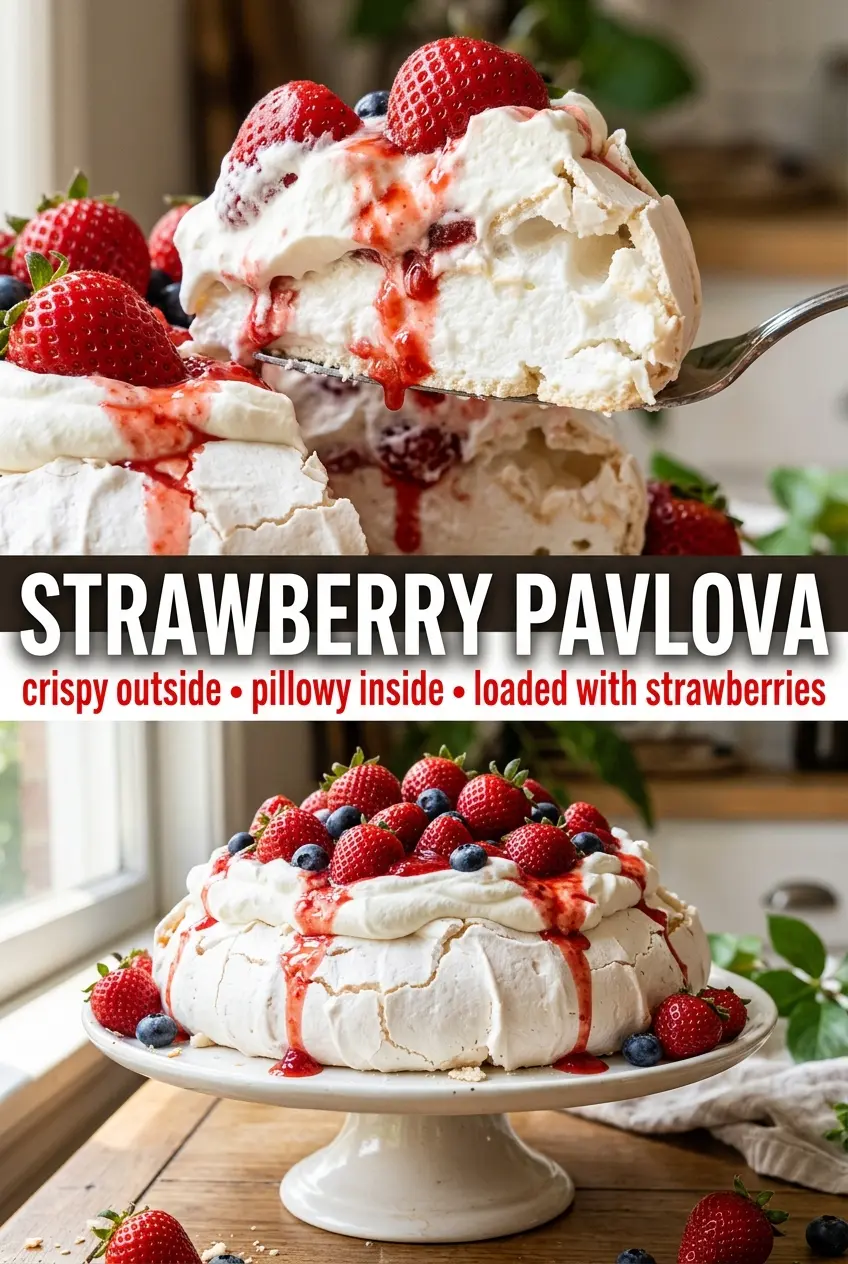
Strawberry pavlova has that rare combination of textures that makes people pause after the first bite: a crisp shell that cracks under the spoon, a soft marshmallow middle, and cool whipped cream piled high with glossy strawberries. The contrast is the whole point, and when it’s done right, the dessert feels light without being fussy.
The key is in the meringue. Superfine sugar dissolves more evenly than regular granulated sugar, which helps the pavlova bake up smooth and stable instead of gritty. A little vinegar and cornstarch keep the center tender, while a long, gentle bake and a slow cool in the oven protect that crisp exterior. The strawberries get a quick toss with honey so their juices turn into a loose syrup that runs into the cream and meringue in the best way.
Below, I’ll walk through the small details that keep the meringue from collapsing, the easiest way to tell when it’s ready, and a few smart swaps if you need to adjust the fruit or make it ahead.
The meringue baked up with a crisp shell and that soft center I always hope for, and the strawberries with honey gave the whole dessert just enough juice without making it soggy.
Like this strawberry pavlova? Save it to Pinterest for the dessert that delivers a crisp shell, marshmallow center, and fresh berry topping every time.
The Part Most Pavlovas Lose: Crisp Shell, Soft Center
The difference between a pavlova that slices beautifully and one that weeps onto the plate usually comes down to sugar dissolving and heat staying gentle. Beat the egg whites to soft peaks before you add sugar, then add the superfine sugar slowly so it has time to dissolve. If you dump it in at once, the meringue can turn grainy and leak syrup as it bakes.
The other thing that trips people up is overbaking. Pavlova should look pale, dry, and set on the outside, but not deeply colored. A slow cool inside the turned-off oven matters because sudden temperature changes can crack the shell hard or collapse the center before it sets.
What Each Ingredient Is Doing in the Meringue Bowl
- Egg whites — Room-temperature whites whip to more volume than cold ones. That extra lift helps the pavlova hold its shape and gives you the airy center you’re after.
- Superfine sugar — This is the ingredient that makes or breaks the texture. It dissolves faster than regular sugar, which keeps the meringue glossy instead of sandy; if you only have granulated sugar, pulse it briefly in a food processor first.
- White vinegar — A small amount steadies the egg foam and keeps the center tender. Don’t skip it unless you’re using lemon juice in the same amount, which gives a similar effect with a little more brightness.
- Cornstarch — This helps create that marshmallow-like middle. It’s one of the reasons pavlova can crack on the outside and still stay soft inside.
- Heavy whipping cream — Use the full-fat version here. Lighter cream won’t whip as high or hold as long, and the topping will slump before you finish serving.
- Strawberries — Fresh berries matter. They bring the clean, bright finish that balances the sweet meringue, and slicing them just before serving keeps them from going soft too early.
Building the Pavlova Without Losing the Crunch
Whipping the Meringue to Stiff, Glossy Peaks
Start with a clean, grease-free bowl and whisk. Any trace of fat can stop the egg whites from building volume, and that’s the most common reason a pavlova falls flat before it even hits the oven. Whip until soft peaks hold their shape, then add the sugar gradually while the mixer runs. Stop once the mixture looks thick, shiny, and no longer feels gritty between your fingers.
Shaping the Nest
Spoon the meringue into an 8-inch circle on parchment, then use the back of the spoon to lift the edges slightly higher than the center. That shallow indentation gives the cream and strawberries a place to sit instead of sliding off the sides. Keep the shape compact; a pavlova that’s spread too thin bakes faster at the edges and dries out before the middle is ready.
Baking and Cooling Slowly
Bake until the outside is pale and crisp, then turn the oven off and leave the pavlova inside to cool completely. That resting time is what protects the center from collapsing while the structure sets. If you move it too soon, the shell can crack aggressively and the middle can sink.
Finishing With Cream and Strawberries
Whip the cream with powdered sugar and vanilla until it holds firm peaks, then pile it onto the cooled meringue right before serving. Toss the strawberries with honey so they turn glossy and juicy, but don’t do that too early or they’ll start to release too much liquid. Once the fruit is on top, add mint and serve immediately for the best contrast between crisp and creamy.
Three Ways to Adjust This Pavlova Without Breaking It
Make It Dairy-Free
Swap the whipped cream for a chilled coconut whipping cream or another stable non-dairy whip. The pavlova shell itself is already dairy-free, so the texture change is mostly in the topping: coconut adds a little richness and a faint tropical note that still works well with strawberries.
Use Mixed Berries Instead of Just Strawberries
Blueberries, raspberries, and blackberries all work here. Raspberries break down faster and give you more juice, while blueberries stay firmer and add pop; keep the honey light so the berries still taste fresh, not syrupy.
Make Individual Mini Pavlovas
Pipe or spoon the meringue into smaller rounds and reduce the baking time until the outside is set and the centers still feel marshmallow-soft. Minis are a smart choice for guests because they cool faster, serve cleaner, and give everyone their own crisp shell.
Storage and Reheating
- Refrigerator: Store the baked meringue shell at room temperature in a dry container for up to 2 days. Once assembled, pavlova softens fast, so add the cream and fruit only when you’re ready to serve.
- Freezer: The baked meringue can be frozen, tightly wrapped, for up to 1 month. Thaw it at room temperature while still wrapped so condensation doesn’t make the shell sticky.
- Reheating: Don’t reheat an assembled pavlova. If the shell needs a little crisping after storage, place it in a low oven for a few minutes, then cool completely before topping it again.
Questions I Get Asked About This Recipe
Strawberry Pavlova
Ingredients
Equipment
Method
- Preheat oven to 300°F and line a sheet pan with parchment paper.
- Beat egg whites until soft peaks form.
- Gradually add superfine granulated sugar while beating until stiff, glossy peaks form, with a thick ribbon when you lift the beaters.
- Fold in vanilla extract, white vinegar, and cornstarch until no streaks remain.
- Spread meringue onto parchment in a circle about 8 inches across, creating a slight indent in the center with the back of a spoon.
- Bake for 60 minutes until pale golden and crisp.
- Turn off the oven and let cool completely inside, about 30 minutes, so the shell stays crisp and doesn’t crack.
- Transfer the pavlova to a serving plate.
- Whip heavy whipping cream with powdered sugar and vanilla extract until stiff peaks form.
- Toss fresh strawberries with honey until coated and slightly syrupy.
- Top the pavlova with whipped cream, then add honey-tossed strawberries and fresh mint just before serving, finishing with any extra strawberry juices for shine.