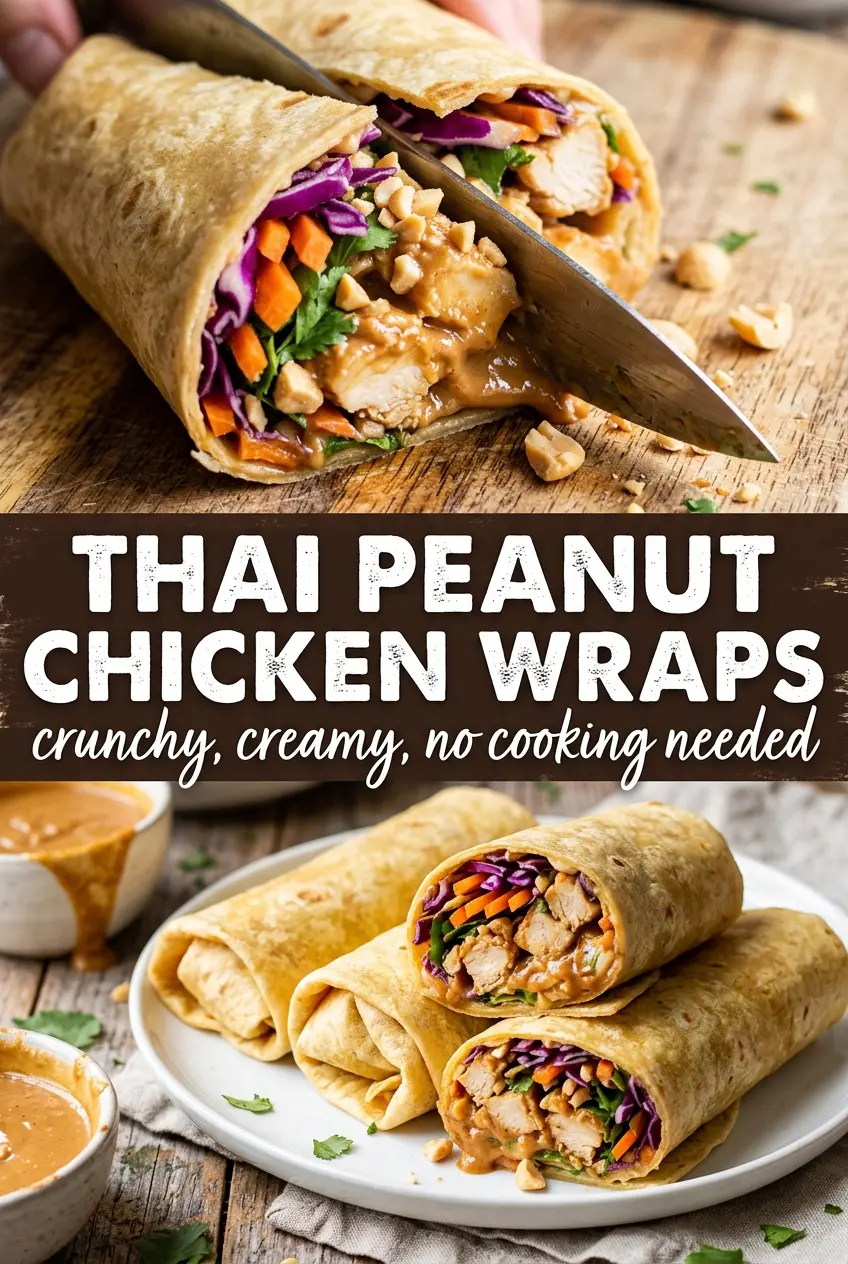
These Thai peanut chicken wraps hit the sweet spot between crisp, creamy, and satisfying. The peanut sauce clings to the chicken instead of sliding off, the cabbage stays crunchy, and the tortilla softens just enough to wrap everything up without turning soggy. It’s the kind of lunch or quick dinner that tastes like you planned ahead, even when you didn’t.
What makes this version work is balance. The sauce leans on peanut butter for body, soy sauce for salt, honey for roundness, rice vinegar and lime for brightness, and just enough sriracha to wake it up. I also like warming the tortillas first and keeping the vegetables dry and well-shredded, because that’s what keeps the wraps tight and clean when you slice them.
Below, you’ll find the small details that matter most: how to keep the sauce smooth, how to layer the fillings so the wraps hold together, and a few smart swaps if you want to make them gluten-free or vegetarian.
The peanut sauce came together silky smooth, and the wraps stayed crunchy even after sitting in the lunchbox for a few hours. My husband asked if I could pack them again the next day.
Save these Thai Peanut Chicken Wraps for the days when you want crisp vegetables, creamy peanut sauce, and a fast dinner that still feels put together.
The Trick to Keeping the Wrap Tight Without Crushing the Crunch
The biggest mistake with wraps like this is overfilling them and then wondering why they split at the seam. These hold best when the sauce goes on in a thin layer, the chicken is sliced across the grain, and the vegetables are tucked into a narrow strip down the center instead of piled high across the whole tortilla. You want enough filling to get flavor in every bite, not so much that the wrap turns into a slippery bundle.
Warming the tortillas matters more than people think. A cold flour tortilla tears faster and fights back when you roll it. Give it a few seconds of heat until it feels flexible, then build while it’s still soft. If the tortillas cool off before you roll, rewarm them for a few seconds rather than forcing the fold.
- Chicken breast — Grilled or pan-cooked chicken gives you clean slices and a firm bite that stands up to the sauce. Thigh meat works too if you want more richness, but slice it a little thinner so the wrap doesn’t feel heavy.
- Peanut butter — This is the backbone of the sauce, so a creamy peanut butter works best. Natural peanut butter is fine, but stir it well first or the sauce can turn oily and uneven.
- Rice vinegar and lime juice — Both keep the sauce from tasting flat. If you only have one, use it, but the combination gives the sauce the sharper finish that makes the chicken and vegetables pop.
- Flour tortillas — Large, soft tortillas roll cleanly and seal better than thin or dry ones. If yours crack, warm them longer or cover them with a towel so they stay pliable while you build the wraps.
- Cabbage, carrots, and cucumber — These bring the crunch. Pat the cucumber dry after slicing; extra moisture is the fastest way to make the tortilla soggy.
What Each Ingredient Is Actually Doing in This Recipe
- Primary ingredient (the star) — Quality matters most. Choose the best you can find.
- Cooking medium (oil, butter, or broth) — This carries flavors and prevents dryness.
- Seasonings (salt, pepper, spices, herbs) — Layer flavors so nothing overpowers. Build depth gradually.
- Aromatics (garlic, onion, herbs) — Cook with fat to bloom flavors. Become the foundation.
- Supporting ingredients — Complement the main ingredient without overpowering it.
- Sauce or liquid (if applicable) — Brings flavors together. Balance richness with acid.
- Acid (lemon, vinegar, wine, or other) — Brightens and prevents flat-tasting results.
- Final finish (garnish, glaze, or sauce) — Prevents one-dimensional taste and adds visual appeal.
Building the Wrap in the Right Order
Mix the Sauce Until It Turns Glossy
Whisk the peanut butter, soy sauce, honey, vinegar, lime juice, and sriracha together first, then add water a little at a time until the sauce goes from thick and stubborn to smooth and spoonable. If it looks grainy, keep whisking before you add more liquid. The sauce should drip slowly off the whisk, not sit in a clump or run like dressing.
Warm the Tortillas Before You Fill Them
A quick warm-up changes everything here. Heat the tortillas just until they’re flexible and no longer stiff at the edges. If you skip this, the first fold usually cracks before you even get the seam tucked under.
Layer for Crunch, Not Chaos
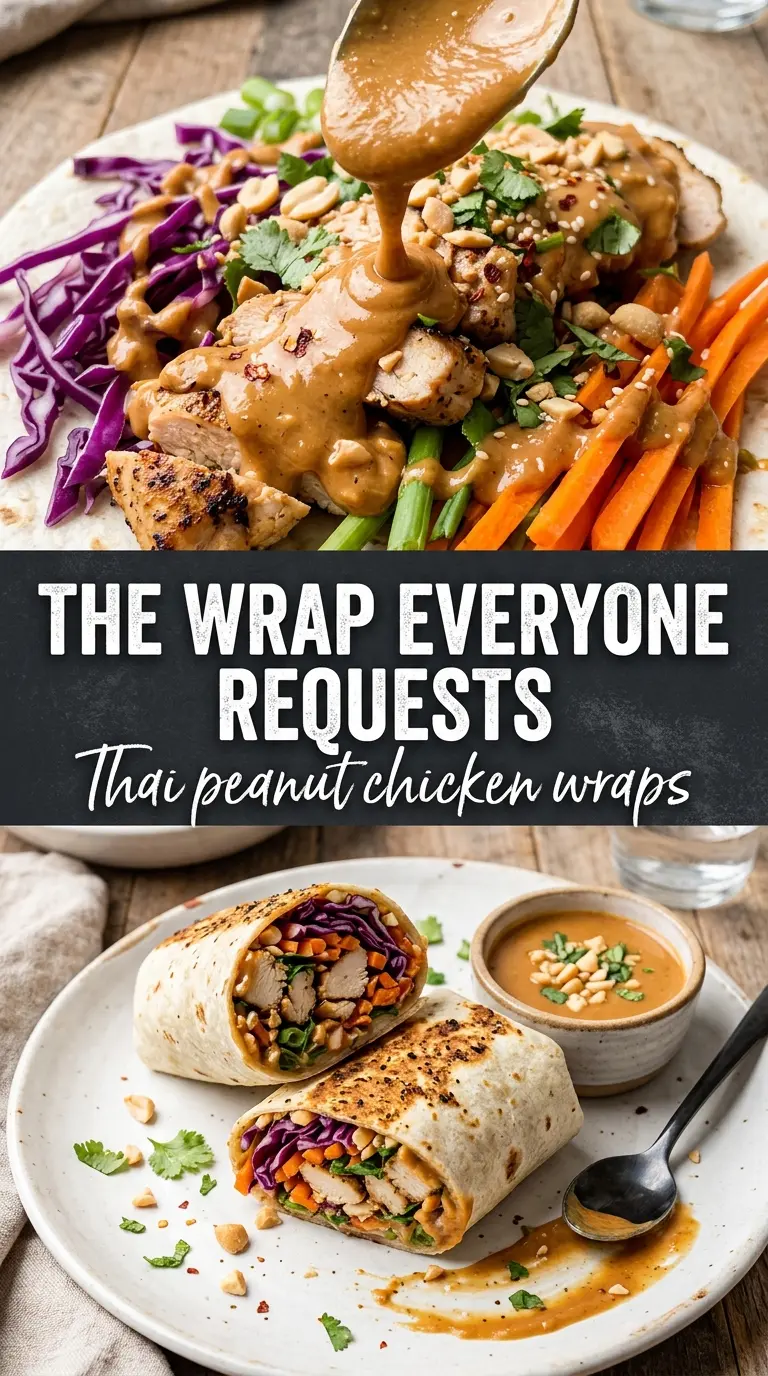
Spread the peanut sauce in the center, then add chicken first so it anchors the wrap. Top it with cabbage, carrots, cucumber, cilantro, and green onions in a neat line down the middle. Keep the filling centered and leave the edges clean; that empty space is what lets the tortilla seal when you roll it.
Roll Tightly, Then Slice Cleanly
Fold the sides in just a little, then pull the bottom edge over the filling and roll forward with steady pressure. If the tortilla feels loose, the filling was too wide or too wet. Slice with a sharp knife and wipe the blade between cuts so the peanut sauce doesn’t smear all over the cut face.
How to Adapt These Wraps When You Need a Different Finish
Gluten-Free Version
Use certified gluten-free tortillas and swap the soy sauce for tamari or coconut aminos. Tamari keeps the sauce closest to the original flavor, while coconut aminos make it a little sweeter and lighter. The wraps still hold together well, but gluten-free tortillas are usually more delicate, so warm them gently and don’t overfill.
Vegetarian Peanut Wraps
Swap the chicken for baked tofu, tempeh, or a handful of shelled edamame. Tofu works best when it’s pressed and seared first, because the light crust helps it pick up the sauce instead of going bland inside the wrap. You’ll lose the savory depth of chicken, but the peanut sauce fills that gap nicely.
Meal-Prep Lunch Wraps
For ahead-of-time lunches, keep the sauce separate and assemble the wraps just before eating, or pack the filling with the tortilla on the side. If the sauce sits on the tortilla for hours, the wrap softens and tears when you pick it up. The vegetables stay brightest and crispiest when you keep everything dry until serving.
Storage and Reheating
- Refrigerator: Store the chicken, vegetables, and sauce separately for up to 3 days. Fully assembled wraps soften fast, so they’re best rolled just before eating.
- Freezer: The sauce and vegetables don’t freeze well in assembled wraps. You can freeze the cooked chicken on its own, then thaw and build fresh wraps later.
- Reheating: Warm the chicken gently in the microwave or in a skillet over low heat. High heat dries it out fast, and overheated sauce can separate, so add the peanut sauce after reheating or use it cold.