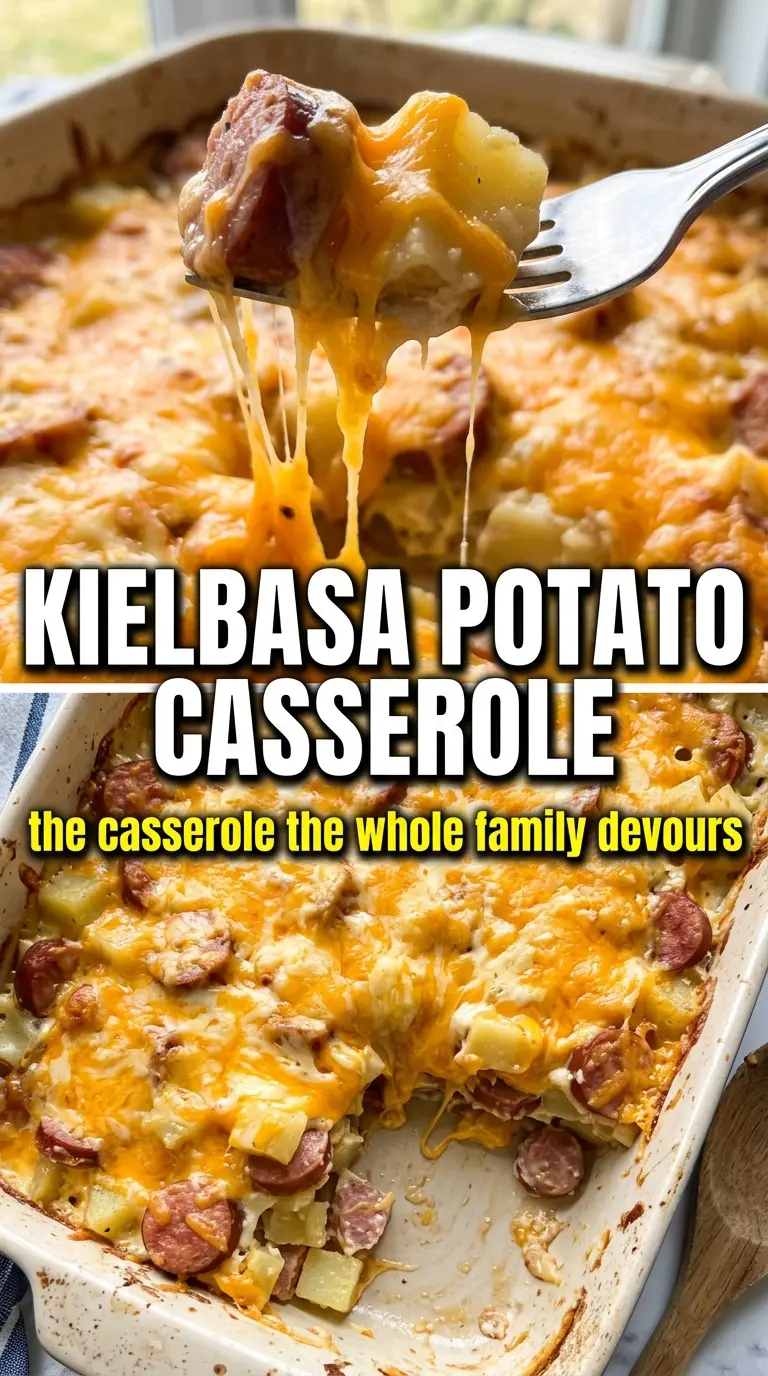
Kielbasa sausage cheesy potato casserole lands on the table with the kind of heft that disappears fast. The potatoes turn tender in a creamy sauce, the kielbasa brings smoky, browned edges, and the cheddar bakes into a golden top that bubbles at the corners. It’s the sort of dish that feels complete on its own, with enough substance to work as dinner without needing much else beside it.
What makes this version work is the order of the prep. The potatoes get a head start in salted water so they finish in the oven without turning chalky or underdone, and the kielbasa gets browned before it goes into the pan so it adds flavor instead of just warming through. The sauce is built with sour cream and cream of mushroom soup, which gives it body and richness without needing a long stovetop reduction.
Below, I’ve included the detail that matters most for a casserole like this: how to keep the potatoes tender, how to get the top properly golden, and what to change if you want to make it a little lighter or use what you already have.
The potatoes stayed tender all the way through, and browning the kielbasa first gave the whole casserole a deeper smoky flavor. The cheese top turned out perfectly golden, not greasy.
Save this kielbasa sausage cheesy potato casserole for the nights when you want smoky sausage, creamy potatoes, and a crisp cheddar top in one pan.
The Trick Most Potato Casseroles Miss: Give the Potatoes a Head Start
The biggest failure point in a casserole like this is uneven potatoes. If they go into the oven raw, the outside can turn soft before the center is even close, which leaves you either overbaking the whole dish or serving a fork-resistant middle. Parboiling the cubes for about 8 minutes solves that problem. They should still be a little firm when you drain them, because they’re going back into the oven with sauce around them.
Browned kielbasa matters for the same reason. Slicing and searing it first adds a little crust and pushes out some of the fat, which keeps the casserole from tasting flat or greasy. You’re not cooking it through from scratch here. You’re building flavor that will hold up under the cheese and cream.
- Parboiled russet potatoes — Russets soften beautifully here because they break down just enough to absorb the sauce without falling apart. Dice them evenly so they finish at the same time.
- Browned kielbasa — Smoked sausage gives the casserole its backbone. Any good quality smoked sausage works, but don’t skip the browning step or the flavor stays muted.
- Cream of mushroom soup — This is the shortcut that gives the sauce body. If you need a substitute, cream of chicken soup works well and keeps the same thick, spoonable texture.
- Sharp cheddar — Mild cheese melts fine, but sharp cheddar gives the top a stronger, saltier finish that stands up to the sausage. Shred it yourself if you can; pre-shredded cheese melts less smoothly.
What Each Ingredient Is Actually Doing in This Recipe
- Primary ingredient (the star) — Quality matters most. Choose the best you can find.
- Cooking medium (oil, butter, or broth) — This carries flavors and prevents dryness.
- Seasonings (salt, pepper, spices, herbs) — Layer flavors so nothing overpowers. Build depth gradually.
- Aromatics (garlic, onion, herbs) — Cook with fat to bloom flavors. Become the foundation.
- Supporting ingredients — Complement the main ingredient without overpowering it.
- Sauce or liquid (if applicable) — Brings flavors together. Balance richness with acid.
- Acid (lemon, vinegar, wine, or other) — Brightens and prevents flat-tasting results.
- Final finish (garnish, glaze, or sauce) — Prevents one-dimensional taste and adds visual appeal.
Building the Casserole So the Sauce Stays Creamy and the Top Turns Golden
Parboiling the Potatoes
Start the potatoes in salted water and pull them once the edges are just starting to soften. They should be tender on the outside but still hold their shape in the center. If they go too far, they’ll collapse in the bake and turn the casserole muddy instead of layered. Drain them well before they go into the dish so extra water doesn’t thin the sauce.
Getting Color on the Kielbasa
Use a hot skillet and give the sausage slices space. They should pick up browned edges and a little caramelization, not just steam in their own moisture. That browning adds depth to every bite. If the pan looks crowded, work in batches or the sausage will go soft instead of crisping.
Mixing the Sauce Base
Stir the soup, sour cream, broth, garlic, paprika, garlic powder, salt, and pepper together until the mixture looks smooth and loose enough to coat the potatoes. It should pour easily, not sit in a thick lump. If it seems too stiff, add a splash more broth. The goal is a sauce that settles between the potatoes and bakes into the casserole instead of sitting on top like a paste.
Baking Until Bubbling at the Edges
Cover the dish with foil for the first half of the bake so the potatoes steam through without drying out. Then uncover it and let the cheese turn deeply golden. You’re looking for bubbling edges and potatoes that slide cleanly under a fork. If the top browns too fast before the center is done, put the foil back on loosely and give it a few more minutes.
How to Adapt This Kielbasa Casserole for What’s in Your Kitchen
Dairy-Free Version
Use a dairy-free sour cream and a plant-based shredded cheese that melts well. The casserole will still be creamy, but the top won’t brown exactly the same way as cheddar, so give it a little extra oven time if you want more color.
Gluten-Free Swap
Use a certified gluten-free cream of mushroom soup and check the kielbasa label, since some brands include fillers. The texture stays the same, which makes this an easy adjustment without changing the bake.
Extra Veggie Add-In
Bell peppers, mushrooms, or frozen peas can all go in without much trouble. Add firmer vegetables with the onions so they soften in the oven, and stir frozen peas in near the end if you want them to stay bright.
Storage and Reheating
- Refrigerator: Keeps for 4 days. The potatoes firm up a little as they chill, but the casserole still reheats well.
- Freezer: It freezes, though the potatoes soften slightly after thawing. Cool completely, wrap tightly, and freeze in portions for the best texture.
- Reheating: Warm covered in a 350°F oven until hot in the center. The microwave works for single servings, but use short bursts so the cheese doesn’t separate and the potatoes don’t dry out.
Questions I Get Asked About This Recipe

Kielbasa Sausage Cheesy Potato Casserole
Ingredients
Equipment
Method
- Preheat oven to 375°F and grease a 9x13 dish.
- Parboil cubed potatoes in salted water for 8 minutes until just slightly tender, then drain.
- Brown kielbasa slices in a skillet over medium-high heat until caramelized on both sides, then remove.
- Mix cream of mushroom soup, sour cream, chicken broth, garlic, smoked paprika, garlic powder, salt, and black pepper until smooth.
- Combine potatoes, kielbasa, and diced onion in the baking dish, then pour the soup mixture over and toss to coat.
- Top with shredded cheddar, cover with foil, and bake 30 minutes, until bubbling at the edges.
- Remove foil and bake 15 more minutes at 375°F until potatoes are tender and the cheese is golden.
- Let the casserole stand 5 minutes before serving, then garnish with fresh chives.