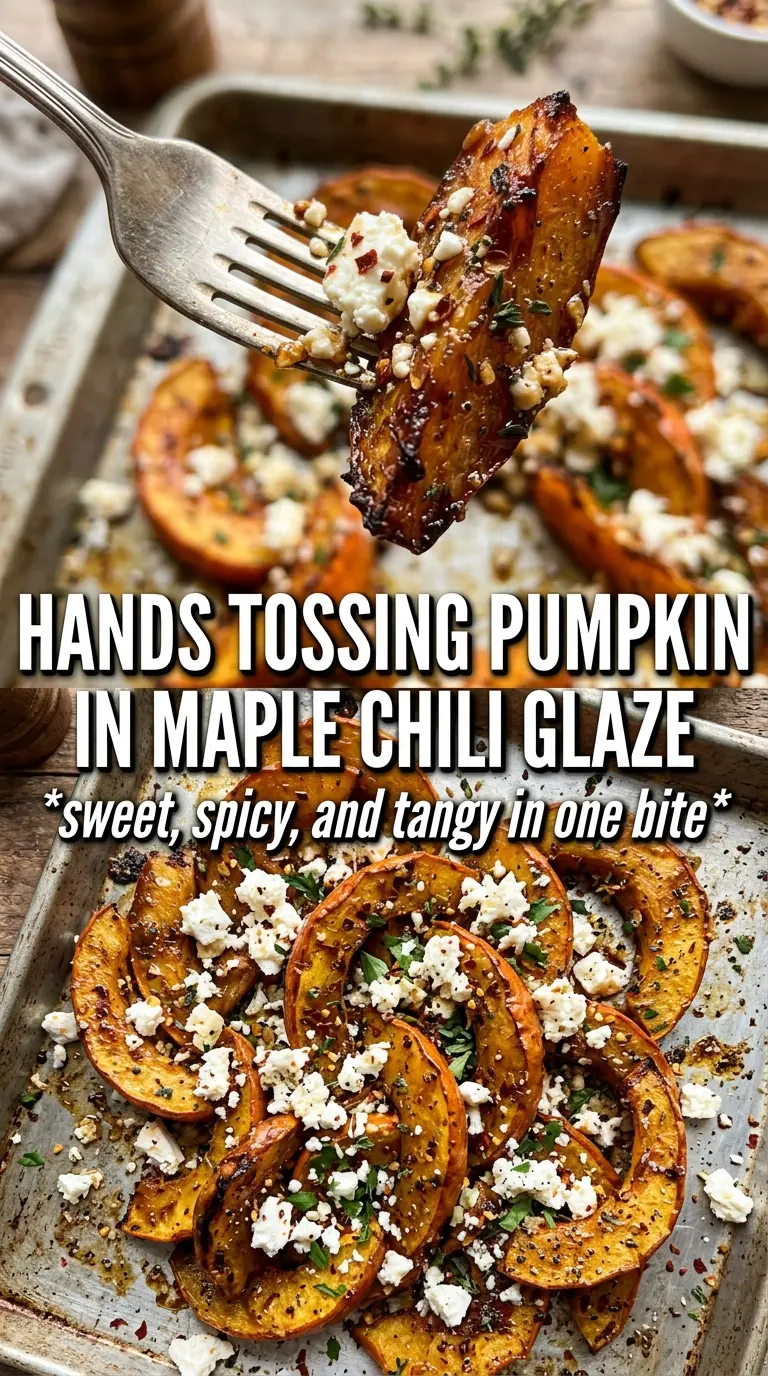
Caramelized maple roasted pumpkin with chili and feta brings together the kind of contrast that keeps a side dish from fading into the background. The pumpkin turns tender at the edges and almost jammy in the center, while the maple syrup browns in the oven and leaves a sticky glaze that catches the heat from the chili flakes. Feta cools everything down with salty crumbs, and the pomegranate seeds add those sharp little bursts that make each bite feel finished.
This version works because the pumpkin is roasted hot enough to color before it collapses. The maple syrup goes on before baking, not after, so it can reduce and cling to the wedges instead of sitting on the surface like a drizzle. A little smoked paprika and cinnamon round out the sweetness without turning the dish into dessert, and the olive oil keeps the edges from drying out.
Below, I’ll walk through the one oven trick that keeps the pumpkin from steaming, what each ingredient is doing, and a few smart ways to adapt it when you want to change the heat level or make it dairy-free.
The pumpkin caramelized beautifully and the feta on top kept it from tasting too sweet. I used butternut squash, and it came out tender in 35 minutes with just the right amount of heat from the chili flakes.
Love the sweet-heat balance and creamy feta finish? Save this maple roasted pumpkin with chili and feta for an easy side that looks polished on the table.
The Trick to Keeping the Pumpkin Caramelized Instead of Soft
The biggest mistake with roasted pumpkin is crowding the pan. When the wedges sit too close together, they trap steam and turn soft before they ever get a chance to brown. A hot oven and a lined baking sheet help, but spacing matters just as much. Give the pieces room so the maple syrup can reduce into a glaze and the edges can take on color.
Flip the wedges halfway through roasting. That one move keeps the underside from staying pale and gives you even caramelization on both sides. If the pumpkin looks glossy but still stubbornly pale at the end, it needs a few more minutes. What you want is tenderness at the thickest part and browned edges that pull back slightly from the pan.
What Each Ingredient Is Actually Doing in This Recipe
- Primary ingredient (the star) — Quality matters most. Choose the best you can find.
- Cooking medium (oil, butter, or broth) — This carries flavors and prevents dryness.
- Seasonings (salt, pepper, spices, herbs) — Layer flavors so nothing overpowers. Build depth gradually.
- Aromatics (garlic, onion, herbs) — Cook with fat to bloom flavors. Become the foundation.
- Supporting ingredients — Complement the main ingredient without overpowering it.
- Sauce or liquid (if applicable) — Brings flavors together. Balance richness with acid.
- Acid (lemon, vinegar, wine, or other) — Brightens and prevents flat-tasting results.
- Final finish (garnish, glaze, or sauce) — Prevents one-dimensional taste and adds visual appeal.
What Each Ingredient Is Actually Doing in This Dish
- Pumpkin or butternut squash — Either one works, but butternut is often a little easier to cut into neat wedges and roasts predictably. Use the freshest squash you can get; older squash can dry out before the outside caramelizes. Keep the wedges similar in size so they finish at the same time.
- Maple syrup — This is the glaze, not just a finishing touch. It thickens in the oven and clings to the squash, which is why a cheap pancake-style syrup won’t give you the same depth or clean sweetness. If you’re out of maple syrup, honey works, but it browns faster and tastes a little sharper.
- Chili flakes, smoked paprika, and cinnamon — The chili brings heat, the paprika gives a gentle savory smoke, and the cinnamon softens the whole dish without making it taste like pie. That mix keeps the sweetness in check. If you want less heat, cut the chili flakes in half rather than skipping them completely.
- Feta, pomegranate seeds, mint, and pine nuts — These are the finish that makes the plate feel balanced. Feta gives salt and creaminess, pomegranate adds acidity and crunch, mint brightens the whole thing, and pine nuts add a buttery toastiness. If you’re serving this dairy-free, skip the feta and add an extra pinch of salt plus more pine nuts for richness.
Roasting the Wedges So the Glaze Stays On
Seasoning the Pumpkin Evenly
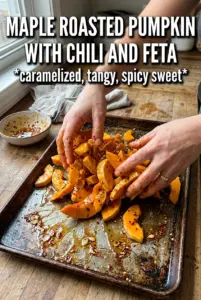
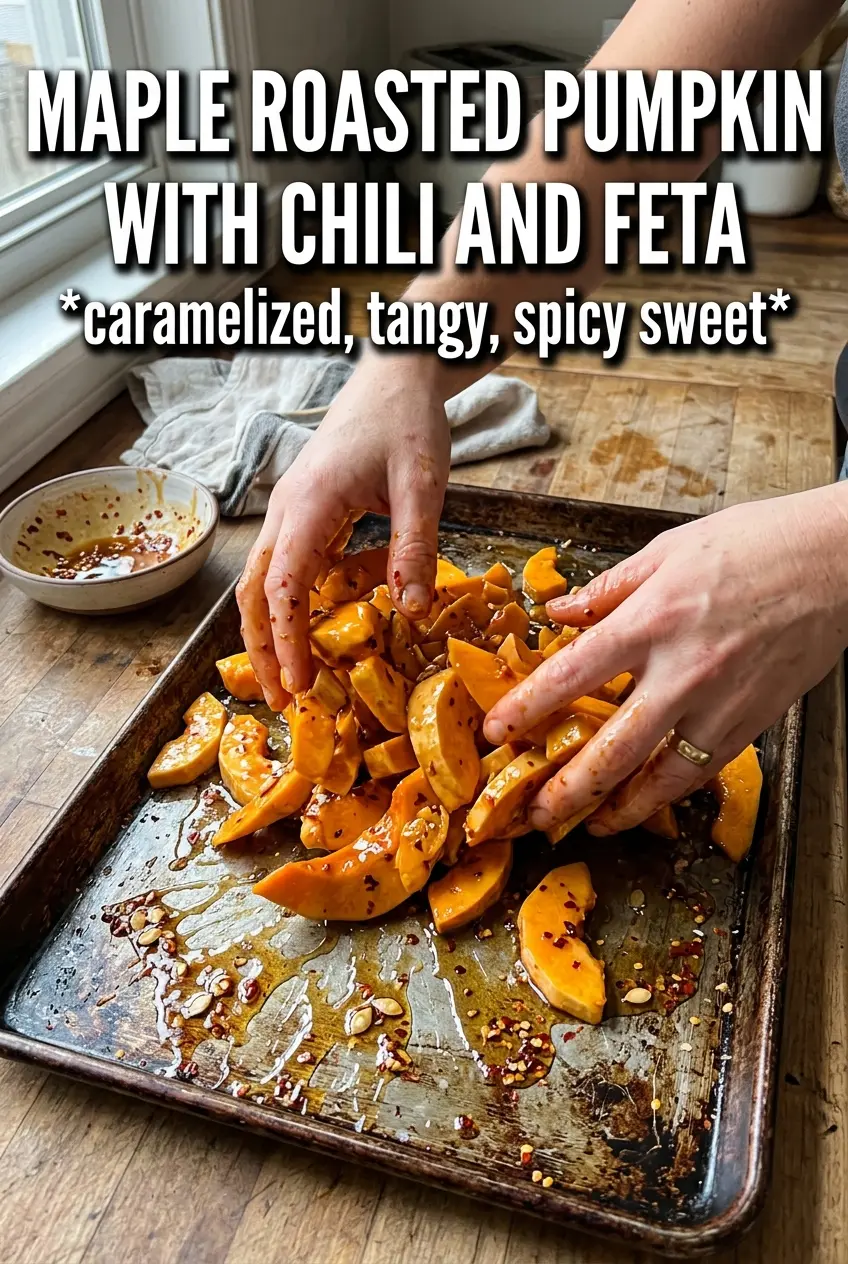
Toss the pumpkin wedges with the maple syrup, olive oil, spices, salt, and pepper until every cut surface looks coated. The oil helps the syrup spread and keeps the spices from clumping. If the pumpkin is wet or the pieces are different sizes, the coating slides off and the roasting turns uneven, so dry the squash first and cut with consistency in mind.
Letting the Oven Do the Browning
Roast at 425°F until the wedges are tender and the edges are deeply golden, about 30 to 35 minutes. You want a little blistering where the syrup pooled on the pan and a fork to slide through the thickest part without resistance. If the oven runs cool or the tray is too crowded, the pumpkin will go limp before it colors, so use a single layer and don’t stack the wedges.
Finishing With the Cold Ingredients
Move the roasted pumpkin to a platter and add the feta, pomegranate seeds, mint, and pine nuts after it comes out of the oven. The contrast matters here: hot squash, cool cheese, fresh herbs, and crisp nuts. If you add the feta too early, it softens into the glaze instead of staying in clean crumbles, which takes away the texture that makes this dish stand out.
Make It Milder Without Losing Balance
Cut the chili flakes to 1/4 teaspoon if you want gentle warmth instead of clear heat. The dish still tastes layered because the smoked paprika and maple carry the flavor, and the feta keeps the sweetness from taking over.
Dairy-Free With the Same Sweet-Savory Contrast
Leave out the feta and finish with extra pine nuts plus a little more salt. You lose the creamy salty bite, so add a tiny squeeze of lemon at the end if you want the same brightness the cheese would have given.
Swap the Pumpkin for Butternut Squash
Butternut squash gives you cleaner wedges and a slightly sweeter, denser finish. It usually roasts in the same window, but watch the narrow ends closely because they can soften faster than the thicker sections.
How to Stretch It for a Bigger Table
Double everything and use two sheet pans instead of piling the wedges onto one. If you cram them together, they steam, and the glaze thins out instead of sticking. Rotate the pans halfway through so both trays brown evenly.
Storage and Reheating
- Refrigerator: Store leftovers in an airtight container for up to 4 days. The pumpkin will soften a bit, and the feta will lose some of its crumbly texture.
- Freezer: The roasted pumpkin freezes, but the finished dish doesn’t hold up well once the feta, mint, and pomegranate are added. Freeze only the roasted wedges, then add the toppings after reheating.
- Reheating: Warm the pumpkin on a sheet pan in a 375°F oven until heated through. The microwave makes the glaze loose and the texture too soft, which is the main thing to avoid here.
Questions I Get Asked About This Recipe
Maple Roasted Pumpkin With Chili And Feta
Ingredients
Equipment
Method
- Preheat your oven to 425F and line a sheet pan with parchment or lightly grease it for easy release.
- Toss the pumpkin wedges with maple syrup, olive oil, chili flakes, smoked paprika, cinnamon, salt, and pepper until evenly coated with a glossy layer.
- Roast for 30-35 minutes at 425F, flipping the wedges halfway, until caramelized and tender.
- Arrange the roasted pumpkin on a platter and scatter crumbled feta, pomegranate seeds, fresh mint, and pine nuts over the top.
- Drizzle with extra maple syrup and chili oil if desired right before serving.