Slow cooker beef stew and dumplings is the kind of dinner that lands on the table with a deep, comforting smell and disappears fast once the dumplings go in. The stew turns rich and thick while the beef goes fork-tender, and those biscuit-style dumplings steam on top until they’re light in the middle with just enough golden surface to catch the gravy. It’s hearty without feeling heavy-handed, and it eats like a full meal in one bowl.
The best part is that the slow cooker does the long, patient work, but the flavor still starts with a proper brown on the beef. That flour coating helps the meat sear and gives the stew its body later, while tomato paste and Worcestershire add the kind of savory depth you notice even before the first bite. The dumplings use Bisquick, which keeps the process simple and gives you a reliable, fluffy result without fussing with separate dry ingredients.
Below, I’ll walk through the part that matters most: how to keep the stew from turning thin, how to get the dumplings cooked through without lifting the lid too early, and what to swap if you need to work with what’s already in your kitchen.
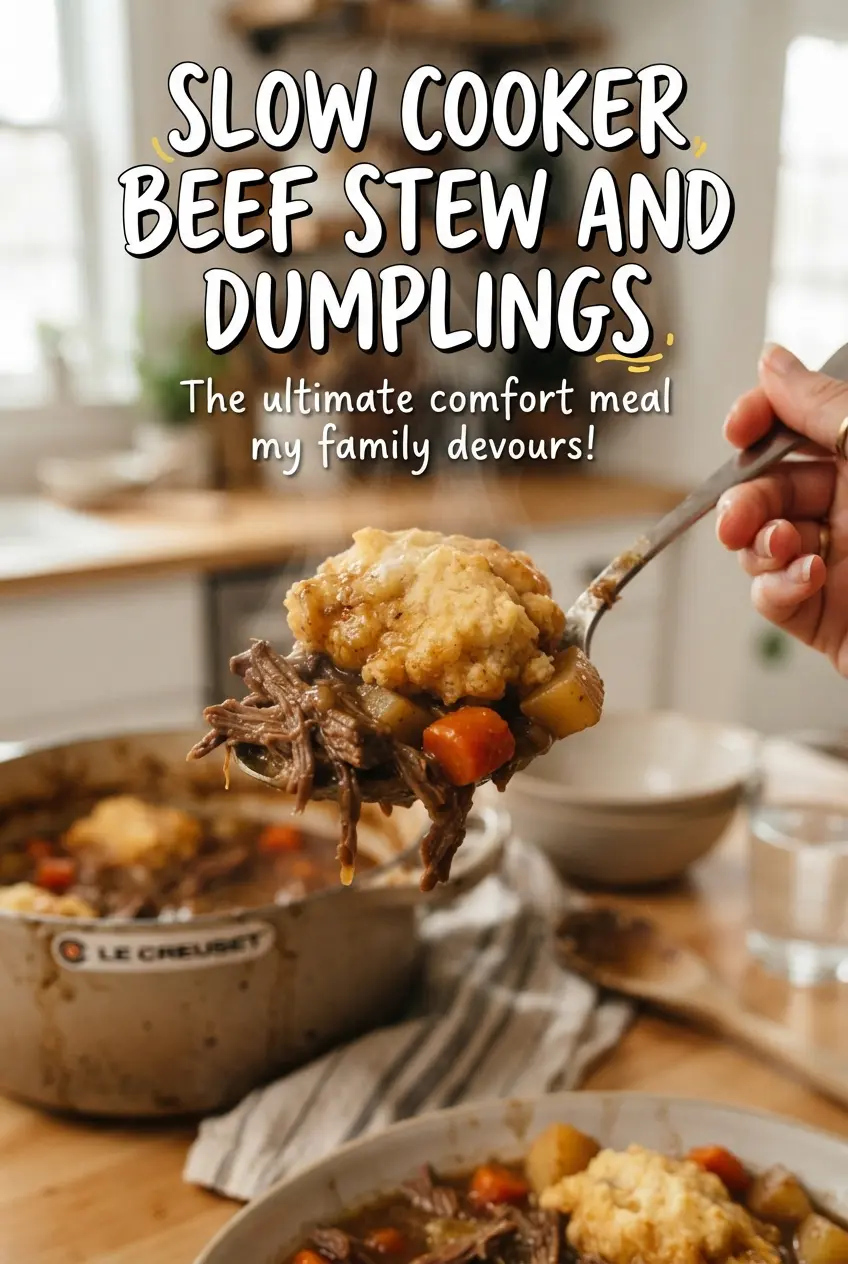
The beef was tender enough to break apart with a spoon, and the dumplings stayed fluffy instead of gummy even after the full 35 minutes. I loved that the stew thickened up on its own from the flour on the beef.
Save this slow cooker beef stew and dumplings for the night you want tender beef, thick gravy, and fluffy herb dumplings in one bowl.
The Browned Beef Is What Keeps This Stew From Tasting Flat
The biggest mistake in slow cooker beef stew is treating the beef like it can just go straight into the pot raw and somehow turn deep and savory later. It won’t. Browning the flour-coated beef first gives you color, better flavor, and a head start on thickening the broth as it cooks. Those browned bits on the pan are not optional garnish; they’re the base of the stew’s taste.
The other thing that matters is heat management. The slow cooker is doing tenderness, not rescue work. If the pot starts out with watery broth and no browned surface flavor, it tends to finish tasting thin no matter how long it cooks. That’s why the tomato paste goes in with the aromatics and why the Worcestershire matters — both bring a darker, rounder savory note that keeps the stew from tasting one-note.
- Beef chuck — Chuck is the cut that softens instead of drying out over a long cook. Leaner beef gets stringy and chalky before it ever turns tender.
- Flour — The light flour coating helps the beef brown and gives the stew a little built-in body. A cornstarch slurry at the end can thicken, but it won’t give the same rounded texture.
- Tomato paste — This isn’t here to make the stew taste like tomato. It deepens the color and adds concentrated savoriness that reads as richer beef flavor.
- Bisquick — It keeps the dumplings soft and dependable. You can swap in a homemade biscuit mix, but use a mix that already has leavening or the dumplings won’t puff the same way.
What Each Ingredient Is Actually Doing in This Recipe
- Primary ingredient (the star) — Quality matters most. Choose the best you can find.
- Cooking medium (oil, butter, or broth) — This carries flavors and prevents dryness.
- Seasonings (salt, pepper, spices, herbs) — Layer flavors so nothing overpowers. Build depth gradually.
- Aromatics (garlic, onion, herbs) — Cook with fat to bloom flavors. Become the foundation.
- Supporting ingredients — Complement the main ingredient without overpowering it.
- Sauce or liquid (if applicable) — Brings flavors together. Balance richness with acid.
- Acid (lemon, vinegar, wine, or other) — Brightens and prevents flat-tasting results.
- Final finish (garnish, glaze, or sauce) — Prevents one-dimensional taste and adds visual appeal.
Getting the Dumplings to Steam Through Without Turning Dense
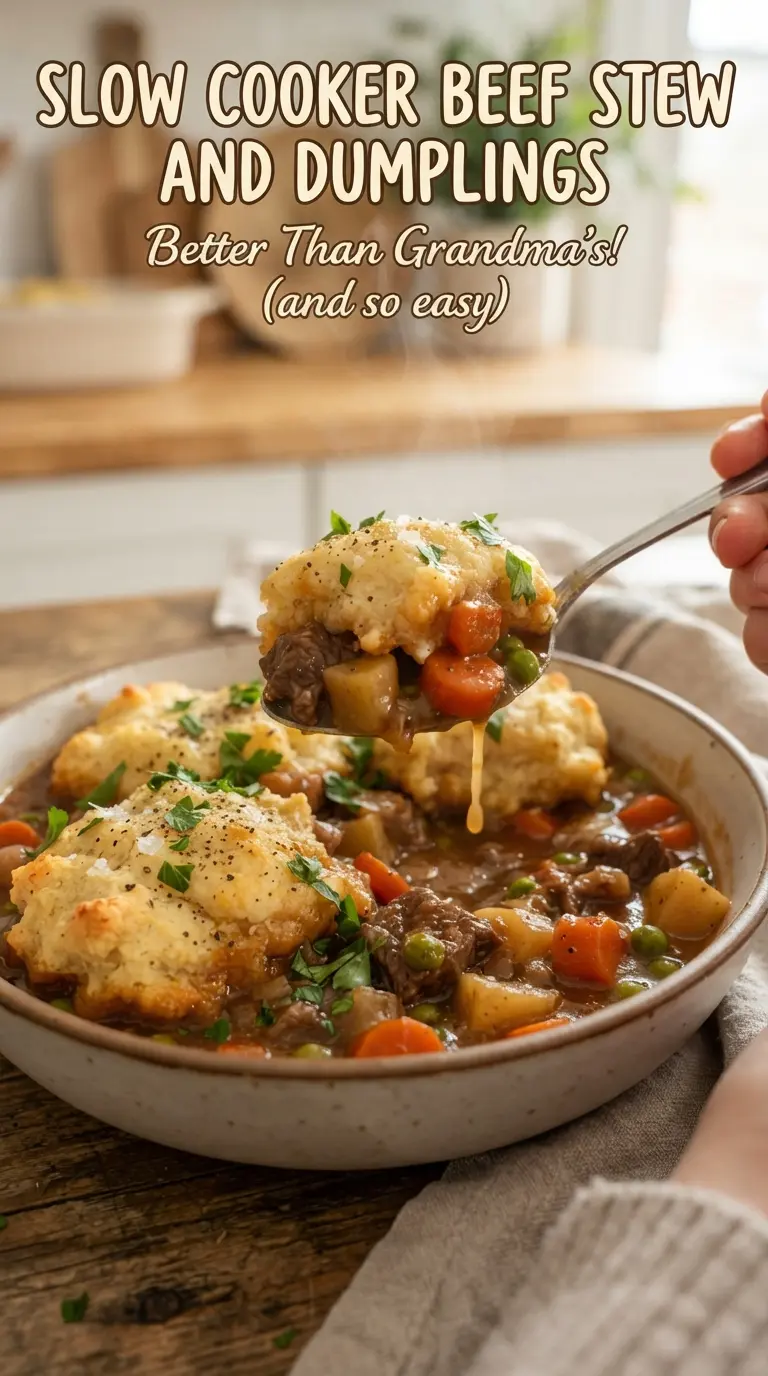
The dumpling stage is where people get nervous, and for good reason. If the lid comes off too often, the heat drops and the dumplings turn gummy or undercooked in the center. If the dough is too wet, they spread into the stew instead of sitting on top and steaming into light, pillowy lumps. The goal is a soft dough that drops in neat tablespoons and holds its shape just long enough to rise.
Turn the slow cooker to HIGH before you add them so the surface heat comes back up quickly. Then work fast, drop the dough over the bubbling stew, and leave the lid alone for the full 30 to 35 minutes. When they’re done, the tops will look set and matte instead of wet, and a dumpling pulled from the center should feel springy, not pasty.
Browning the Beef First
Toss the beef with flour, salt, and pepper until every piece is lightly coated, then brown it in hot oil in batches. Crowding the pan steams the meat, which means less color and less flavor in the finished stew. You’re looking for deep brown edges, not just a gray surface, because that’s where the savory base starts.
Building the Slow Cooker Base
Add the onion, garlic, tomato paste, broth, Worcestershire, carrots, celery, potatoes, and thyme over the browned beef. The tomato paste should be stirred into the hot pan first if you can spare the minute, because that brief sizzle takes the raw edge off. If the broth looks skimpy, trust the process; the vegetables and beef release liquid as they cook, and the stew thickens along the way.
Cooking Until the Beef Gives Easily
Cover and cook on LOW for 8 hours, or until the beef breaks apart with a fork and the potatoes are tender all the way through. If the beef still feels tight, it needs time more than heat. Rushing it on HIGH can make the edges dry before the center softens, which is the opposite of what you want in stew meat.
Dropping the Dumplings on Top
Mix the Bisquick, milk, and parsley into a soft dough, then drop tablespoons of it over the hot stew. Don’t stir them in. They need to sit on the surface where the steam can cook them evenly. Keep the lid on for 30 to 35 minutes and resist the urge to check early, because that lost steam is exactly what keeps dumplings from rising properly.
How to Adapt This for What’s in Your Kitchen
Gluten-Free Dumpling Swap
Use a gluten-free baking mix that includes leavening in place of Bisquick, and keep the dough slightly soft rather than dry. The texture will still be tender, but the dumplings may spread a little more than the original because gluten-free blends usually need less handling and more exact moisture.
Dairy-Free Version
Swap the milk in the dumplings for unsweetened plain oat milk or almond milk. The dumplings will still steam up fluffy, though oat milk gives a slightly better richness. Skip anything strongly flavored, because the topping should taste like a soft biscuit, not the milk you used.
No Bisquick on Hand
Use a homemade biscuit mix or another all-purpose baking mix with baking powder already added. If you only have flour, you’ll need to build the leavener into the dough yourself, or the topping will bake up heavy instead of fluffy.
Storage and Reheating
- Refrigerator: Store in an airtight container for up to 4 days. The dumplings will soften as they sit, but the stew flavor gets even better by the next day.
- Freezer: The stew freezes well, though the dumplings lose some of their original texture after thawing. For best results, freeze the stew without the dumplings and add a fresh batch when reheating.
- Reheating: Warm gently on the stovetop over low heat or in the microwave at medium power. If it’s too hot too fast, the beef tightens up and the dumplings can turn rubbery before the center is warm.
Questions I Get Asked About This Recipe
Slow Cooker Beef Stew and Dumplings
Ingredients
Equipment
Method
- Toss the beef chuck with the all-purpose flour, salt, and black pepper until evenly coated, then brown in hot olive oil in a skillet over high heat before transferring to the slow cooker.
- Add the diced onion, minced garlic, tomato paste, beef broth, Worcestershire sauce, sliced carrots, sliced celery, halved baby potatoes, and dried thyme to the slow cooker.
- Cover and cook on LOW for 8 hours, or until the beef is tender.
- Turn the slow cooker to HIGH and stir the Bisquick baking mix, milk, and fresh parsley into a soft dough.
- Drop tablespoons of the dumpling dough over the hot stew, cover, and cook on HIGH for 30-35 minutes without lifting the lid until the dumplings are cooked through.