Bright, salty, and packed with the kind of crunch that holds up after a long chill, Classic Italian Pasta Salad earns its place at potlucks because it stays lively instead of turning dull and soggy. The tri-color rotini catches the dressing in every curve, the pepperoni brings a little chew and spice, and the mozzarella softens just enough to feel creamy without falling apart.
The trick is in the balance. Rinsing the pasta stops the cooking fast and keeps the salad from steaming itself into mush, while the dressing goes in while the pasta is cool so it clings instead of sliding off. A short rest helps the flavors settle, but the vegetables still need enough bite to stand up to the dressing.
Below you’ll find the small details that matter here: when to add the cheese so it doesn’t get greasy, how to keep the onions from taking over, and what to do if the salad looks dry after chilling. Those little fixes are what turn a decent pasta salad into one people keep going back for.
I chilled it overnight and the pasta soaked up the dressing without getting soft. The pepperoni stayed chewy, the mozzarella held its shape, and it tasted even better the next day.
Love the pepperoni, mozzarella, and Italian dressing combination? Save this Classic Italian Pasta Salad for your next potluck or make-ahead lunch.
The Dressing Has to Coat, Not Pool
The biggest mistake with pasta salad is treating the dressing like a sauce. It isn’t. This dish works when the pasta absorbs enough flavor to taste seasoned, but every piece still looks glossy instead of wet. That happens when the pasta is drained well, cooled before dressing, and tossed again after chilling so the oil and vinegar redistribute.
If the pasta is still warm, it drinks up too much dressing and the salad can turn greasy. If it’s icy cold straight from the fridge, the dressing stays clumped at the bottom of the bowl. Room-temperature pasta that has been rinsed and drained well gives you the best balance.
What Each Ingredient Is Doing in the Bowl
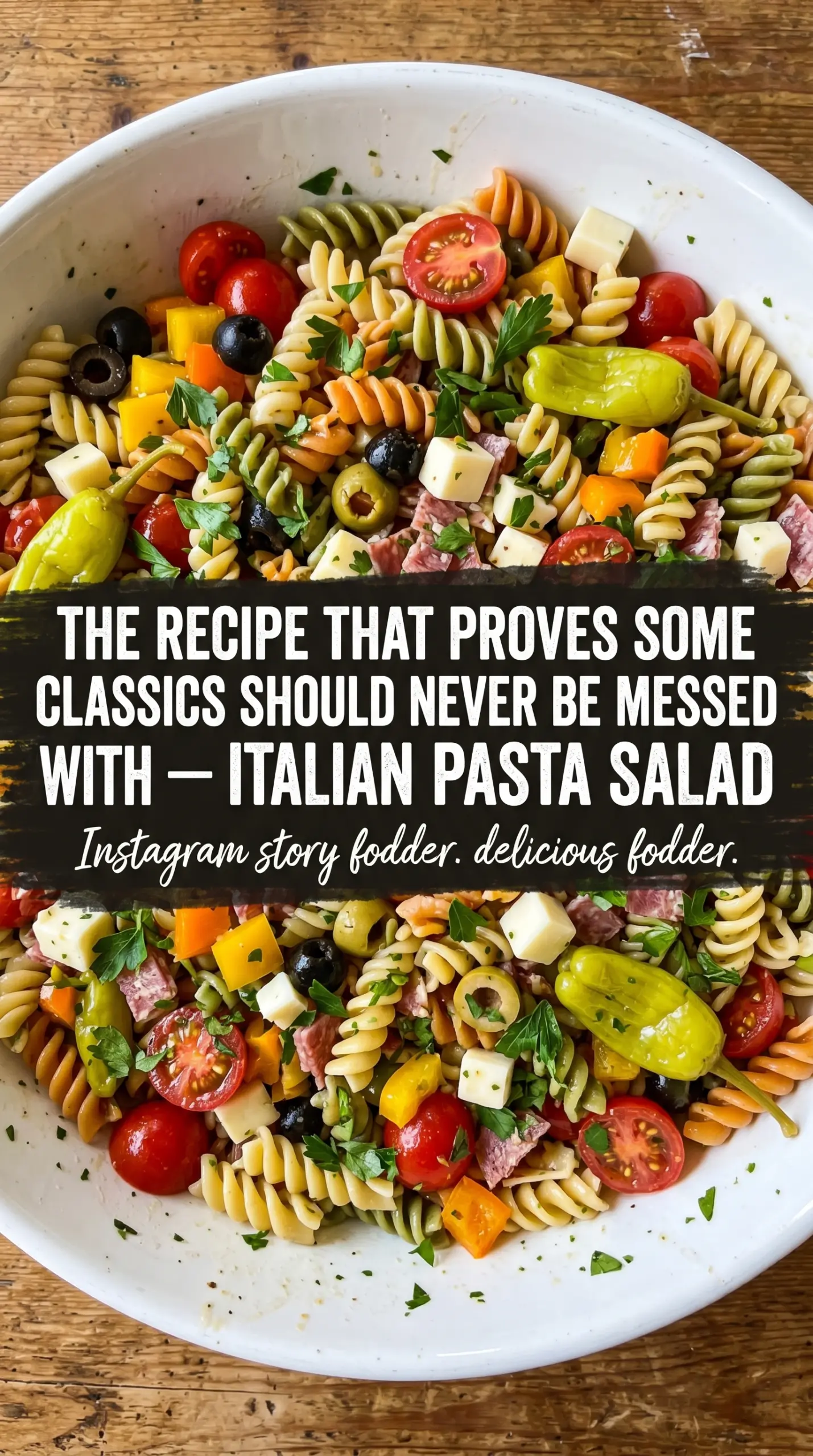
- Tri-color rotini — The spirals hold onto the dressing and small bits of seasoning better than straight noodles. Rotini also stays sturdy after chilling, which matters when the salad needs to sit for a few hours.
- Italian dressing — This is the backbone of the dish, so use one you actually like straight from the bottle. A sharper dressing gives the salad more bite, while a milder one needs extra Parmesan and seasoning to wake it up.
- Pepperoni — Halving the slices keeps the texture from feeling oversized and lets the fat season the pasta without dominating every forkful. Turkey pepperoni works, but it’s leaner and a little less rich.
- Mozzarella — Cubed mozzarella gives you those soft, milky bites that break up the salt and acidity. Fresh mozzarella is too wet here; use a low-moisture block or pre-cut cubes so the salad stays tidy.
- Cherry tomatoes, bell pepper, olives, and red onion — These bring crunch, acid, and color. Dice them evenly so every bite feels balanced, and keep the onion fine enough that it sharpens the salad instead of taking it over.
- Parmesan and Italian seasoning — Parmesan adds a salty finish that bottled dressing can’t fully give you, and the seasoning reinforces the herbs already in the dressing. If the dressing is bold, use a lighter hand with both until the final taste.
Getting the Chill Time Right Without Losing Texture
Cooking the Pasta to a Firm Bite
Cook the rotini just to al dente, then drain and rinse it under cold water until it stops steaming. That quick rinse does two things: it stops the cooking and washes away surface starch so the dressing can cling cleanly. If the pasta is soft before it chills, it will go mushy by the time you serve it.
Building the Bowl in the Right Order
Add the pasta, vegetables, pepperoni, and mozzarella to a large bowl first, then pour in the dressing, Parmesan, and Italian seasoning. Toss from the bottom up so the heavier pieces don’t stay dry underneath. If you dump the dressing on top and stir once, the bottom gets salty and the top tastes bare.
Letting the Flavor Settle
Chill the salad for at least 3 hours, and give it one or two tosses while it rests if you can. That little bit of movement helps the pasta absorb flavor evenly instead of leaving a puddle at the bottom. Before serving, taste again and add a splash more dressing if the pasta has soaked up more than you expected.
The Final Toss Before Serving
Cold pasta salad always tightens up in the fridge. Right before it goes to the table, stir it well and look for a light sheen on every piece. If it seems dry, add a small amount of dressing at a time; if it seems heavy, a handful of extra tomatoes or bell pepper brings the balance back.
How to Change This Pasta Salad Without Losing the Point
Make It Meat-Free
Skip the pepperoni and add extra olives, chopped roasted red peppers, or marinated artichokes for more punch. You lose the smoky, salty chew from the pepperoni, so the salad leans more bright and briny, which still works well with Italian dressing.
Use Gluten-Free Pasta
A sturdy gluten-free rotini works here, but cook it just until done and rinse it well so it doesn’t stick together. Gluten-free pasta can soften faster than regular pasta, so chill it for the shorter end of the time range if you’re making it the same day.
Swap the Dressing for Homemade
A homemade Italian dressing gives you a fresher, sharper finish and lets you control the salt. Use the same amount, but taste after chilling because homemade dressings often mellow less than bottled ones.
Make It a Little Heartier
Add salami, chickpeas, or diced provolone if you want a more filling side or a light lunch. Each one changes the balance a bit: salami pushes it richer, chickpeas make it more picnic-friendly, and provolone adds a firmer cheese bite than mozzarella.
Storage and Reheating
- Refrigerator: Keeps for 3 to 4 days. The pasta will absorb more dressing as it sits, so expect the salad to soften slightly by day two.
- Freezer: This one doesn’t freeze well. The pasta and vegetables lose their texture once thawed, and the dressing separates.
- Reheating: Don’t reheat it. Serve it cold straight from the fridge, then toss with a little extra dressing if it looks dry. That’s the fix when a chilled pasta salad tastes flat after sitting.
Answers to the Questions Worth Asking
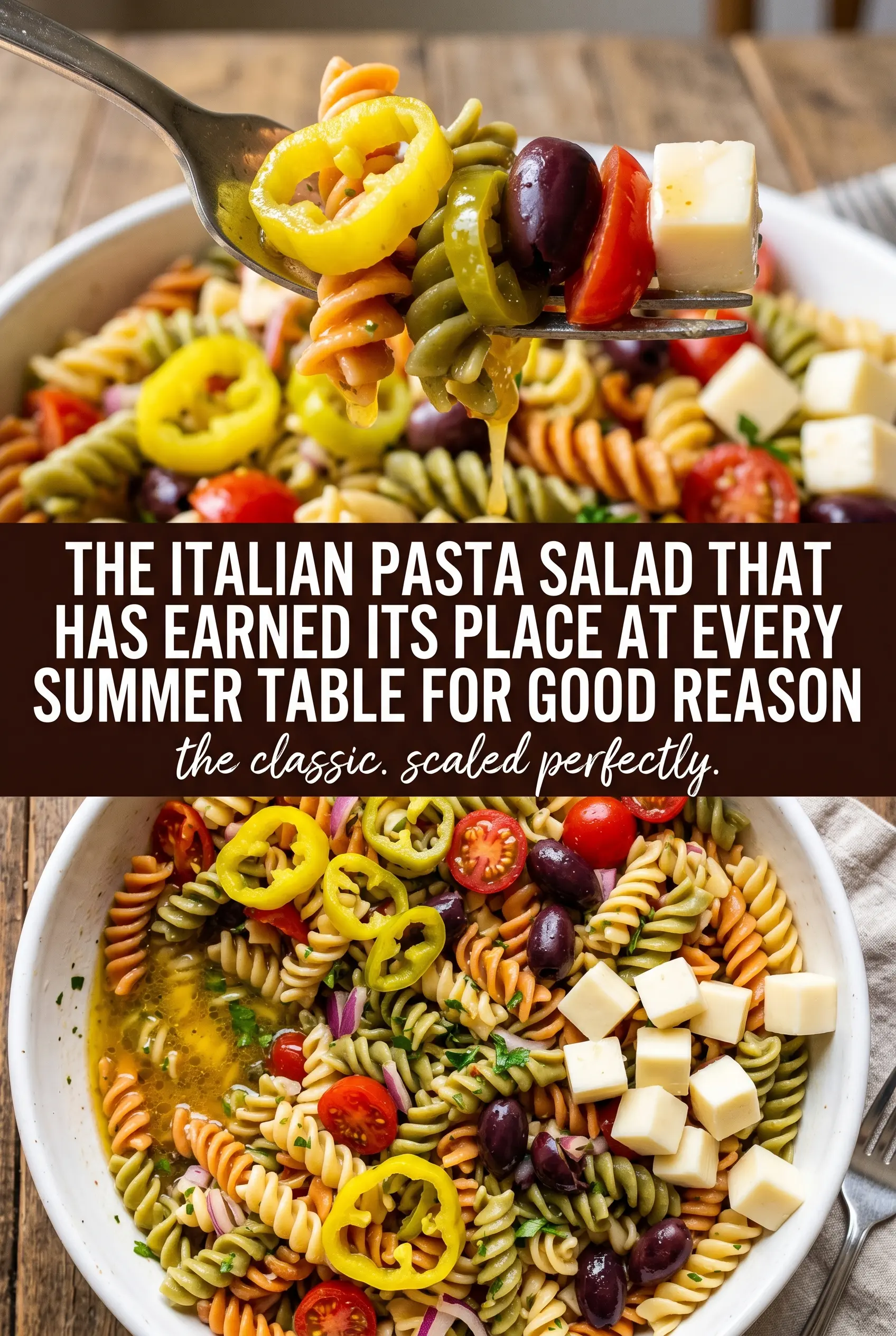
Classic Italian Pasta Salad
Ingredients
Equipment
Method
- Cook the tri-color rotini pasta according to package directions until tender, then drain. Rinse under cold water to stop cooking and cool it quickly.
- In a large bowl, combine the cooled pasta with pepperoni, mozzarella, cherry tomatoes, green bell pepper, black olives, and red onion. Fold gently so the tri-color pasta stays visible.
- Pour in the Italian dressing and add Parmesan cheese and Italian seasoning, then toss until everything is evenly coated. The mixture should look glossy from the dressing.
- Season with salt and pepper to taste, then toss again. Taste and adjust so the flavors pop without being overpowering.
- Cover and refrigerate for at least 3 hours or overnight, tossing occasionally. The pasta should look more set and the vegetables should soften slightly while staying crisp.
- Before serving, toss again and add more Italian dressing if needed to loosen the salad. Serve cold for the best texture and flavor.