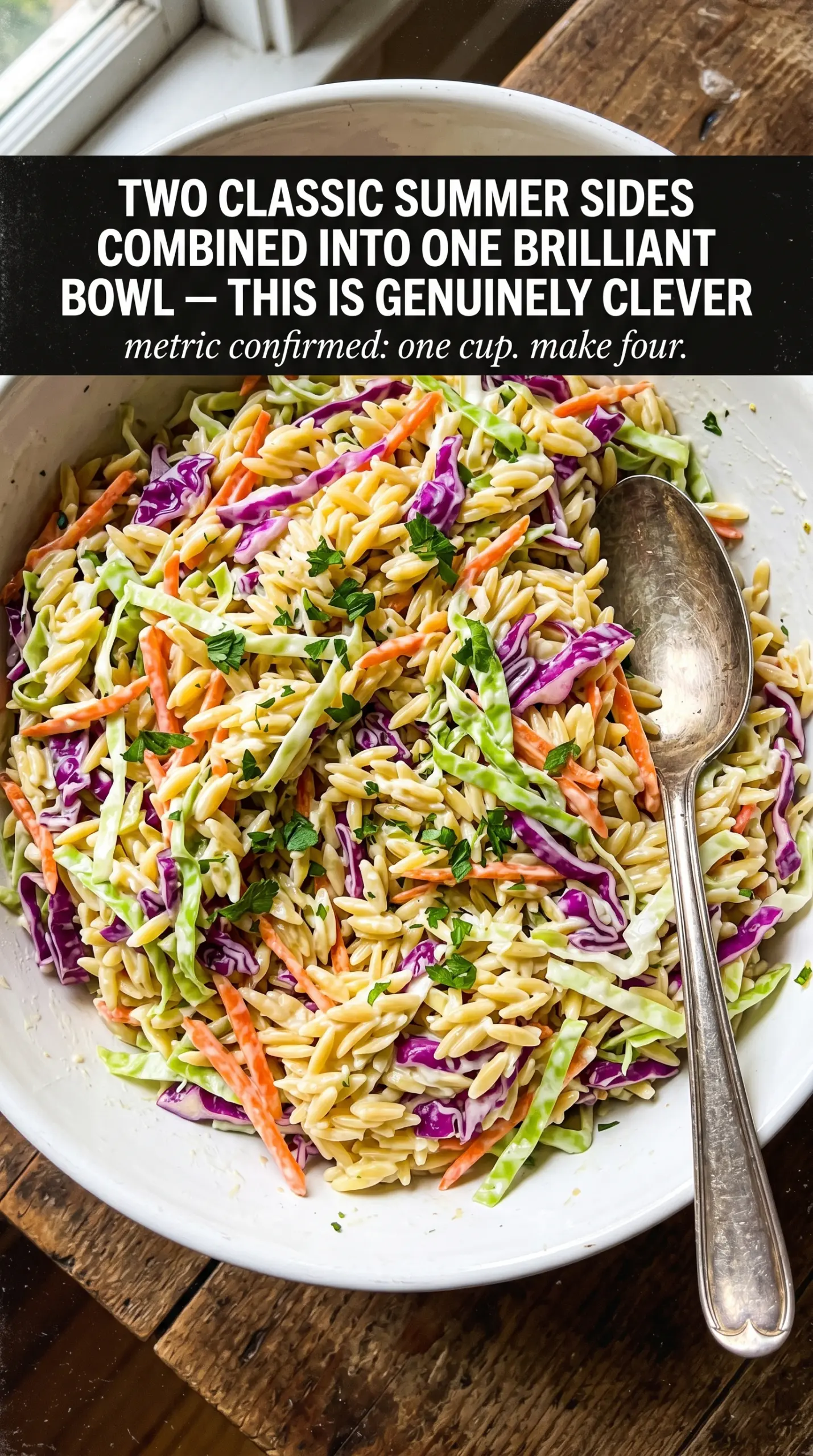
Tiny orzo, crisp cabbage, and a tangy creamy dressing make this coleslaw orzo salad the kind of side dish that disappears fast at cookouts and potlucks. It lands somewhere between pasta salad and classic slaw, but the orzo gives it a softer, more substantial bite that makes it feel a little more complete on the plate.
The trick is in the balance. The dressing needs enough acidity to wake up the mayonnaise and sour cream, and the cabbage needs time to soften just a little so the salad eats cleanly instead of feeling dry and shredded. Rinsing the orzo after cooking stops it from clumping and keeps the salad cool and fresh once it chills.
Below, I’ll show you how to keep the dressing from turning heavy, why the rest time matters, and a couple of easy ways to adjust the texture if you want it a little creamier or a little crunchier.
I was skeptical about mixing orzo with coleslaw, but the dressing coated everything evenly and the cabbage softened just enough after chilling. It held up great for lunch the next day, too.
Pin this creamy coleslaw orzo salad for an easy side dish with crisp cabbage, tender pasta, and a tangy chill-time finish.
The Chill Time That Keeps the Dressing From Getting Heavy
A lot of creamy pasta salads go wrong because the dressing is treated like a coating instead of an ingredient that needs time to settle in. This salad tastes best after a full hour in the fridge because the cabbage softens slightly, the orzo absorbs some of the tang, and the dressing loosens into the pasta instead of sitting on top in a thick layer. If you skip the chill, the salad can taste sharp and a little disjointed.
Rinsing the orzo matters here more than it does in hot pasta dishes. You want it cold and separate before it meets the dressing, or the mayonnaise mixture can turn pasty as it clings to warm pasta. The goal is a salad that feels coated and cool, with each bite carrying a little crunch from the cabbage and a little softness from the orzo.
What Each Ingredient Is Actually Doing During the Final Chill
- Dressing base (mayo or oil) — As the salad chills, the dressing firms up and coats everything more evenly. The richness becomes less apparent and more integrated.
- Pasta absorbing dressing — The pasta continues to absorb flavor and seasoning as it chills. This is when the salad really comes together as one cohesive dish.
- Cold temperature mellowing the flavors — Cold mutes flavor perception, so bold seasoning tastes balanced when cold. The salad won’t taste harsh after chilling.
- Vegetables releasing subtle liquid — Fresh vegetables slowly release their juice into the dressing. This adds flavor without making the salad watery if done properly.
- Seasonings distributing evenly — As the salad sits and everything chills together, the seasoning distributes throughout. No more pockets of over- or under-seasoning.
- Acid becoming integrated — The vinegar or lemon juice becomes part of the dressing instead of tasting sharp. The acid integrates with the oil and other components.
- Herbs infusing their flavor — Hardy herbs become more mellow and integrated. Tender herbs added before chilling may wilt, so add them fresh right before serving.
- Proper chilling time (2-4 hours minimum) — Don’t rush the chill. The flavors need time to settle and the whole dish needs to come together properly.
What the Dressing Is Doing Besides Tasting Good
- Mayonnaise — This gives the salad its body and makes the dressing cling to the pasta. Use a good jarred mayo here; homemade isn’t necessary, but a thin or overly sweet mayo will make the salad taste flat.
- Sour cream — It lightens the texture and adds a cleaner tang than mayo alone. If you need a substitute, plain Greek yogurt works, but the salad will taste a little sharper and less plush.
- Apple cider vinegar — This keeps the dressing from feeling heavy and wakes up the cabbage. White vinegar works in a pinch, but cider vinegar gives a rounder edge that fits the slaw flavor better.
- Celery seed — This is the ingredient that makes the salad taste like coleslaw instead of just creamy pasta. Don’t skip it unless you have to, because it gives the whole bowl that familiar deli-style note.
- Coleslaw mix — A bagged mix is perfect here because the shred size is consistent and the carrots add color without extra prep. If you shred your own cabbage, cut it a little finer than you think so it softens enough during the chill.
- Green onions — These cut through the richness and keep the salad from feeling one-note. Use both white and green parts for the best balance.
How to Keep the Orzo Salad Creamy, Not Gloppy
Cooking the Orzo to the Right Bite
Boil the orzo in well-salted water until just tender, then drain it right away and rinse under cold water. That rinse stops the cooking and removes the starch that would otherwise make the salad sticky. If the pasta sits too long in the colander while it’s hot, it starts clumping, and the dressing never coats it evenly.
Whisking a Dressing That Stays Smooth
Stir the mayonnaise, sour cream, vinegar, sugar, celery seed, salt, and pepper until the mixture looks completely smooth before it touches the bowl. The sugar should disappear and the dressing should taste a little punchy on its own, since the pasta and cabbage will mellow it out later. If the dressing tastes bland at this stage, the finished salad will taste flat after chilling.
Letting the Salad Sit Before the Final Toss
Combine everything and toss until the orzo and cabbage are evenly coated, then refrigerate it for at least an hour. The cabbage softens just enough to stop feeling raw, and the dressing thickens slightly as it settles. Before serving, toss again and taste for salt and vinegar; cold salads almost always need one last adjustment right before they hit the table.
Three Easy Ways to Shift the Balance
Make It Lighter With Greek Yogurt
Swap half or all of the sour cream for plain Greek yogurt if you want a tangier, lighter salad. The texture turns a little tighter and the flavor gets sharper, which works well if you’re serving it next to rich barbecue or fried foods.
Add More Crunch for a Picnic-Style Salad
Fold in extra shredded cabbage or a handful of chopped celery if you want the salad to stay crisper after chilling. This version keeps more snap and feels a little closer to traditional coleslaw, but it won’t be as creamy or as pasta-forward.
Gluten-Free Version
Use a gluten-free orzo or another small gluten-free pasta with a similar shape. Cook it just to tender and rinse it well, because gluten-free pasta can soften fast and turn mushy if it sits in the dressing while still warm.
Turn It Into a Fuller Lunch Salad
Add chopped rotisserie chicken, diced ham, or canned chickpeas for a more substantial bowl. Chicken makes it feel like a full meal, while chickpeas keep it vegetarian and give you more bite without changing the dressing.
Storage and Reheating
- Refrigerator: Store covered for up to 3 days. The cabbage softens more as it sits, so the salad will lose some crunch by day two.
- Freezer: Don’t freeze this one. The dressing separates and the cabbage turns watery once thawed.
- Reheating: This salad is meant to be served cold. If it thickens too much in the fridge, stir in a spoonful of mayo or a splash of vinegar rather than warming it, which would break the texture.
Questions I Get Asked About This Recipe

Coleslaw Orzo Salad
Ingredients
Equipment
Method
- Bring a large pot of salted water to a boil and cook the orzo according to package directions. Cook until tender, then drain.
- Rinse the drained orzo with cold water to cool it down quickly and stop cooking. Visually, the pasta should look separate and no longer steam.
- Whisk mayonnaise, sour cream, apple cider vinegar, sugar, celery seed, salt, and pepper until smooth. The dressing should look glossy and evenly blended.
- In a large bowl, combine the cooled orzo, coleslaw mix, and green onions. Toss just until the cabbage is evenly distributed.
- Pour the dressing over the salad and toss until every piece of orzo and cabbage is coated. The mixture should look creamy with a lightly orange-cabbage color.
- Refrigerate for at least 1 hour so the cabbage softens slightly and the flavors meld. Keep it covered and chill at or below 40°F.
- Before serving, toss again and adjust seasoning with more salt and pepper if needed. Taste and check that the dressing clings but isn’t watery.