Golden cranberry walnut bread slices cleanly after it cools, with a tender crumb that stays moist from orange juice and just enough butter to keep each bite soft. The cranberries pop against the nutty walnuts, and the orange zest gives the loaf a bright, bakery-style aroma that makes the whole kitchen smell inviting. It’s the kind of quick bread that earns a permanent spot on the counter because it works for breakfast, snacking, or a simple dessert with a swipe of butter.
The balance matters here. Orange juice brings both moisture and acidity, which helps the baking soda do its job and keeps the crumb from tasting flat. The batter also stays better if you stop mixing as soon as the dry streaks disappear; overworking quick bread turns it tight and bready instead of tender. Chopping the cranberries keeps them from making the loaf fall apart in big wet pockets, and toasting the walnuts first gives the finished bread a deeper, richer flavor.
Below, I’ve included the small details that make this loaf work the way it should: how to avoid a gummy center, why the pan choice matters, and the easiest ways to swap in what you already have on hand without losing that bright cranberry-orange flavor.
The loaf baked up with a moist crumb and the cranberries stayed bright instead of sinking, which I always worry about. I toasted the walnuts first and it made a huge difference in the flavor.
Save this cranberry walnut bread for the next time you want a bright, tender loaf with toasted walnuts and a citrusy crumb.
The Part That Keeps Cranberry Bread from Turning Dense
The biggest mistake with quick bread is treating it like cake batter and beating it smooth. Once the flour goes in, you want to stir only until the dry pockets disappear. A few streaks are fine; overmixing develops the gluten and gives you a tight loaf instead of a tender slice that pulls apart cleanly.
The other place people lose the texture is in the pan. This loaf needs enough time to set in the middle, and the top can look finished before the center is done. Pull it only when the top is deeply golden and a tester comes out without wet batter. If the crust starts getting too dark before the center is set, lay a loose piece of foil over the top for the last 10 to 15 minutes.
What Each Ingredient Is Actually Doing in This Loaf
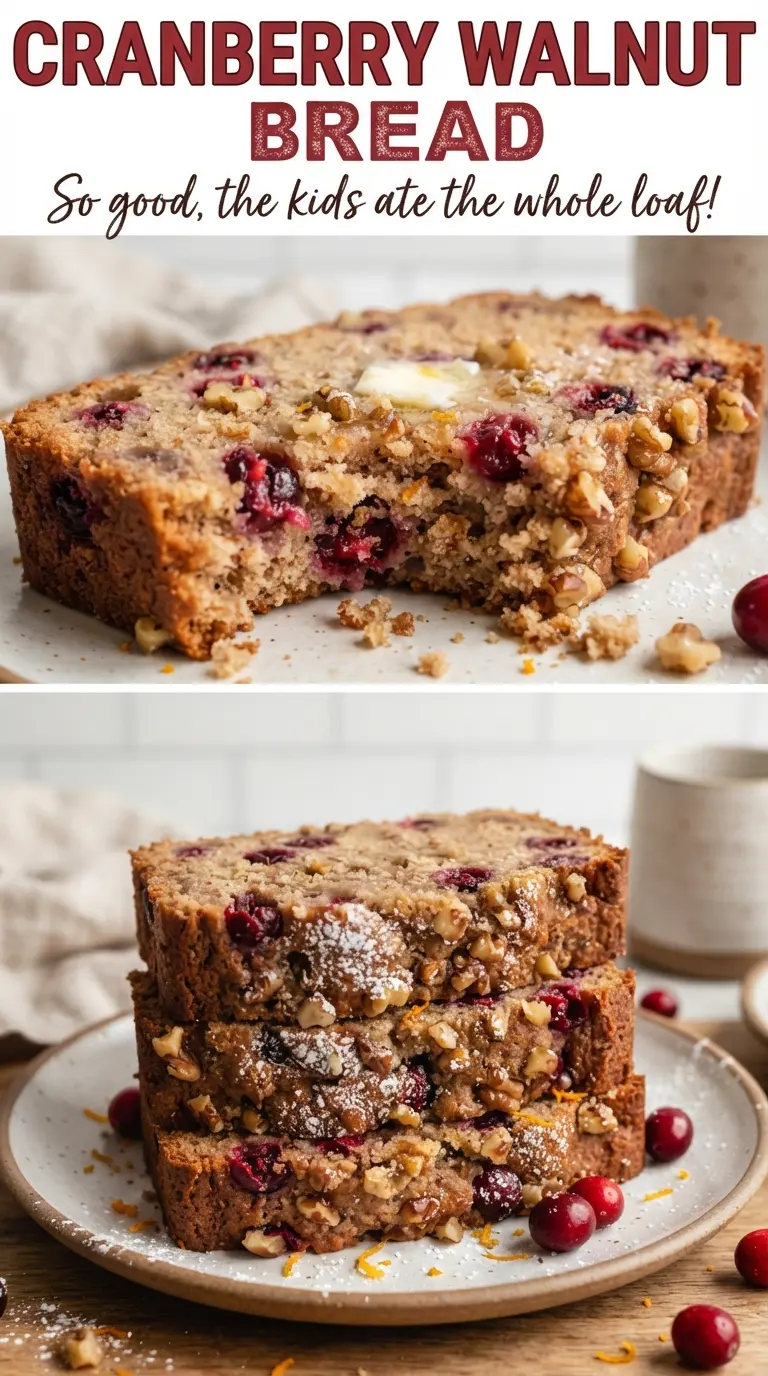
- Orange zest and orange juice — These are the backbone of the loaf’s flavor. The zest carries the strongest citrus aroma, while the juice adds moisture and a gentle acidity that helps the bread lift. Fresh orange juice is best here; bottled juice works in a pinch, but the flavor won’t be as vivid.
- Cranberries — Fresh or frozen both work, and you don’t need to thaw frozen berries first. Roughly chopping them keeps the loaf from tearing apart around huge juicy pockets. If you skip the chopping, you’ll get bigger bursts of tartness but a more fragile slice.
- Walnuts — Toasting them first matters. Untoasted walnuts can taste flat beside the bright fruit, while toasted walnuts bring a deeper, buttery note and a better crunch. If you need to swap them, pecans are the closest match.
- Butter and egg — Together they give the crumb enough richness to stay soft after baking. Melted butter keeps the mixing simple and gives a slightly denser, more tender quick bread texture than oil. The egg helps bind everything so the loaf slices neatly once cooled.
- Flour, sugar, baking powder, and baking soda — The sugar isn’t just for sweetness; it helps the loaf stay moist. The baking powder and baking soda work together because the orange juice brings enough acidity to activate the soda. That’s part of why this bread rises with a light, even crumb instead of a heavy center.
Building the Batter Without Beating the Tenderness Out of It
Mix the dry ingredients first
Whisk the flour, sugar, baking powder, baking soda, salt, and orange zest until the zest is evenly distributed. You want the zest rubbed through the dry mix so it doesn’t clump in one spot. This step wakes up the citrus oils and keeps the flavor from tasting patchy in the finished loaf.
Bring the wet mixture together
Whisk the orange juice, egg, melted butter, and vanilla until the egg is fully blended and the butter no longer sits in streaks. If the butter is too hot, it can scramble the egg or make the batter greasy, so let it cool for a minute before mixing. The wet ingredients should look smooth and glossy.
Stop mixing as soon as the flour disappears
Pour the wet mixture into the dry ingredients and stir only until the flour is just moistened. This batter should look a little rough, not polished. That uneven look is a good sign; if you keep stirring until it turns silky, the loaf gets tougher.
Fold in the fruit and nuts, then bake until set
Gently fold in the cranberries and walnuts, then spread the batter evenly into the prepared loaf pan. Bake until the top is golden and the center tests clean, which usually takes about an hour. Letting it cool in the pan for 10 minutes helps it set enough to release without breaking, but don’t leave it there too long or the bottom can turn damp.
Three Useful Ways to Adjust This Cranberry Walnut Bread
Make it dairy-free
Swap the melted butter for an equal amount of neutral oil or melted dairy-free butter. Oil gives the loaf a slightly softer, more uniform crumb, while dairy-free butter keeps more of the original flavor. The texture still bakes up well either way.
Use pecans instead of walnuts
Pecans bring a softer, sweeter nuttiness that works beautifully with the cranberry and orange. Toast them the same way you would walnuts, but keep an eye on them because pecans can go from fragrant to burnt fast. The loaf will taste a little rounder and less earthy.
Make it gluten-free
Use a cup-for-cup gluten-free flour blend that includes xanthan gum. The batter may look slightly thicker, and the loaf may need the full bake time for the center to set. Let it cool completely before slicing so it holds together better.
Storage and Reheating
- Refrigerator: Store tightly wrapped for up to 5 days. The crumb stays moist, though the walnuts soften a little by day two.
- Freezer: It freezes well. Wrap the whole loaf or individual slices tightly, then place in a freezer bag for up to 3 months.
- Reheating: Thaw at room temperature, then warm slices in a toaster oven or low oven for a few minutes. Microwaving for too long makes the bread rubbery, so use short bursts if that’s your only option.
Answers to the Questions Worth Asking
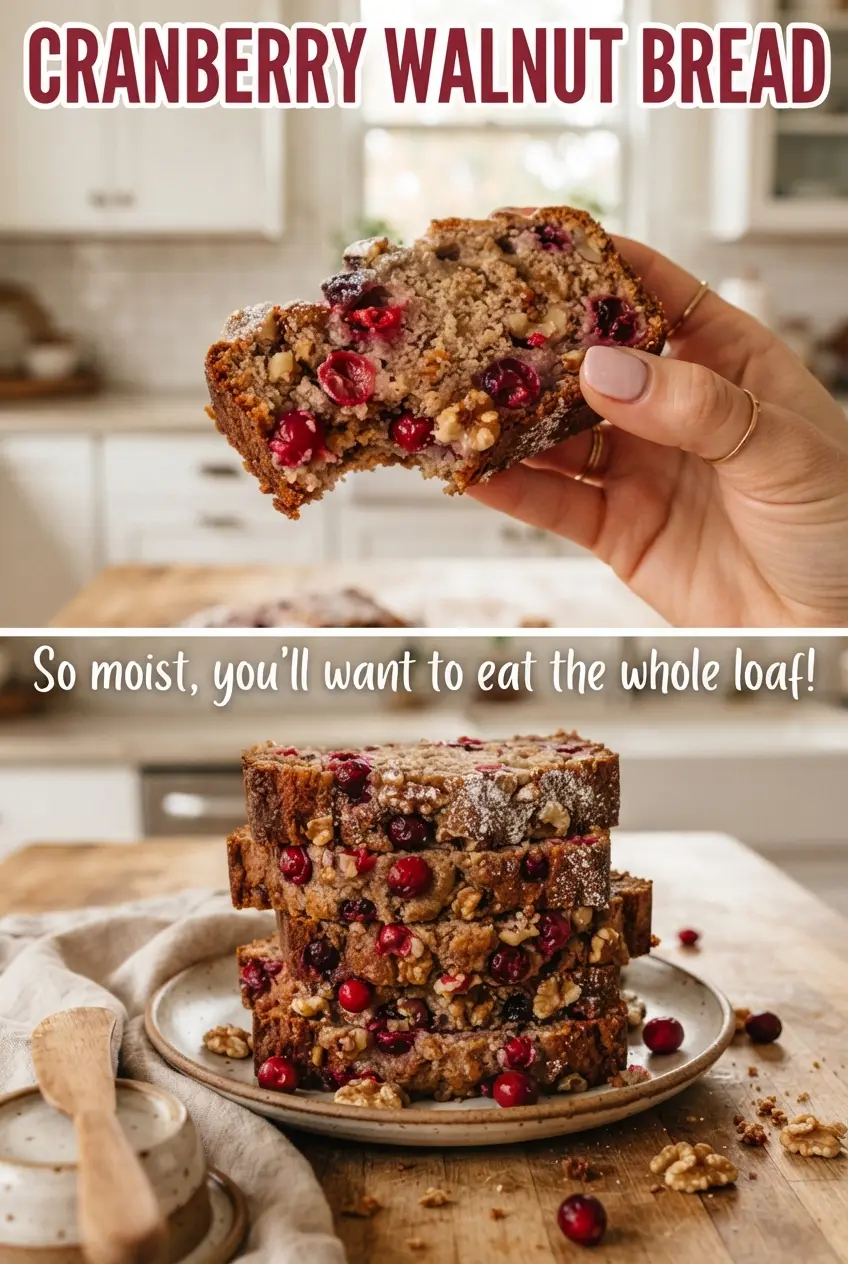
Cranberry Walnut Bread
Ingredients
Equipment
Method
- Preheat oven to 350F, then grease and line a 9x5-inch loaf pan with parchment.
- Whisk all-purpose flour, sugar, baking powder, baking soda, salt, and orange zest together until evenly combined.
- Whisk orange juice, large egg, melted butter, and vanilla extract together until smooth and fully blended.
- Stir wet into dry just until moistened, leaving the batter slightly lumpy.
- Fold in fresh or frozen cranberries and toasted walnuts, then spread the batter into the prepared loaf pan.
- Bake for 55-60 minutes at 350F, until golden and a toothpick comes out clean.
- Cool the loaf 10 minutes in the pan, then transfer to a rack to cool fully before slicing.