Italian pasta salad earns its place on the table because it stays lively instead of turning heavy. The rotini catches the dressing in every curve, the salami and mozzarella add enough richness to feel substantial, and the vegetables bring the crunch that keeps each bite moving. It’s the kind of side dish people keep circling back to at a potluck because it tastes even better after it has had time to sit.
The key is giving the pasta a cold rinse so it stops cooking and doesn’t soak up all the dressing before the salad has a chance to chill. A full bottle of Italian dressing might sound like a lot, but the pasta and cheese absorb some of it as they rest, and that’s what keeps the salad from tasting dry by the time it hits the table. Red onion, olives, and Parmesan do a lot of the seasoning work here, so you don’t need to complicate it.
Below you’ll find the timing trick that keeps the salad from going limp, plus a few swaps that make it work for different crowds without losing that classic antipasto feel.
The pasta soaked up the dressing perfectly after chilling, and the salami, olives, and peppers tasted even better the next day. I added a splash more dressing before serving and it was spot on.
Save this Italian pasta salad for potlucks, picnics, and easy make-ahead lunches with plenty of crunch.
The Dressing Needs Time to Soak In, Not Just Coat the Pasta
The biggest mistake with pasta salad is serving it right after tossing. At that point the dressing is only sitting on the outside, and the pasta still tastes separate from the rest of the bowl. Once it chills for a couple of hours, the rotini absorbs flavor from the dressing and everything starts tasting like one dish instead of a pile of ingredients.
Rinsing the pasta cold matters here because you want to stop the cooking fast and cool the surface down before the dressing goes in. If the pasta is still warm, it drinks up too much dressing too quickly and can go soft. Cold pasta holds its shape better, especially with sturdy rotini that needs to keep some bite after chilling.
- Rotini — The spirals trap dressing, chopped vegetables, and little bits of cheese. Short pasta with ridges works best here; long pasta or smooth shapes won’t carry the same amount of flavor.
- Italian dressing — This does the heavy lifting for acid, oil, herbs, and salt. Bottled dressing is fine, but use one you actually like because its flavor comes through clearly.
- Mozzarella and salami — These make the salad feel like an antipasto platter in pasta form. The mozzarella should be cut into cubes, not shredded, so it stays distinct and doesn’t disappear into the dressing.
- Red onion — Raw onion adds bite, but dice it small so it doesn’t dominate. If yours is sharp, soak it in cold water for 10 minutes and drain well before adding it.
What Each Ingredient Is Actually Doing During Dressing Absorption
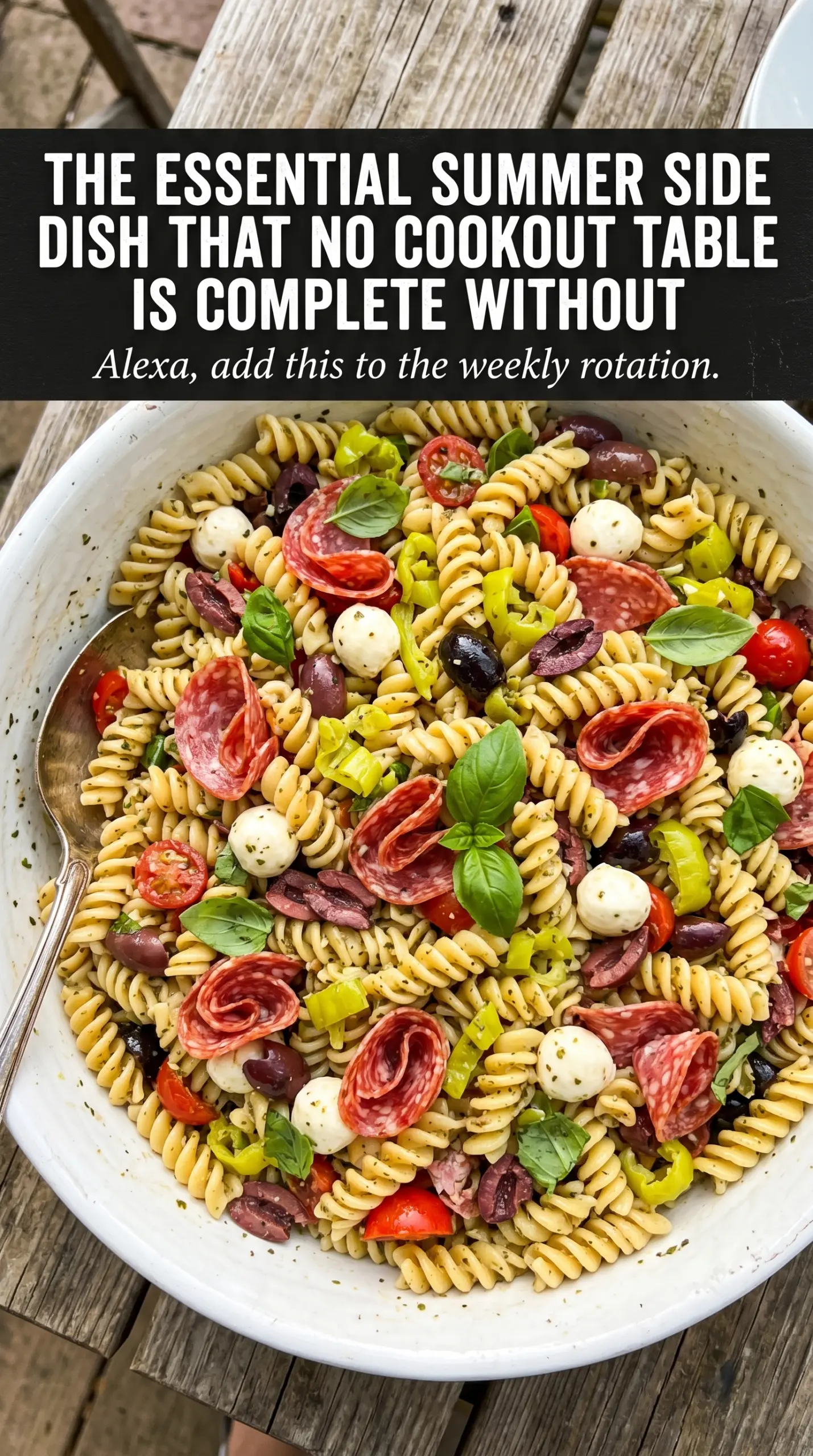
- Pasta cooked to tender (not soft) — The pasta should have a slight bite when first tossed. As it absorbs dressing, it softens to perfect texture.
- Dressing at room temperature (not hot or cold) — Room temperature dressing absorbs into the pasta more readily than cold dressing. Warm dressing makes everything too soft.
- Enough dressing to be fully absorbed — There should be no dressing pooling at the bottom when you’re done. The pasta should drink it all in over a few hours.
- Oil component in the dressing — Oil penetrates the pasta better than liquid alone. It also helps carry flavor throughout.
- Acid to activate absorption — The vinegar or lemon juice helps the pasta absorb the dressing more efficiently. It also seasons the pasta from the inside.
- Time (at least 2-3 hours for full absorption) — The pasta needs hours to fully absorb the dressing, not minutes. This is when the salad really comes together.
- Seasonings that are bold enough to penetrate — Gentle seasoning disappears into the pasta. Bold seasoning remains noticeable after absorption.
- No additional dressing added after initial toss — Once the pasta has absorbed the dressing, adding more makes it watery. The initial amount should be sufficient.
Building the Bowl So the Pasta Stays Firm and the Salad Stays Bright
Cook the Pasta Past the First Taste Test, Then Rinse It Cold
Boil the rotini until it’s just past al dente, then drain and rinse under cold water until the pasta is no longer warm. That extra rinse matters because pasta salad needs a firm texture after chilling, not the bite of freshly cooked noodles. If you skip the rinse, the dressing can get absorbed unevenly and the pasta can clump as it cools.
Dress the Pasta Before Everything Else
Toss the cooled pasta with the Italian dressing in the biggest bowl you own before adding the other ingredients. The pasta gets a head start on flavor this way, and the dressing finds its way into the spirals instead of only coating the outside of the finished salad. If the bowl looks a little wet at this stage, that’s fine; the cheese and vegetables will pull some of it in as the salad rests.
Add the Mix-Ins Once the Pasta Is Evenly Coated
Fold in the salami, mozzarella, tomatoes, olives, peppers, onion, Parmesan, and Italian seasoning after the pasta is dressed. Stir gently enough to keep the cheese cubes intact and the tomatoes from crushing into the bowl. If the salad looks crowded, keep turning it with a wide spoon until every bite has a little bit of everything.
Chill, Stir Again, Then Finish With More Dressing If Needed
Refrigerate the salad for at least 2 hours, stirring once or twice while it chills. This is when the flavors settle in and the dressing thickens slightly around the pasta. Right before serving, taste it and add a splash more dressing if the salad looks dry, because cold pasta often drinks up more than you expect.
How to Change This Italian Pasta Salad Without Losing the Point
Make It Vegetarian Without Making It Boring
Skip the salami and add extra mozzarella, more olives, and a handful of marinated artichoke hearts if you want more of that antipasto feel. You lose the salty, meaty chew, so the salad leans more on briny and cheesy flavors, but it still eats like a full side dish.
Use Gluten-Free Pasta That Can Handle a Chill
Choose a sturdy gluten-free rotini and cook it just until tender, not soft. Gluten-free pasta can get fragile after chilling, so rinse it well, toss it with dressing right away, and don’t let it sit warm in the pot.
Swap in Pepperoni for a Sharper, Saltier Bite
Pepperoni brings more spice and a little more grease than salami, which gives the salad a punchier deli flavor. Slice it into small pieces so it distributes evenly, and expect a slightly richer dressing coating where the pepperoni oil mingles with the Italian dressing.
Storage and Reheating
- Refrigerator: Store covered for up to 4 days. The vegetables stay crispest in the first 48 hours, and the pasta will keep soaking up dressing as it sits.
- Freezer: Don’t freeze it. The tomatoes, cheese, and dressing all lose their texture after thawing, and the pasta turns soft and watery.
- Reheating: Serve it cold straight from the fridge. If it has dried out, stir in a little extra Italian dressing 15 minutes before serving so the pasta has time to absorb it again.
Questions I Get Asked About This Recipe
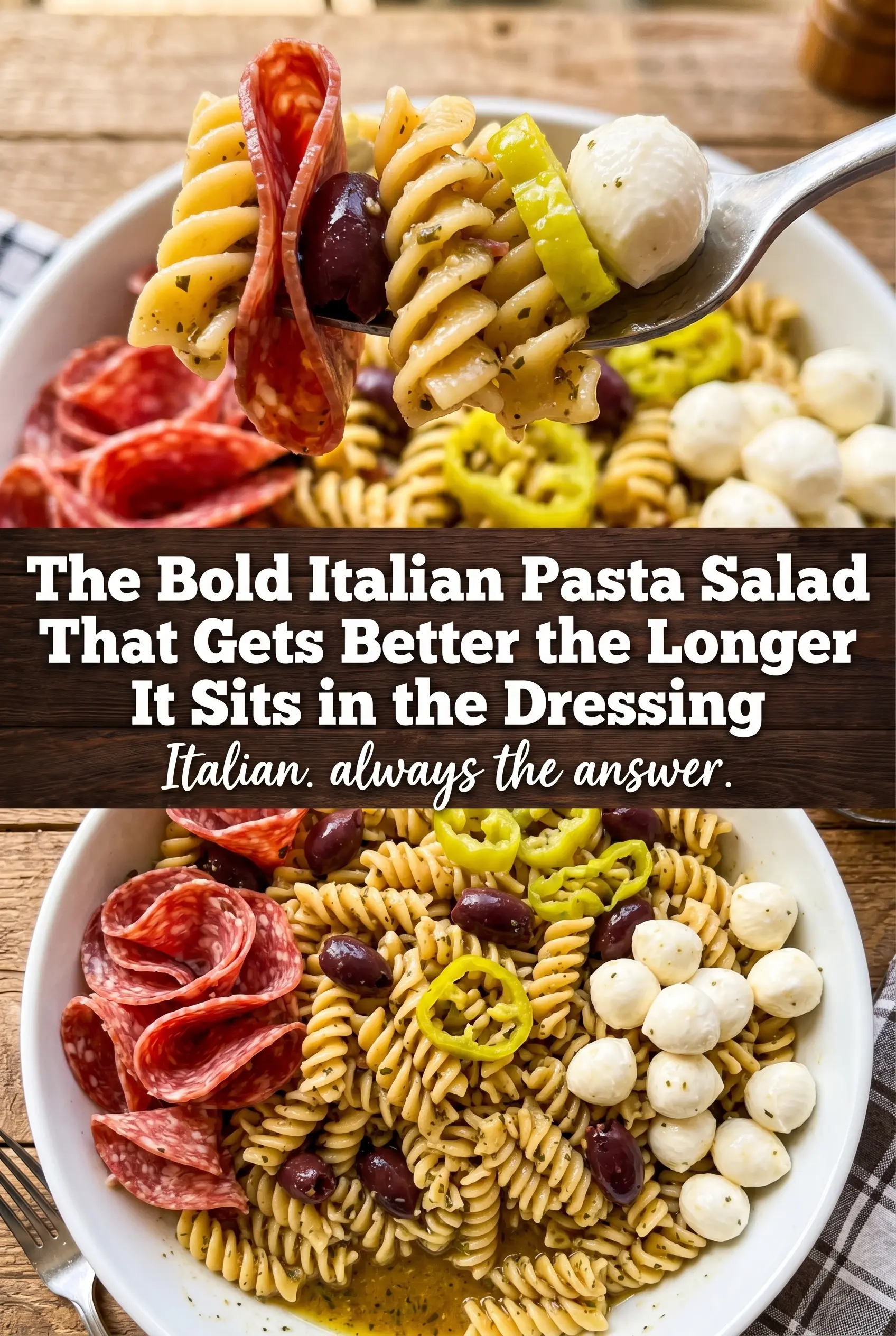
Italian Pasta Salad
Ingredients
Equipment
Method
- Cook the rotini pasta according to package directions until tender, then drain and rinse with cold water.
- Spread the rinsed pasta on a sheet pan to cool slightly before mixing.
- In a large bowl, combine the pasta with the Italian dressing and toss to coat evenly.
- Add the salami, mozzarella cheese, cherry tomatoes, black olives, green bell pepper, red bell pepper, and red onion.
- Sprinkle the Parmesan cheese and Italian seasoning over the top.
- Toss everything together until well combined and the dressing coats the pasta and vegetables.
- Refrigerate the pasta salad for at least 2 hours, tossing occasionally to keep the ingredients evenly dressed.
- Before serving, taste and add more Italian dressing if needed to loosen and coat.