Soft pumpkin chocolate chip cookies live or die by moisture balance, and this version gets it right. The centers stay plush and tender, the edges turn lightly caramelized, and the chocolate melts into pockets that keep each bite from tasting flat or cakey. A final shower of flaky sea salt wakes everything up and makes the pumpkin spice taste deeper instead of sweeter.
The trick is in the pumpkin itself. Blotting the puree dry before it goes into the dough keeps the cookies from spreading too little and baking up wet in the middle. Creaming the butter and sugars well gives the dough enough structure to hold those soft centers, while the mix of pumpkin pie spice and cinnamon gives the cookies that warm, bakery-style aroma without tasting muddy.
Below, I’ll walk you through the little details that matter here: how dry the pumpkin should be, why these cookies bake better at a slightly hotter temperature, and how to keep the chocolate chips from disappearing into the dough.
The pumpkin flavor came through without making the cookies cakey, and the salted chocolate edges were the first thing gone from the plate.
Save these Jessie James Decker pumpkin chocolate chip cookies for when you want soft centers, caramelized edges, and a salty chocolate finish.
The Real Reason These Cookies Stay Soft Instead of Puffy
Pumpkin cookies often miss the mark because the dough carries too much extra moisture. That gives you cakey cookies that don’t spread properly and taste more like muffin tops than a proper chocolate chip cookie. Blotting the pumpkin puree before it goes into the bowl changes everything. It concentrates the flavor and lets the butter, sugar, and flour do their job without fighting excess water.
The other detail that matters is the oven temperature. A 375°F bake helps the edges set fast enough to hold shape while the centers stay soft. If you bake these too cool, they dry out before they brown. If you overmix after the flour goes in, they turn tougher than they should, so fold just until the streaks disappear.
- Blotted pumpkin puree — This is the difference between soft cookies and wet dough. Press the puree between paper towels until it looks thicker and slightly paste-like, not shiny and loose.
- Brown sugar — It adds moisture and that deeper caramel note that works with pumpkin better than white sugar alone. Don’t swap it fully or the cookies lose some of their chew.
- Butter at room temperature — Soft, not melted. You need it to trap air when you cream it with the sugars, which gives the cookies structure.
- Semi-sweet chocolate chips — They balance the spice and keep the cookies from leaning too sweet. Chips work better here than chopped chocolate because they hold their shape and create those melty pockets.
What Each Ingredient Is Actually Doing in the Dough

- All-purpose flour — Gives the cookies their body. Too much flour makes them dry, so spoon and level it instead of packing the cup.
- Baking soda and baking powder — The soda helps with spread and browning, while the baking powder adds a little lift so the cookies stay tender in the middle.
- Pumpkin pie spice and cinnamon — These build the warm spice backbone. Cinnamon alone tastes flatter; the spice blend gives the cookies that bakery-style depth.
- Eggs — They bind the dough and help the cookies hold together even with the moisture from the pumpkin. Room-temperature eggs mix in more evenly.
- Vanilla — It rounds out the pumpkin and chocolate so the spices don’t taste sharp. Use the full amount; it matters here.
- Flaky sea salt — This is not just garnish. It sharpens the chocolate and keeps the cookies from tasting one-note.
Building the Dough So the Cookies Bake Up Thick and Tender
Creaming the Butter and Sugars
Beat the butter, brown sugar, and granulated sugar until the mixture looks pale and a little fluffy. That step gives the cookies their lift and keeps the texture from turning dense. If the butter is too warm, the dough will look greasy and the cookies will spread too much. Stop once the mixture looks smooth and a bit expanded, not oily.
Adding the Pumpkin Without Wrecking the Texture
Mix in the blotted pumpkin, eggs, and vanilla just until combined. The dough may look slightly loose at this stage, and that’s fine. What matters is that the pumpkin is fully distributed before the dry ingredients go in. If you skip the blotting step, the dough can turn slack and the cookies can bake up heavy in the center.
Folding in the Dry Ingredients and Chocolate Chips
Add the whisked dry ingredients and fold only until you stop seeing flour streaks, then add the chocolate chips. Overmixing here tightens the dough and makes the cookies less tender. A few turns of the spatula are enough. The dough should look soft and scoopable, not wet and batter-like.
Baking Until the Edges Set
Scoop the dough into 2-tablespoon rounds and bake until the edges are golden and the centers still look a touch underdone. That underbaked center finishes on the hot pan after you pull them out, which is what keeps the cookies soft for days. The biggest mistake is waiting for the tops to look fully set in the oven. By then, they’re already past the ideal point.
The Salt Finish
Sprinkle the flaky sea salt on right away while the chocolate is still warm and the tops are soft. The salt sticks better at that moment and gives each cookie that sweet-salty contrast in the first bite. Let them sit on the baking sheet for a few minutes before moving them. If you pick them up too soon, they can tear while the centers are still settling.
How to Adapt These Pumpkin Chocolate Chip Cookies Without Losing the Good Parts
Gluten-Free Version
Use a cup-for-cup gluten-free flour blend that includes xanthan gum. The cookies will still be soft, but they may spread a little less and taste slightly more delicate. Don’t use a single-ingredient flour like almond flour here; it won’t behave like wheat flour and the dough won’t hold the same shape.
Dairy-Free Swap
Replace the butter with a high-quality plant-based stick butter, not a tub spread. You’ll get similar spread and a decent chewy texture, though the cookies may brown a little differently. Keep the dough chilled for 15 minutes if it feels too soft after mixing.
More Chocolate, Less Spice
If you want a stronger chocolate-cookie feel, replace 1/2 cup of the chips with chopped dark chocolate. The chopped pieces melt into wider pools, while the chips keep their shape. The cookies will taste a little richer and less sweet.
Make-Ahead Dough
Scoop the dough first, then chill the portions on a tray until firm. Bake straight from the fridge, adding 1 to 2 minutes if needed. Cold dough holds its shape better, which helps these cookies bake with thicker centers and deeper edges.
Storage and Reheating
- Refrigerator: Store in an airtight container for up to 5 days. The cookies stay soft, though the chocolate firms up when chilled.
- Freezer: These freeze well baked or as scooped dough balls. Freeze in a single layer first, then move to a freezer bag for up to 2 months.
- Reheating: Warm baked cookies in the microwave for 8 to 10 seconds or in a 300°F oven for a few minutes. Don’t overheat them or the chocolate will seize and the centers will dry out.
Questions I Get Asked About This Recipe
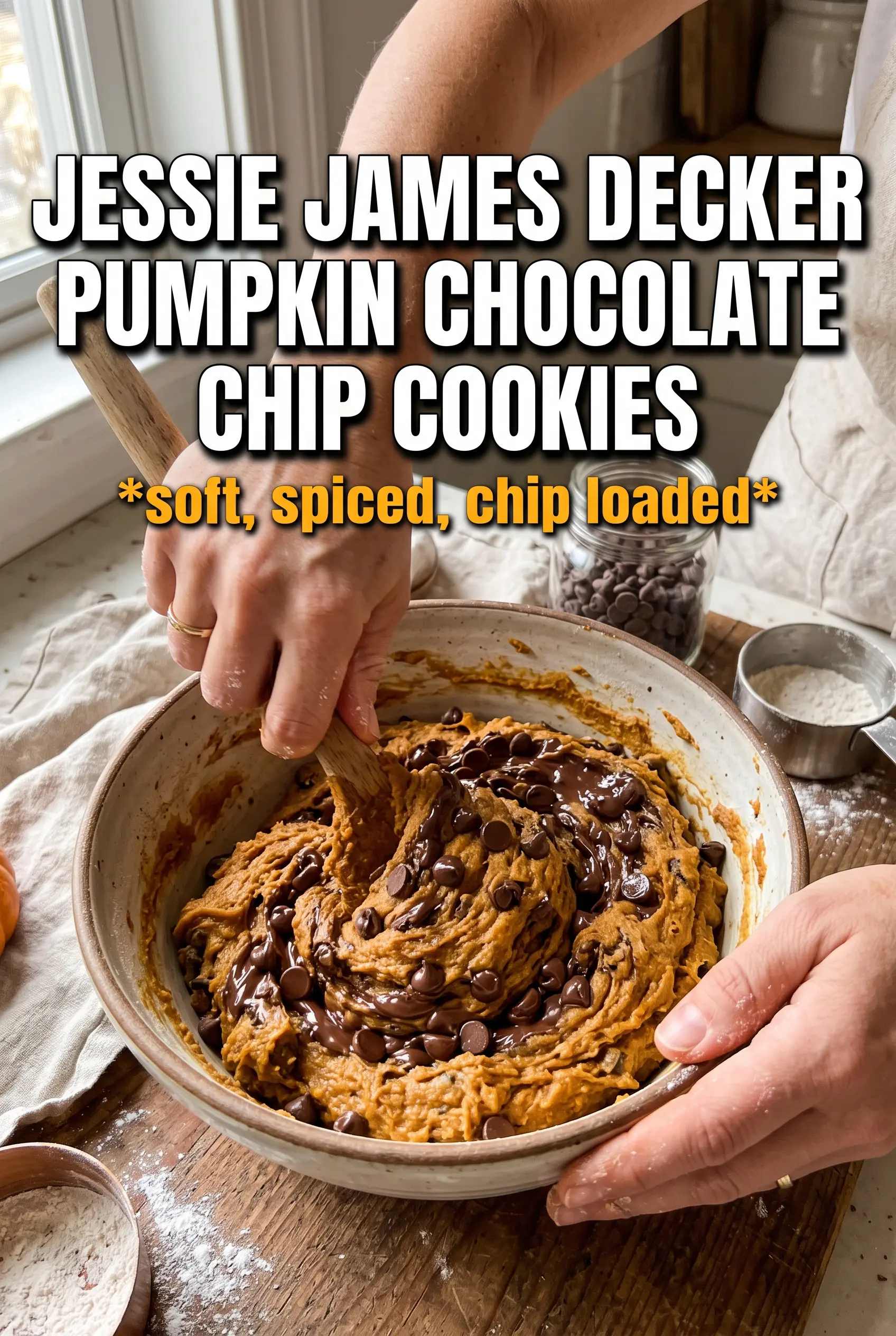
Jessie James Decker Pumpkin Chocolate Chip Cookies
Ingredients
Equipment
Method
- Preheat the oven to 375F and line baking sheets.
- Blot the pumpkin puree dry.
- Beat the softened butter with the brown sugar and granulated sugar until light and fluffy.
- Add the blotted pumpkin puree, eggs, and vanilla, then beat just until combined.
- Whisk together the all-purpose flour, baking soda, baking powder, pumpkin pie spice, cinnamon, and salt.
- Fold the whisked dry ingredients into the wet mixture until no dry streaks remain.
- Fold in the semi-sweet chocolate chips.
- Scoop 2-tablespoon rounds of dough onto the lined baking sheets.
- Bake for 10-12 minutes, until the cookies are golden—do not overbake.
- Sprinkle with flaky sea salt immediately after baking, while the cookies are still warm.