Golden tortillas, melty cheese, and a salty-sweet Mediterranean filling make these quesadillas the kind of dinner that disappears fast. The edges turn crisp in the skillet while the feta softens just enough to perfume the whole pan, and the spinach and roasted red peppers keep every bite from feeling heavy. They’re fast, but they still taste like someone paid attention.
The trick is using two cheeses for two jobs. Mozzarella gives you that stretchy melt that holds the filling together, while feta brings the briny bite that makes the whole thing taste unmistakably Mediterranean. I also like keeping the filling lean and well-drained so the tortilla fries instead of steams; too much moisture is what turns a quesadilla limp before the cheese has a chance to melt.
Below, I’ve included the small details that matter most: how to keep the filling from slipping out, which swaps still give you a crisp finish, and the easiest way to serve these so the dipping sauces actually work with the quesadilla instead of fighting it.
The tortilla got beautifully crisp and the feta-mozzarella combo melted into every bite. I used chickpeas instead of chicken and still had the best texture with the roasted red peppers and olives.
These Mediterranean quesadillas with feta, spinach, and roasted red peppers are the crisp, melty dinner to pin for busy nights.
The Reason These Quesadillas Stay Crisp Instead of Going Soggy
The biggest mistake with filled quesadillas is loading them up with wet ingredients and expecting the tortilla to stay crisp. Spinach, roasted red peppers, and chickpeas all carry moisture, so the filling has to be arranged in a way that lets steam escape instead of getting trapped inside. A medium skillet gives the tortillas time to brown before the cheese burns, which matters more here than cranking the heat and hoping for the best.
Mozzarella acts like glue, feta acts like seasoning, and the olives bring a salty pop that keeps the filling from tasting flat. If you’ve ever had a quesadilla that browned before the middle melted, the heat was too high or the filling was too cold and piled too thick. Keep the layer even and thin, and the skillet will do the rest.
What Each Filling Ingredient Is Actually Doing Here
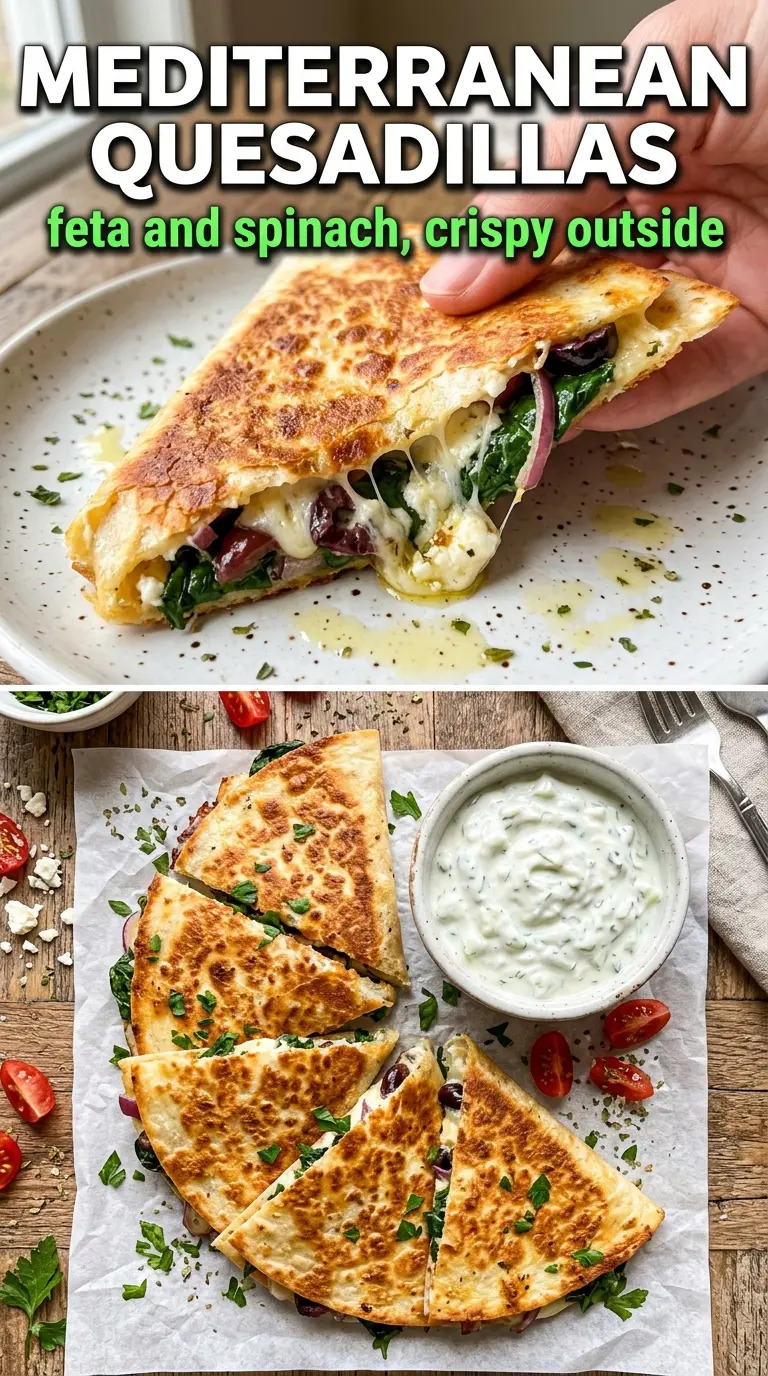
- Flour tortillas — These brown evenly and fold without cracking. Use large, soft tortillas so the filling stays sealed; smaller ones tend to overfill and leak. If yours are stiff, warm them for a few seconds in a dry skillet first.
- Mozzarella — This is the melt that holds everything together. Pre-shredded works, but freshly shredded melts a little cleaner because it doesn’t carry anti-caking starch.
- Feta — Feta gives the quesadilla its Mediterranean edge. Don’t swap in only mozzarella, or the filling tastes like a standard cheese quesadilla.
- Roasted red peppers and spinach — The peppers bring sweetness and color, while spinach softens into the filling without needing extra cooking. Pat the peppers dry if they’re packed in brine or oil, or the tortilla will steam.
- Chicken or chickpeas — Chicken makes it hearty and familiar; chickpeas keep it vegetarian and add enough bite to stand up to the cheeses. If using chickpeas, rinse and drain them well, then pat them dry before layering.
- Tzatziki and hummus — These aren’t just serving extras. Tzatziki cools the salty filling, and hummus adds a creamy base that works especially well if you want the meal to feel bigger without adding more filling.
Building the Fill Without Losing the Crunch
Start with the Cheese Layer
Lay the mozzarella directly on one half of each tortilla first. That bottom layer helps anchor the filling and creates a little barrier between the tortilla and the wetter ingredients. If you put the spinach down first, the tortilla picks up moisture before the cheese has a chance to seal anything together.
Stack the Wet Ingredients in the Middle
Add the chicken or chickpeas, spinach, roasted red peppers, olives, feta, and oregano in a loose mound, then fold the tortilla over without pressing it flat. The filling needs space to melt and settle. If you pack it too tightly, the edges won’t seal and the center stays bulky while the outside browns too fast.
Cook Slowly Enough for the Cheese to Melt
Set the folded quesadilla in the skillet and let it sit until the underside is deeply golden before flipping. If you try to move it too soon, the filling shifts and the tortilla tears. The second side usually needs a little less time because the pan is already hot; by then, the cheese should be fully melted and the tortilla should feel crisp when lifted with a spatula.
Ways to Adjust These Without Losing the Mediterranean Feel
Make It Vegetarian With Chickpeas
Swap the chicken for chickpeas and keep the rest the same. The chickpeas add a little nuttiness and enough structure to make the quesadilla feel substantial, but they’re softer than chicken, so pat them dry and keep the layer modest. This version lands somewhere between hearty and light, and it still crisps up well.
Make It Gluten-Free
Use certified gluten-free tortillas that are soft and pliable, not brittle. Gluten-free tortillas usually brown a little faster and can crack if they’re dry, so keep the heat at medium and cover the skillet briefly if the tortilla needs help softening before the flip. The flavor stays the same; the texture just needs a gentler hand.
Turn Up the Tang
Add a few spoonfuls of chopped artichokes or a pinch of lemon zest if you want the filling to taste brighter. Both work with the feta and olives, but artichokes add extra moisture, so drain them well before they go in. Lemon zest is the cleaner choice if you want more lift without changing the texture.
Storage and Reheating
- Refrigerator: Store cooked quesadillas in an airtight container for up to 3 days. The tortilla softens a bit in the fridge, but the flavor holds up well.
- Freezer: They freeze well if you cool them completely first, then wrap each wedge tightly and freeze in a single layer before moving them to a bag. The spinach will lose a little texture, but the filling stays solid.
- Reheating: Reheat in a dry skillet over medium-low heat until the tortilla crisps again and the center warms through. The oven works too, but avoid the microwave if you want the tortilla to stay crisp instead of turning chewy.
Questions I Get Asked About This Recipe
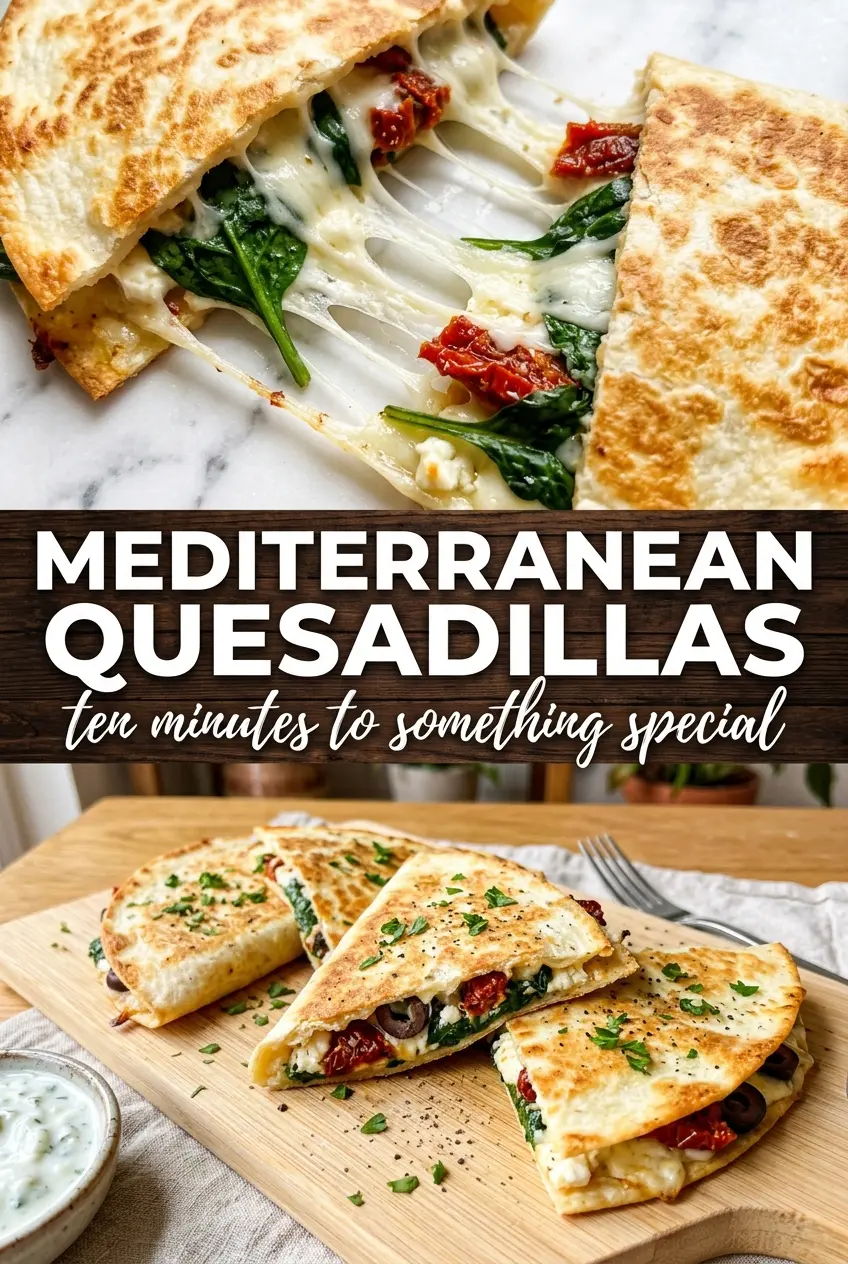
Mediterranean Quesadillas
Ingredients
Equipment
Method
- Heat a large skillet over medium heat and brush lightly with olive oil, so the surface is glossy and ready to crisp the tortillas.
- On one half of each tortilla, layer mozzarella, chicken or chickpeas, baby spinach, roasted red peppers, kalamata olives, feta cheese, and oregano in an even layer for consistent melting.
- Fold the empty half of the tortilla over the filled half to form a half-moon and press gently so the edges stay sealed.
- Cook each quesadilla for 3–4 minutes per side until golden and crispy and the cheese is fully melted, flipping carefully for even browning.
- Slice into wedges and serve with tzatziki and hummus for dipping.