Parmesan baked pork chops land on the plate with the kind of crust that actually stays crunchy while the meat underneath stays juicy. The coating bakes up deeply golden, with salty parmesan, toasted panko, and a little tang from the mustard-mayo layer that keeps the crust anchored instead of sliding off in one sad sheet. When these come out right, they crackle a little when you cut into them.
The trick is building the crust on the outside without drowning the pork. A thin Dijon-mayo layer gives the breadcrumbs something to cling to and adds fat for browning, while a wire rack keeps hot air moving around the chops so the bottom doesn’t go soft. Bone-in chops also help here because they cook a little more steadily than thin boneless cuts, which is what keeps the center from drying out before the crust is finished.
Below, I’ll walk through the exact details that keep the coating crisp, plus the swaps that still work if you need to use what’s already in your kitchen.
The crust stayed crisp all the way to the last bite, and the Dijon-mayo layer gave the pork so much flavor without making it heavy. I baked mine on a rack like you suggested, and the bottoms never went soggy.
Save these parmesan baked pork chops for the night you want a crisp crust, juicy center, and a dinner that’s done in under 30 minutes.
The Crust Won’t Stay Put Unless You Handle the Surface First
The biggest mistake with breaded pork chops is rushing the coating onto wet meat. If the chops are damp on the outside, the parmesan-panko layer steams before it can set, and that’s how you end up with patches falling off when you move them. Pat the pork dry, season it first, and press the crust on firmly enough that it actually grips the mustard-mayo layer.
Using a wire rack matters just as much as the topping itself. The hot air around the pork keeps the underside from turning gummy, and the little space under the chops lets the crust dry and crisp instead of sitting in its own moisture. If you bake these directly on a pan, the bottom side softens fast.
What Each Ingredient Is Doing in These Parmesan Pork Chops
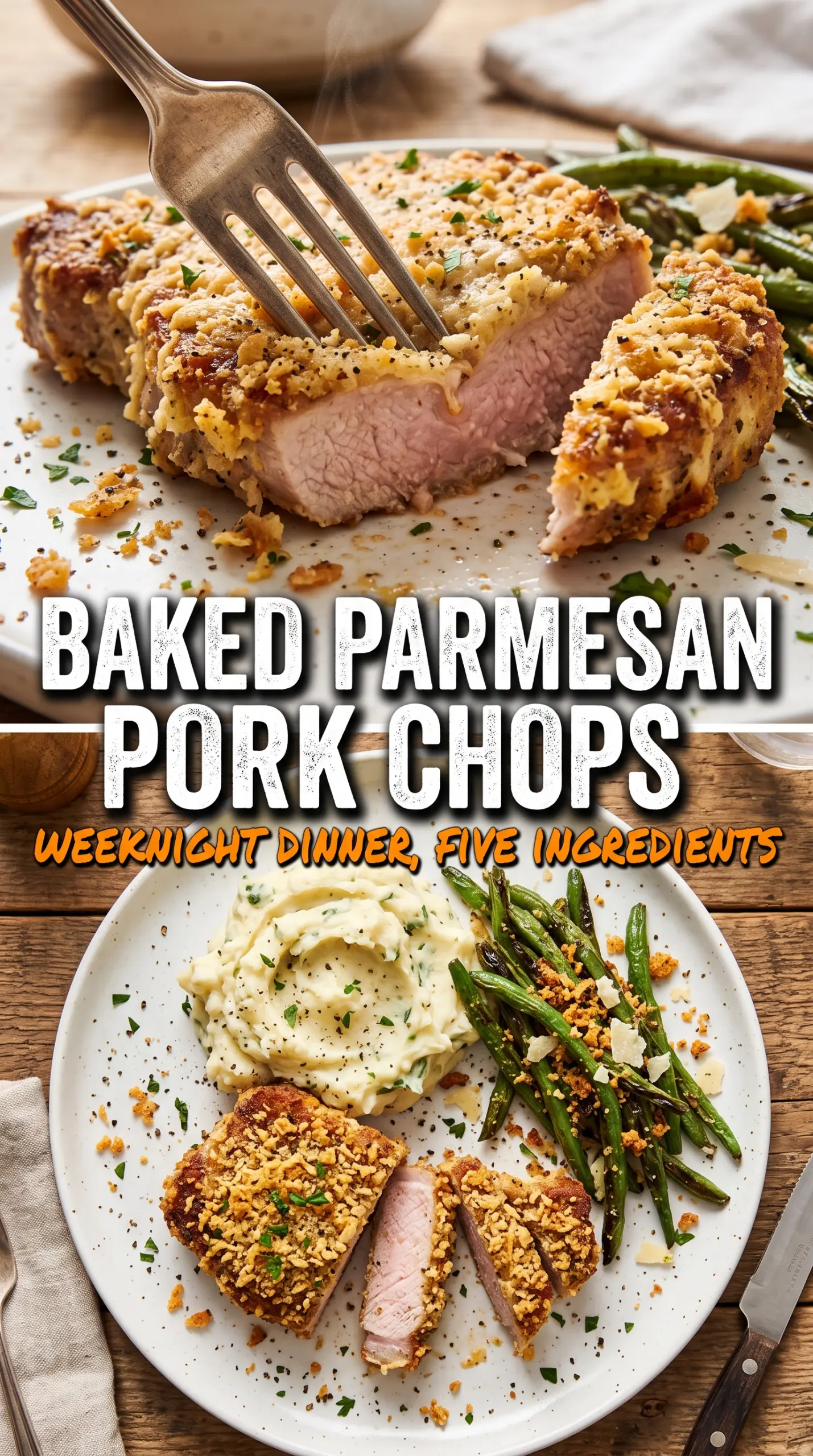
- Bone-in pork chops — These stay juicier than thin boneless chops and give you a little more margin before the meat overcooks. The bone also slows the heat down just enough to help the crust finish properly.
- Parmesan cheese — Grated parmesan browns hard and fast, which is what gives the crust that sharp, salty finish. Freshly grated cheese melts and clumps better than the shelf-stable shaker stuff.
- Panko breadcrumbs — Panko keeps the coating light and crunchy instead of dense. If you swap in regular breadcrumbs, the crust will be tighter and less crisp, though it still works.
- Dijon mustard and mayonnaise — This is the glue. Dijon adds tang, mayo adds fat, and together they help the crust brown without needing extra oil brushed over the top.
- Smoked paprika and Italian seasoning — These season the crust from the outside in, so the pork doesn’t taste like plain meat under a salty shell. The paprika also nudges the crust toward a deeper color.
Getting the Parmesan Crust Browned Before the Pork Dries Out
Mix the Coating Until It Looks Even
Stir the parmesan, panko, garlic powder, Italian seasoning, and smoked paprika together until the color is uniform. You want the cheese and crumbs evenly distributed so every bite tastes seasoned, not patchy. If the parmesan clumps, break it up with your fingers before it goes on the pork.
Spread the Binder in a Thin Layer
Brush or spread the Dijon-mayo mixture over the top and sides of each chop in a thin coat. Thick blobs just slide around and make the crust heavy. The surface should look tacky, not coated in a thick white layer.
Press the Crust Hard Enough to Stick
Press the breadcrumb mixture onto the chops with your hands, then pat it again once it’s in place. That second press is what keeps the topping from scattering in the oven. A thick, even crust is what you’re after, not a dusty sprinkle on top.
Bake Until the Edges Go Deep Gold
Slide the chops onto the rack and bake until the crust is deeply golden and the pork reaches 145°F in the center. If the topping browns before the meat is done, tent loosely with foil for the last few minutes. Pull the chops at temperature and rest them for 3 minutes so the juices settle instead of running all over the cutting board.
How to Adapt These Chops for Different Kitchens and Different Nights
Gluten-Free Crust That Still Catches
Swap the panko for gluten-free panko or finely crushed gluten-free crackers. You’ll still get a crisp top, but the texture may be a touch more delicate, so press it on firmly and keep an eye on the oven toward the end.
Dairy-Free Version
Use a dairy-free parmesan-style topping that melts and browns well. The flavor will be a little less sharp than real parmesan, so lean on the garlic powder and smoked paprika to keep the crust interesting.
Boneless Pork Chops for a Faster Dinner
Boneless chops work, but they cook faster and dry out sooner. Use thick-cut chops if you can, start checking them early, and pull them the moment they hit 145°F so the crust doesn’t overbake while you wait.
Storage and Reheating
- Refrigerator: Store leftovers for up to 3 days. The crust softens a little, but the flavor stays good.
- Freezer: Freeze cooked chops tightly wrapped for up to 2 months. The coating won’t be as crisp after thawing, but they still reheat well.
- Reheating: Warm in a 375°F oven on a rack until hot through. The oven keeps the crust from going soggy; the microwave will soften it fast.
Questions I Get Asked About This Recipe

Parmesan Baked Pork Chops
Ingredients
Equipment
Method
- Preheat the oven to 425°F and line a sheet pan with foil, placing a wire rack on top so the crust stays crisp.
- Mix parmesan cheese, panko breadcrumbs, garlic powder, Italian seasoning, and smoked paprika together until evenly combined.
- Season the pork chops with salt and black pepper to taste.
- Stir Dijon mustard and mayonnaise together, then spread a thin layer over the top of each chop.
- Press the parmesan mixture firmly onto the top and sides of each chop to form a thick, fully coated crust.
- Place the pork chops on the wire rack and bake for 22–25 minutes at 425°F, until the crust is deeply golden and the internal temperature reaches 145°F.
- Rest the pork chops for 3 minutes to help the juices settle.
- Garnish with fresh parsley and serve with lemon wedges.