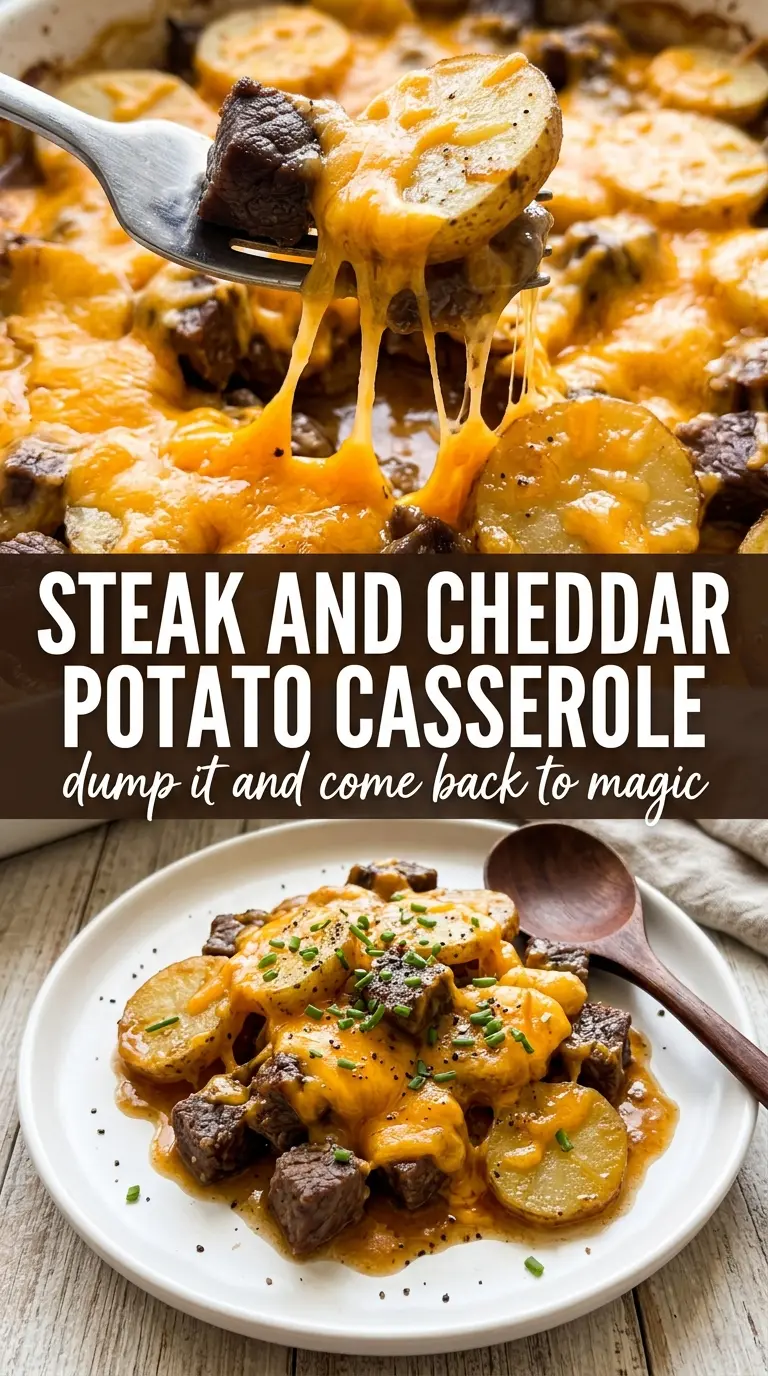
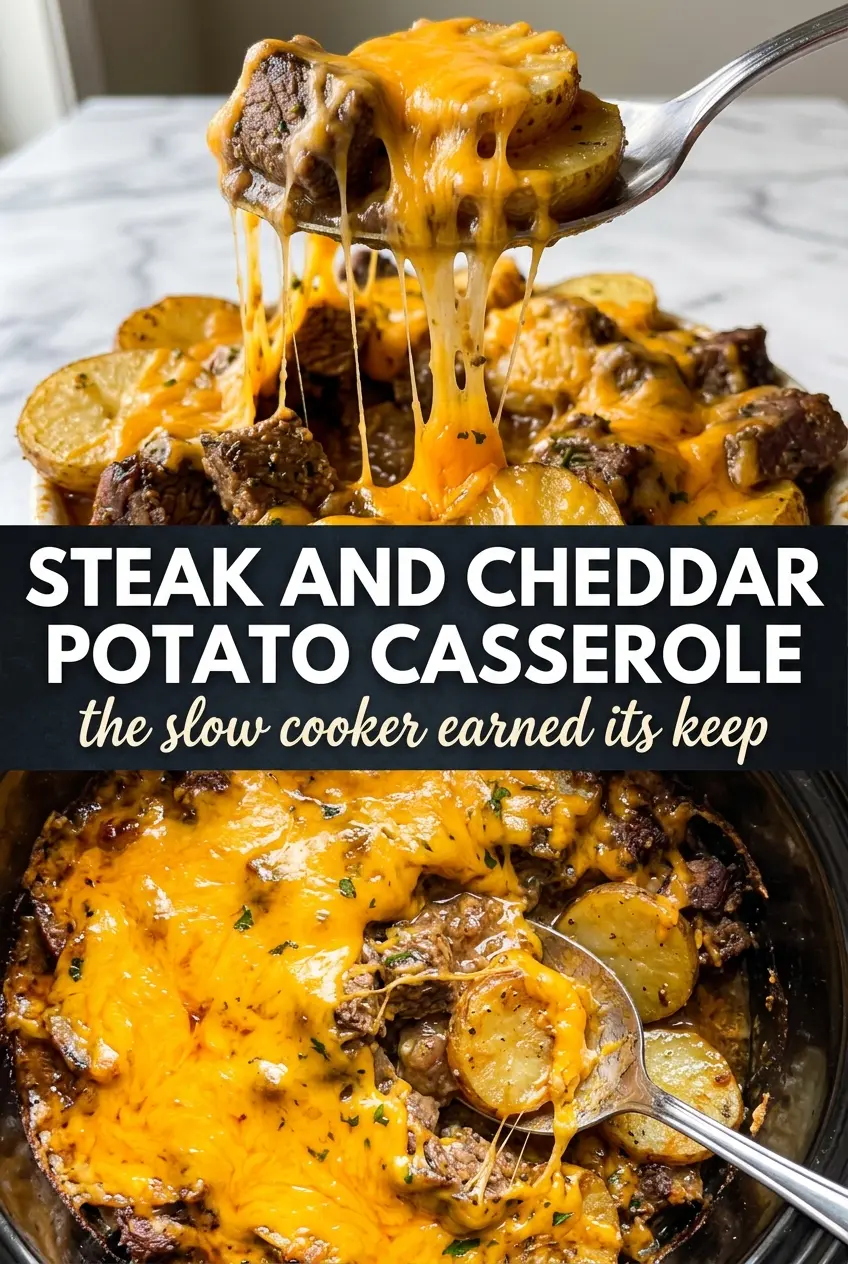
Fork-tender steak, creamy potatoes, and a sharp cheddar finish make this slow cooker casserole the kind of dinner that disappears fast. The potatoes soak up the savory sauce as they cook, the steak turns soft enough to pull apart with a spoon, and the melted cheese on top gives every bite a rich, salty finish that feels like real comfort food without hovering over the stove.
The part that makes this version work is the layering. Thin potato slices go on the bottom where they need the most heat, and the soup-sour cream mixture gets poured over in stages so it seeps between the layers instead of pooling on top. Chuck steak is the right cut here because it has enough marbling to stay juicy through the long cook; lean beef would dry out and turn stringy before the potatoes were ready.
Below, you’ll find the timing cue that tells you the casserole is done even if your slow cooker runs hot, plus a few smart swaps for making it gluten-free or changing up the cheese without losing that creamy finish.
The potatoes were soft all the way through and the steak got that fall-apart texture without drying out. I loved that the cheese went on at the end and stayed creamy instead of disappearing into the sauce.
Save this slow cooker steak and cheddar potato casserole for the night you want tender beef, creamy potatoes, and a cheesy finish with almost no hands-on time.
The Layering That Keeps the Potatoes Tender, Not Watery
Slow cookers can turn potatoes gluey if they sit in a loose, milky sauce with too much liquid too soon. This casserole avoids that by using just enough broth and soup to moisten the slices while still letting them steam gently from the heat trapped inside the pot. The potatoes at the bottom get the strongest heat, so they need to be sliced thin and kept in an even layer or they’ll cook at different speeds and leave you with a mix of soft and firm pieces.
The other thing that matters here is the cut of beef. Chuck steak stands up to the long cook because the connective tissue has time to relax and melt. If you use a leaner steak, it won’t have enough fat or collagen to stay tender through seven hours, and the finished casserole will taste dry even if the sauce looks creamy.
- Thin-sliced russet potatoes — Russets soften into the best casserole texture because they break down at the edges and absorb the sauce. Slice them about 1/8-inch thick so they cook through in the same window as the beef.
- Chuck steak — This is the cut that gives you fork-tender pieces after a long simmer. If you swap in stew meat, the result is similar; if you use sirloin, shorten the cook or it can tighten up.
- Cream of mushroom soup — It gives the casserole body without needing a flour roux. A homemade mushroom sauce can work, but it needs to be thick before it goes in or the final dish turns soupy.
- Sour cream — This is what keeps the sauce tangy and smooth. Add it to the liquid mixture before cooking, not at the end, so it melts into the sauce instead of sitting in streaks.
What Each Ingredient Is Actually Doing in This Recipe
- Primary ingredient (the star) — Quality matters most. Choose the best you can find.
- Cooking medium (oil, butter, or broth) — This carries flavors and prevents dryness.
- Seasonings (salt, pepper, spices, herbs) — Layer flavors so nothing overpowers. Build depth gradually.
- Aromatics (garlic, onion, herbs) — Cook with fat to bloom flavors. Become the foundation.
- Supporting ingredients — Complement the main ingredient without overpowering it.
- Sauce or liquid (if applicable) — Brings flavors together. Balance richness with acid.
- Acid (lemon, vinegar, wine, or other) — Brightens and prevents flat-tasting results.
- Final finish (garnish, glaze, or sauce) — Prevents one-dimensional taste and adds visual appeal.
Building the Crockpot So the Sauce Stays Creamy
Season the Beef First
Toss the steak cubes with garlic powder, smoked paprika, salt, and pepper before anything else. That seasoning hits the meat directly instead of disappearing into the sauce, which gives the finished casserole a deeper beef flavor. If you skip this and rely on the soup mixture alone, the dish tastes flat under the cheese.
Whisk the Sauce Until Smooth
Mix the soup, broth, sour cream, minced garlic, and seasoning until it looks fully combined and pourable. A few streaks of sour cream are fine, but you don’t want thick lumps because they can sit in the layers and melt unevenly. The sauce should be loose enough to seep through the potatoes but thick enough to cling to the steak.
Layer for Even Cooking
Start with half the potatoes, then onions, then steak, then sauce, and repeat. That layout helps the heat move evenly through the crockpot and keeps the beef from clumping in one area while the potatoes stay undercooked. Press the top layer down lightly with a spoon so the sauce settles around the slices instead of just running to the edges.
Finish With Cheese at the End
Wait until the potatoes are tender and the steak pulls apart easily before adding the cheddar. If the cheese goes in too early, it dissolves into the sauce and loses that sharp, stretchy top layer that makes the casserole feel finished. Cover it for just long enough to melt, then serve while the cheese is still glossy.
Three Smart Ways to Adjust This Casserole
Make it gluten-free
Use a certified gluten-free cream of mushroom soup or replace it with a quick homemade sauce thickened with cornstarch. The flavor stays the same, but you’ll avoid the hidden flour that’s common in canned soup. Check the beef broth label too, since some brands use wheat-based additives.
Swap the cheese without losing the melt
Sharp cheddar gives the casserole its boldest finish, but Colby Jack melts a little smoother if that’s what you have. Monterey Jack makes the top milder and creamier, while extra-sharp cheddar adds more bite. Avoid pre-shredded blends if you want the cleanest melt, since the anti-caking coating can make the cheese look grainy.
Use a different cut of beef
Stew meat works well if it’s mostly chuck, and brisket can also turn tender with the same long cook. If you use a leaner cut like round steak, the casserole still works, but the meat will be less rich and a little firmer. In that case, don’t push the cook time past what the potatoes need.
Storage and Reheating
- Refrigerator: Store leftovers in an airtight container for up to 4 days. The potatoes will firm up a little as they sit, but the flavor deepens overnight.
- Freezer: It freezes fairly well, though the potatoes can soften a bit after thawing. Freeze in portions once cooled completely, then thaw in the fridge before reheating.
- Reheating: Warm covered in a 325°F oven with a splash of broth or reheat gently in the microwave at medium power. High heat is the mistake here — it can make the beef tough and the sauce separate.
Questions I Get Asked About This Recipe
Slow Cooker Steak and Cheddar Potato Casserole
Ingredients
Equipment
Method
- Season the steak cubes generously with garlic powder, smoked paprika, salt, and pepper.
- Whisk the cream of mushroom soup, beef broth, sour cream, garlic, salt, and pepper together until smooth.
- Layer half the potato slices in the bottom of the crockpot.
- Top with half the onions and half the steak.
- Pour half the soup mixture over the first layer.
- Repeat with the remaining potatoes, onion, steak, and soup mixture.
- Cook on low for 7–8 hours or high for 4 hours until potatoes are tender and steak is fall-apart.
- Top with shredded cheddar, cover the crockpot, and let it sit for 10 minutes until melted.
- Garnish with fresh chives and serve, with a cheesy golden sauce bubbling around the edges.