Glossy cranberry sauce with whole berries and a bright orange finish earns its place on the table because it tastes clean, tart, and sharp instead of weighed down with too much sugar. The berries burst just enough to leave a mix of soft sauce and little pops of texture, and that balance makes it work with everything from roasted turkey to a plain spoonful straight from the fridge.
This version leans on monk fruit or allulose for sweetness, which keeps the color bright and the flavor focused on the fruit. The water and sweetener get dissolved first, so the cranberries simmer in an even syrup instead of a grainy one, and the orange zest goes in at the end so the citrus stays fresh and fragrant.
You’ll find a few useful notes below on how to keep the sauce from turning thin, what to swap if you only have frozen berries, and how to adjust the sweetness after it cools.
The sauce thickened up beautifully and the orange zest at the end made it taste fresh, not flat. I made it the night before Thanksgiving and it held its texture perfectly after chilling.
Save this sugar free cranberry sauce for a bright, tangy side that sets up beautifully after chilling.
The Reason Cranberry Sauce Turns Thin, and How This One Sets Up
Cranberry sauce usually gets watery when the berries break down before the liquid has a chance to reduce. Here, the sweetener dissolves first, which gives you a stable base and keeps the cranberries from sitting in undissolved granules that can make the finished sauce gritty. As the berries burst, their natural pectin helps thicken the pot, and chilling finishes the job.
The other trap is overcooking. Once most of the berries have popped and the sauce looks slightly looser than you want, pull it from the heat. It tightens as it cools, and if you cook it until it looks perfect in the pan, it usually lands too stiff in the fridge.
What Each Ingredient Is Actually Doing Here
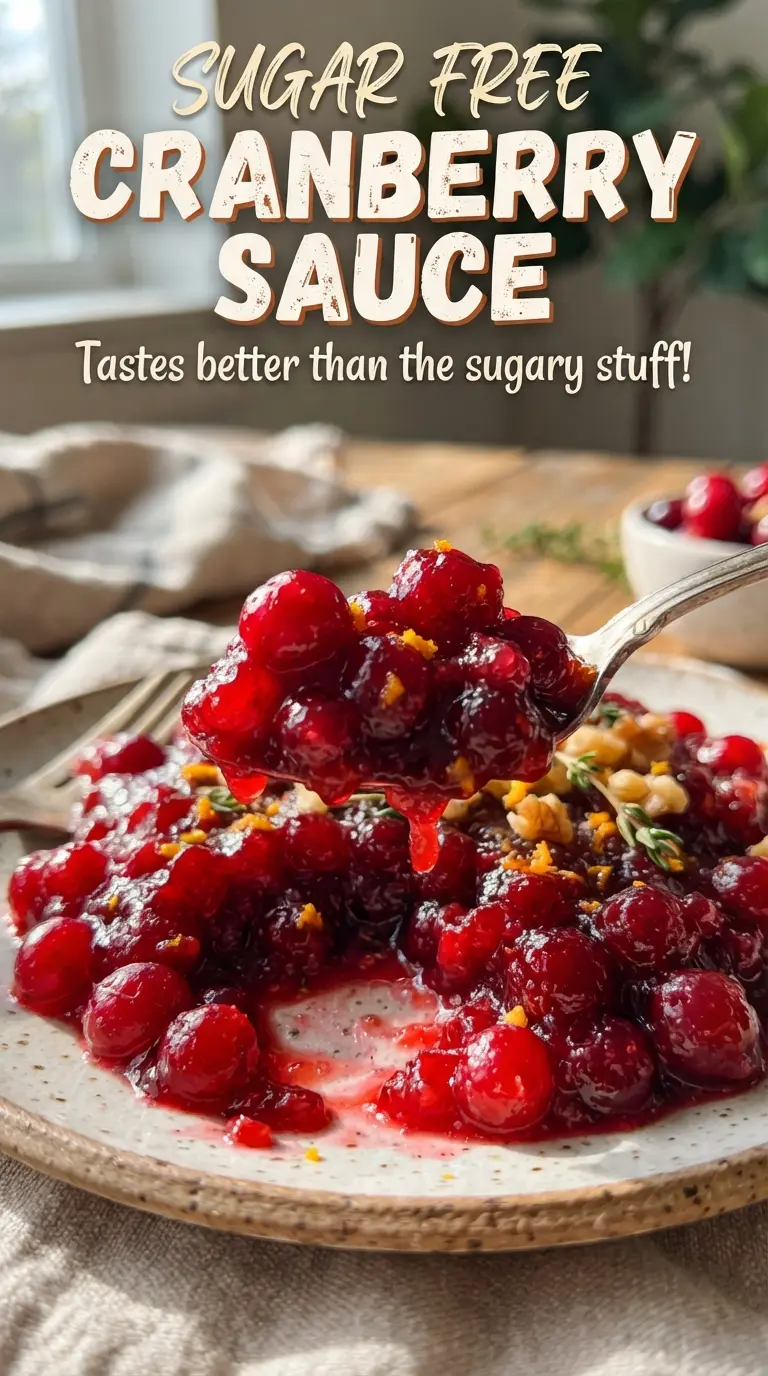
- Fresh cranberries — These are the whole structure of the sauce. They burst as they cook and release both tart juice and natural pectin, which is what gives you that thick, spoonable texture. Frozen cranberries work too; don’t thaw them first.
- Monk fruit or allulose sweetener — This replaces the sugar without the heavy syrupy finish. Allulose gives the closest texture to traditional cranberry sauce because it dissolves smoothly and doesn’t leave a cooling aftertaste. Monk fruit blends vary a lot, so taste the sauce after chilling and adjust if the sweetness lands a little shy.
- Orange zest — Zest brings the fresh top note that makes the sauce taste lively instead of one-dimensional. Add it off the heat so the oils stay bright. Orange juice isn’t necessary here and can thin the sauce more than you want.
- Ground cinnamon — A small amount rounds out the tart berries without turning the sauce into pie filling. Too much cinnamon takes over fast, so keep it subtle.
- Water — This creates the cooking liquid and helps the sweetener dissolve before the berries go in. It reduces as the sauce simmers, so the finished texture isn’t runny.
How to Cook It So the Sauce Stays Bright and Glossy
Dissolving the Sweetener First
Bring the water and sweetener to a full boil and stir until the liquid looks clear, not cloudy or grainy. That small step matters because undissolved sweetener can cling to the berries and leave the sauce unevenly sweet. Once it’s dissolved, add the cranberries, cinnamon, and salt right away so the berries start breaking down in a balanced syrup.
Letting the Berries Burst on Their Own
Keep the simmer gentle but active. You want the berries to pop open, not get smashed into a puree. As they burst, stir occasionally and watch for the sauce to go from watery to glossy and lightly thickened. If it starts sticking to the pan before enough berries have broken, lower the heat a little; rushing this stage can scorch the bottom before the sauce is ready.
Finishing With Zest and the Final Taste
Take the pan off the heat before adding the orange zest. That keeps the citrus oils fragrant instead of cooked off, which makes a bigger difference than people expect. Taste the sauce after the zest goes in and adjust the sweetness only if it still feels sharp. The flavor should be tart first, sweet second, with the orange lifting everything at the end.
How to Adapt This for Different Tables and Different Pantries
Frozen cranberries instead of fresh
Use them straight from the freezer. They may take a minute or two longer to burst, but the texture and flavor stay right on track. Don’t thaw them first or you’ll add extra liquid to the pan for no reason.
Using erythritol blends
These work in a pinch, but they can cool a little more aggressively than allulose and sometimes taste less smooth after chilling. If that’s what you have, start with the listed amount, then taste once the sauce is cold and add a little more only if needed.
Spiced cranberry sauce
Add a strip of orange peel or a pinch of ground cloves with the cinnamon if you want a deeper holiday-style spice note. Keep the cloves tiny; they get loud fast and can overpower the clean cranberry flavor.
Storage and Reheating
- Refrigerator: Store in a covered container for up to 1 week. It thickens as it chills, so expect a firmer texture the next day.
- Freezer: It freezes well for up to 2 months. Thaw overnight in the refrigerator and stir before serving.
- Reheating: This is usually served cold or at room temperature, but if you want it warm, use low heat and stir often. High heat can make it loosen too much and dull the fresh orange note.
Answers to the Questions Worth Asking
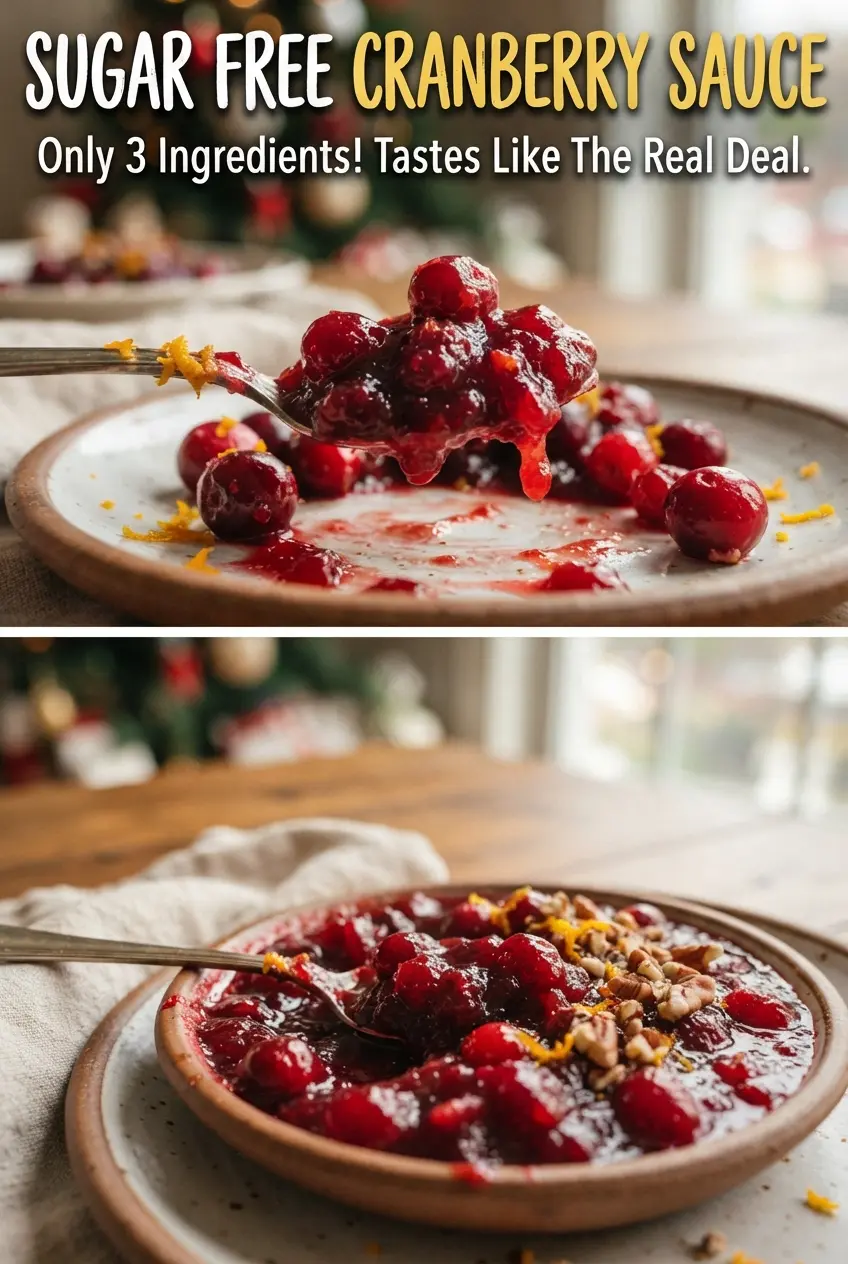
Sugar Free Cranberry Sauce
Ingredients
Equipment
Method
- Bring the water and granular monk fruit or allulose sweetener to a boil in a saucepan, stirring until fully dissolved.
- Keep the saucepan at a steady boil for 1 minute so the sweetener is completely clear.
- Add fresh cranberries, ground cinnamon, and salt to the boiling syrup, then stir to coat.
- Simmer for 10-12 minutes at a gentle boil until the berries burst and the sauce thickens slightly, with visible berry skins breaking.
- Remove from heat, then stir in orange zest and let the sauce settle for 1 minute so the citrus disperses.
- Taste and adjust sweetness by stirring in more granular monk fruit or allulose sweetener if needed.
- Cool the sauce to room temperature, then chill before serving until set and glossy.