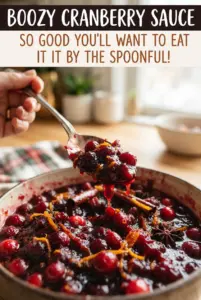
Deep ruby cranberry sauce with a glossy finish belongs on the table next to anything rich, roasted, or buttery. This version has the bright pop you want from cranberry sauce, but the port and orange liqueur give it a rounder, deeper flavor that makes it taste polished instead of one-note. The berries burst into a soft, jammy spoonable sauce, and the alcohol cooks down just enough to leave warmth without harshness.
The trick is starting with the sugar, port, orange juice, and cinnamon so the liquid has a chance to reduce before the cranberries go in. That gives you a sauce that thickens fast and doesn’t taste watery at the end. Stirring in the Grand Marnier off the heat keeps the orange aroma fresh, and a little zest at the finish wakes everything up.
Below, I’ve included the small details that keep cranberry sauce glossy instead of gluey, plus a few smart swaps if you want to adjust the alcohol level or make it ahead.
The port gave the sauce this deep, almost jammy flavor, and it thickened up exactly once the cranberries burst. I chilled it overnight and it was even better the next day.
Save this boozy cranberry sauce for the holidays when you want a glossy, wine-kissed side that tastes brighter than the usual jarred version.
The Part Most Cranberry Sauces Get Wrong: Cooking the Alcohol Down First
The biggest mistake with cranberry sauce is throwing everything together and hoping it thickens at the end. That leaves you with a sauce that tastes sharp, thin, and a little flat. Here, the port, orange juice, sugar, and cinnamon simmer before the cranberries go in, which concentrates the liquid and gives the berries a flavorful base to break down into.
You’ll know it’s working when the pot shifts from noisy boiling to a thick, steady bubble and the cranberries start popping open. Don’t rush that stage. The sauce needs time for the sugar to dissolve fully and for enough liquid to evaporate that it coats a spoon instead of sliding off it.
What Each Ingredient Is Doing in This Cranberry Sauce

- Fresh cranberries — These are the backbone of the sauce. Frozen cranberries work too, straight from the freezer, but don’t thaw them first or they’ll turn mushy before the sauce has time to thicken.
- Ruby port or red wine — This is where the deeper, grown-up flavor comes from. Port gives the richest result because it brings sweetness and body; a dry red wine will taste cleaner and less lush, so if you use it, keep the sugar as written.
- Orange juice and orange zest — The juice helps the berries cook down, and the zest adds a fresh citrus hit at the end. Bottled juice works in a pinch, but fresh juice makes the sauce taste brighter and less cooked.
- Grand Marnier or orange liqueur — Stir this in off the heat so the orange aroma stays up front. If you add it while the sauce is still boiling hard, you lose the best part of it.
- Cinnamon stick — It adds warmth without turning the sauce into spice-cake territory. A pinch of ground cinnamon can work, but it muddles the texture a little, so use it only if that’s what you have.
How to Build the Sauce So It Stays Glossy, Not Gluey
Starting the Syrup Base
Put the sugar, port, orange juice, cinnamon stick, and salt in the saucepan first and bring it to a boil. You want the sugar fully dissolved before the cranberries go in, because undissolved sugar can leave the sauce grainy. Let it boil long enough to look unified and slightly reduced, not foamy and thin.
Cooking the Berries Until They Burst
Add the cranberries and keep the heat at a steady simmer for 10 to 12 minutes. The berries will pop, then the liquid will thicken as the pectin releases. If the sauce still looks loose, keep cooking in short bursts; it should coat a spoon and leave a slow trail when you drag a finger through it on the back of the spoon.
Finishing Off the Heat
Take the pan off the burner before stirring in the Grand Marnier and orange zest. Off-heat finishing keeps the orange liqueur fragrant instead of boiled off, and it keeps the zest from tasting harsh. Discard the cinnamon stick, then cool the sauce before chilling so it sets into that clean, spoonable texture.
Three Ways to Adjust It Without Losing the Balance
Make it non-alcoholic
Replace the port with pomegranate juice or extra orange juice, then add 1 to 2 teaspoons of balsamic vinegar for depth. You’ll lose the wine’s richness, but the sauce still lands bright and layered instead of tasting like sweet cranberry jam.
Use frozen cranberries
Frozen cranberries can go in straight from the freezer, no thawing needed. They may take a minute longer to burst, but the finished sauce is just as thick and vivid.
Cut the sweetness a little
Drop the sugar by 2 tablespoons if you like a sharper cranberry finish, especially if your port is already sweet. The sauce will still set, but it will taste a little tarter and less dessert-like.
Storage and Reheating
- Refrigerator: Keep it covered for up to 1 week. It thickens more as it chills, so expect a firmer texture the next day.
- Freezer: It freezes well for up to 2 months. Portion it into a container with a little room at the top, then thaw overnight in the fridge before serving.
- Reheating: Warm it gently over low heat or serve it cold straight from the fridge. Don’t boil it again, or the fruit can break down into a loose, dull sauce instead of a glossy one.
Questions I Get Asked About This Recipe
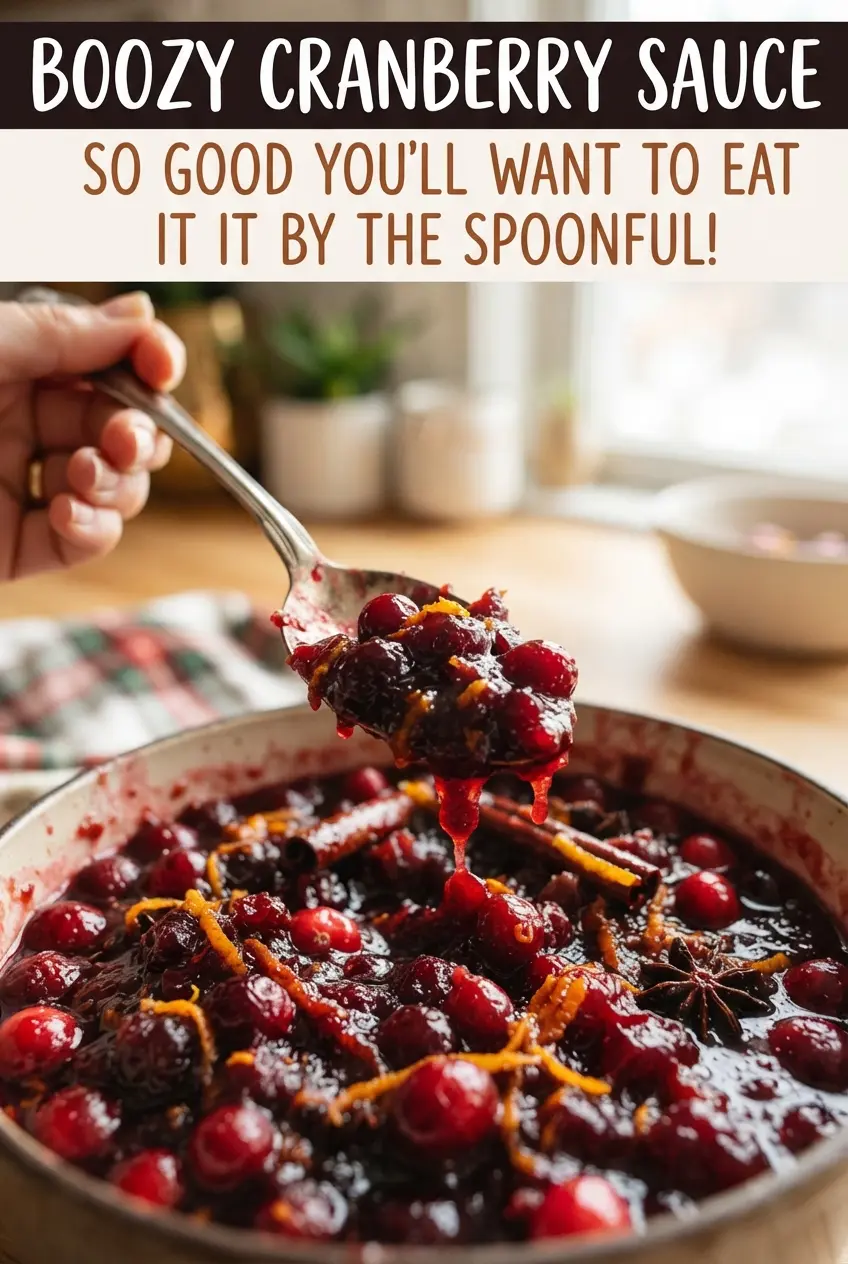
Boozy Cranberry Sauce
Ingredients
Equipment
Method
- Combine sugar, ruby port or red wine, orange juice, cinnamon stick, and salt in a saucepan. Bring to a boil over medium-high heat and keep the mixture bubbling for even dissolving.
- Add fresh cranberries to the boiling liquid. Simmer for 10-12 minutes, stirring occasionally, until the berries burst and the sauce thickens with a glossy sheen.
- Remove the saucepan from heat. Stir in Grand Marnier or orange liqueur and orange zest until the sauce looks uniformly ruby-red.
- Discard the cinnamon stick. Taste and check that the sauce is balanced, then cool to room temperature.
- Cool and chill the cranberry sauce before serving. Refrigerate until set so it holds its shape when spooned.