Coconut chicken rice bowls land in that sweet spot between fast weeknight cooking and a meal that still feels put together. The chicken stays tender, the sauce turns silky and fragrant, and the whole bowl gets lifted by lime, mango salsa, and fresh herbs. You end up with something creamy, bright, and a little bit tropical without needing a long ingredient list or a complicated simmer.
What makes this version work is the order of operations. The chicken gets a quick sear first, which builds flavor in the pan and keeps the pieces from tasting boiled later. Then the coconut milk goes in with soy sauce, turmeric, ginger, and a touch of honey, which gives the sauce body and balance instead of making it flat or overly rich. A small amount of red curry paste adds warmth without taking over.
Below, I’m walking through the part that matters most: how to get the sauce to thicken just enough to coat the chicken, not drown it. I’ve also included a few swaps and storage notes, because this bowl holds up well for lunch the next day.
The sauce coated the chicken instead of turning watery, and the mango salsa with the lime made the whole bowl taste fresh and balanced.
Save this coconut chicken rice bowl for the nights when you want a creamy, lime-bright dinner with mango salsa on top.
The Step That Keeps Coconut Milk Sauce from Turning Thin
Coconut milk looks rich in the can, but it doesn’t automatically turn into a thick sauce. The chicken needs to be seared first, then the sauce has to simmer uncovered long enough to reduce slightly. If you rush that part, you end up with a pale broth instead of something that clings to the rice and coats every piece of chicken.
The other thing that matters here is heat control after the coconut milk goes in. Once the sauce is simmering, keep it at a gentle bubble. A hard boil can make the coconut milk separate and leave you with a greasy surface instead of a smooth sauce. The goal is a glossy finish that looks just thick enough to nap the spoon.
- Chicken breast — Bite-sized pieces cook fast and pick up the sauce well. Cut them evenly so the smaller pieces don’t dry out before the larger ones finish.
- Coconut milk — Full-fat coconut milk gives the sauce its body. Light coconut milk works in a pinch, but the sauce will be thinner and less silky.
- Red curry paste — This brings depth and gentle heat. Different brands vary a lot, so start with the amount listed and add more only after the sauce simmers.
- Mango salsa — It’s not garnish here; it cuts the richness and wakes up the bowl. Fresh mango salsa works best, but diced mango with a squeeze of lime and a pinch of salt gets close.
What Each Ingredient Is Actually Doing in the Bowl
- Ginger and garlic — These are the backbone of the sauce. Cook them briefly so they smell fragrant, not brown; burnt garlic will dominate the whole dish.
- Soy sauce — It adds salt and umami at the same time, which is why the sauce tastes rounded instead of one-note. Low-sodium soy sauce works well if you want more control over the seasoning.
- Lime juice and honey — Lime brightens the coconut milk, while honey softens the edges and keeps the sauce from tasting sharp. If your lime is very tart, add the honey before reaching for more soy sauce.
- Turmeric — This gives the bowl its warm color and a mild earthy note. It won’t taste like curry on its own, but it helps the sauce look and taste more layered.
- Jasmine rice — The lightly sticky texture is perfect under a saucy chicken topping. Basmati works, but it stays more separate and gives a different eating experience.
Building the Bowl in the Right Order
Getting the Sear First
Season the chicken with salt and pepper, then spread it in a hot pan with oil so it can brown instead of steam. If the pan is crowded, the chicken will release liquid and turn gray before it ever gets a proper crust. You want golden edges and just enough color on the outside to build flavor in the sauce later. Pull it out as soon as it’s seared through the outside; it finishes cooking in the coconut milk.
Waking Up the Aromatics
Use the same pan for the garlic and ginger. Those browned bits left behind from the chicken are part of the sauce, so don’t wipe them out. Stir the aromatics for about a minute, just until they smell fragrant. If they start to toast too hard, lower the heat right away so the sauce doesn’t pick up a bitter edge.
Simmering the Sauce
Pour in the coconut milk, soy sauce, lime juice, honey, turmeric, and red curry paste, then stir until the mixture looks smooth. Bring it to a simmer, not a rolling boil. Add the chicken back in and let everything cook together for 10 to 12 minutes, uncovered, until the sauce thickens slightly and the chicken is cooked through. If the sauce still looks loose at the end, give it another few minutes; it usually tightens as it cools.
Finishing the Bowl
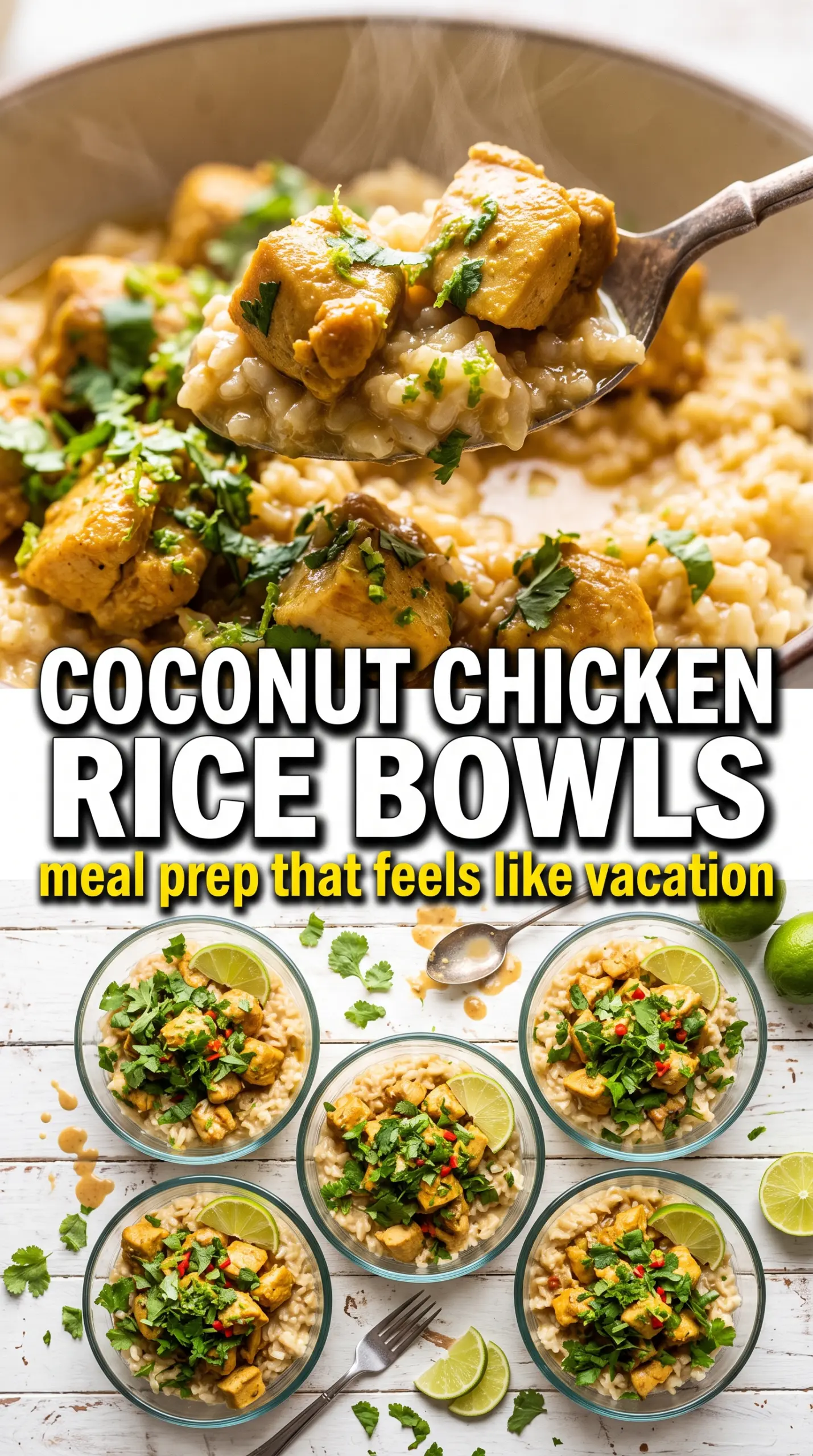
Spoon the coconut chicken over jasmine rice, then top with mango salsa, cilantro, and lime wedges. That fresh topping is what keeps the bowl from feeling heavy. If you want the brightest flavor, squeeze the lime over the bowl right before eating. The heat of the rice and sauce helps release the herbs and makes the whole dish smell alive.
How to Change This Coconut Chicken Rice Bowl Without Losing the Balance
Make It Dairy-Free as Written
This bowl is naturally dairy-free as long as your curry paste and soy sauce are, too. That’s part of why coconut milk works so well here: it gives you creaminess without needing any cream or butter. Check the curry paste label if you’re cooking for someone with allergies, since some brands include dairy or shrimp.
Swap in Chicken Thighs for a Richer Bowl
Boneless thighs stay juicier and handle a longer simmer without drying out. They bring a little more richness to the bowl, which works especially well if you like a deeper coconut flavor. Keep the simmer gentle so the sauce thickens without turning the thighs stringy.
Make It Gluten-Free with One Label Check
Use tamari or a certified gluten-free soy sauce instead of standard soy sauce. The flavor stays close, but you avoid the wheat. Everything else in the bowl is naturally gluten-free, including the rice and coconut milk.
Turn It into a Veggie Rice Bowl
Swap the chicken for pressed tofu or roasted cauliflower. Tofu soaks up the sauce nicely, while cauliflower gives you a softer, more vegetable-forward bowl with less protein. With either one, add the protein or vegetables near the end so they don’t fall apart in the simmer.
Storage and Reheating
- Refrigerator: Store the chicken and sauce in an airtight container for up to 4 days. The sauce thickens in the fridge, which is normal.
- Freezer: It freezes well for up to 2 months. Freeze the chicken and sauce separately from the rice if you want the best texture.
- Reheating: Warm gently on the stove or in the microwave with a splash of water or coconut milk. High heat can split the sauce and dry out the chicken, so reheat just until hot.
Answers to the Questions Worth Asking

Coconut Chicken Rice Bowl
Ingredients
Equipment
Method
- Season the chicken breast pieces with salt and pepper, then sear in oil over high heat for 4–5 minutes until golden. Set aside while you cook the aromatics.
- In the same pan, sauté the garlic and grated ginger for 1 minute. Add coconut milk, soy sauce, lime juice, honey, turmeric, and red curry paste.
- Stir and bring the mixture to a simmer, then return the chicken to the pan. Simmer until the sauce reduces and thickens slightly, 10–12 minutes, until the chicken is cooked through.
- Divide cooked jasmine rice among bowls. Top with the coconut-sauced chicken, mango salsa, fresh cilantro, and serve with lime wedges.