These pumpkin cheesecake bars slice cleanly, hold their layers, and give you that classic pumpkin-cheesecake contrast without the fuss of a full water bath. The crust stays crisp under a thick, tangy filling, and the pumpkin swirl bakes into marbled ribbons instead of turning the whole pan the same shade and texture. You get a dessert that feels polished on the plate but is still easy to portion for a crowd.
The key is separating the plain cheesecake mixture before you add the pumpkin, so the swirl stays distinct and the bars bake evenly. A gingersnap crust brings spice and structure at the same time, which matters here because the filling is soft and needs a base that won’t turn sandy or soggy after chilling. I also like a little sour cream in the cheesecake layer; it keeps the texture creamy and gives the filling a clean tang that balances the brown sugar and pumpkin.
Below, I’ll walk through the one part that most often causes cracking or a loose center, plus the ingredient swaps that still keep these bars sturdy enough to cut after chilling.
The swirl stayed pretty and the bars set up perfectly after chilling overnight. The gingersnap crust was the best part — crisp, not crumbly, and it held up all the way to the last bite.
Pin these pumpkin cheesecake bars for a layered dessert with a crisp gingersnap crust and a marbled pumpkin filling.
The Swirl That Keeps the Bars from Turning Dense
Most cheesecake bars go wrong when the pumpkin is mixed into the whole batter. That makes the filling heavier, dulls the tang from the cream cheese, and leaves you with a pan that tastes flat instead of layered. Pulling off part of the plain batter first keeps the texture lighter and gives the pumpkin its own lane.
The other thing to watch is the bake. You want the edges set and the center just barely wobbly when the pan comes out. If you bake until the middle is firm in the oven, the bars will overcook as they cool and chill. Cheesecake always finishes setting on the counter and in the fridge.
- Don’t overmix after the eggs go in — that adds air, and air turns into cracks and puffy edges that sink later.
- Stop at a gentle swirl — a few passes with a knife is enough. If you blend the layers together, you lose the marbled look and the contrast in each bite.
- Chill long enough — these bars need time to set fully before slicing, or the layers will smear.
What Each Ingredient Is Actually Doing in These Pumpkin Cheesecake Bars
- Gingersnap crumbs — These bring spice and a sturdier texture than graham crackers. If you swap them, use graham crackers or vanilla wafers, but know the crust will taste milder and a little less snappy.
- Cream cheese — This is the backbone of the filling. Use full-fat blocks, softened all the way through, or you’ll get little lumps that never fully smooth out.
- Sour cream — It loosens the batter just enough and adds a slight tang. Plain Greek yogurt works in a pinch, but it gives a sharper finish and can make the texture a touch thicker.
- Pumpkin puree — Use pure pumpkin, not pumpkin pie filling. Pie filling already has sugar and spices mixed in, which throws off both the flavor and the set.
- Brown sugar and spices — The brown sugar deepens the pumpkin layer and keeps it from tasting one-note. Cinnamon and pumpkin pie spice together give the swirl a warm finish without making it taste like a spice cake.
Building the Pan So the Bars Slice Cleanly
Pressing the Crust
Mix the gingersnap crumbs with the sugar and melted butter until every crumb looks damp, then press it firmly into the parchment-lined pan. Use the bottom of a measuring cup to pack it down evenly, especially into the corners, because a loose crust will crumble when you cut the bars. The brief pre-bake sets the butter and gives the base enough structure to support the soft cheesecake layer.
Making the Cheesecake Base
Beat the cream cheese and sugar until the mixture looks smooth and glossy with no visible lumps. Add the eggs one at a time, then the sour cream and vanilla, and stop mixing as soon as the batter looks uniform. If the batter starts looking loose or frothy, you’ve gone too far and introduced too much air, which can lead to cracking in the oven.
Swirling the Pumpkin Layer
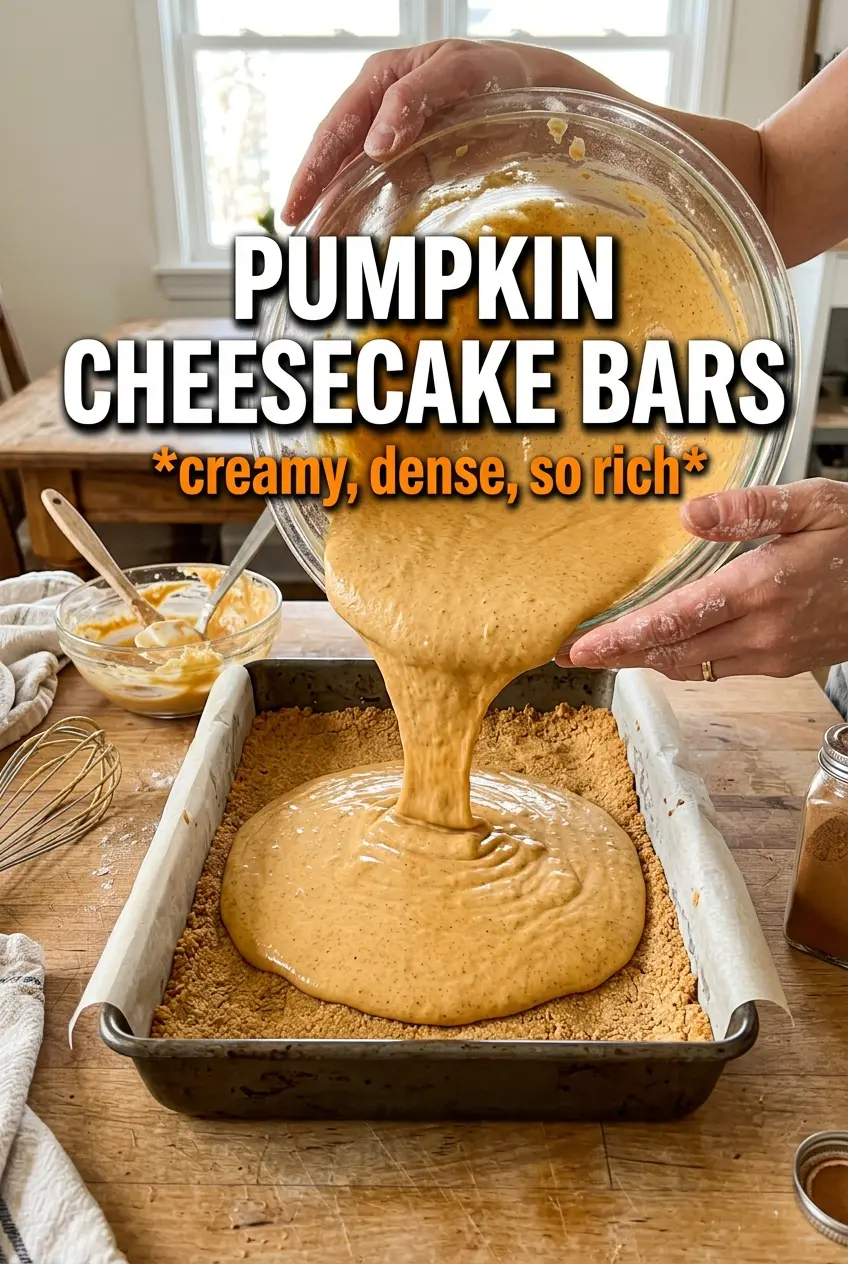
Scoop out part of the plain cheesecake mixture and whisk the pumpkin, brown sugar, and spices into that portion only. Pour the plain batter over the crust first, then dollop the pumpkin mixture over the top and drag a knife through in wide figure-eight motions. You want visible ribbons, not a blended filling, and the swirls should reach close to the corners so every bar gets both flavors.
Baking and Chilling
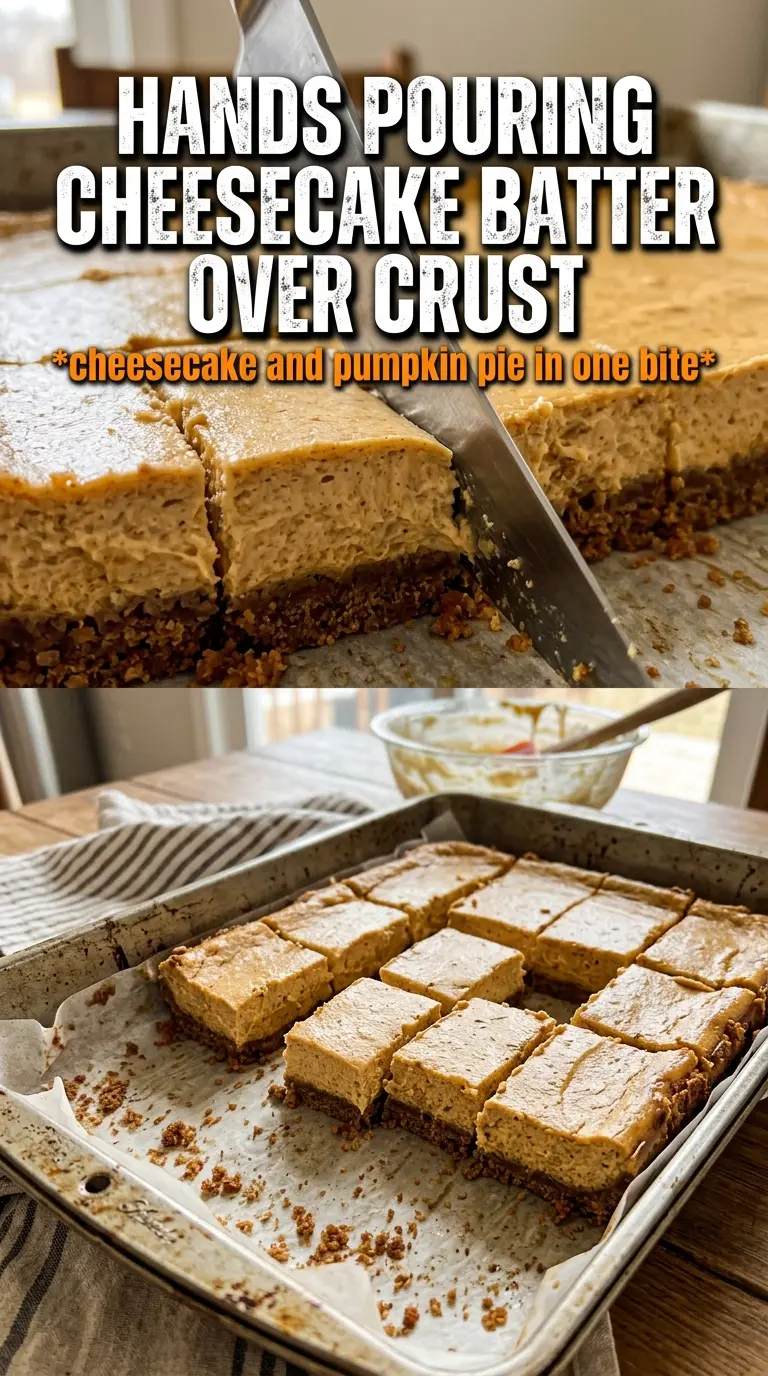
Bake until the edges are set and the center still has a slight jiggle when you tap the pan. That wobble should look like set custard, not a liquid middle. Let the bars cool completely before refrigerating, or condensation will form on top and soften the crust. After chilling, lift the slab out with the parchment and cut with a sharp knife wiped clean between slices for the neatest edges.
Make Them Gluten-Free with a Different Crust
Swap the gingersnap crumbs for certified gluten-free gingersnaps or gluten-free graham-style crumbs. The filling already fits naturally, so this change mostly affects the base; just keep the crumb-to-butter ratio the same so the crust still packs tightly and slices cleanly.
Use Graham Crackers for a Milder Crust
Graham crackers work if you want the pumpkin and vanilla to stand out more than the spice. The bars will taste a little lighter and sweeter, but they lose that sharper ginger note that makes the crust stand up to the cheesecake filling.
Use Dairy-Free Cream Cheese for a Non-Dairy Version
A high-quality dairy-free cream cheese can work here, but the texture will be softer and the tang less pronounced. Chill the bars a little longer than usual before slicing, since non-dairy versions often need extra time to firm up.
Add a Salted Caramel Drizzle
A thin drizzle over the chilled bars adds a buttery finish and makes the pumpkin layer taste richer. Keep it light, though, because too much caramel can overwhelm the spice and make the top sticky when you store leftovers.
Storage and Reheating
- Refrigerator: Store covered for up to 5 days. The crust softens a little by day three, but the bars still hold their shape well.
- Freezer: These freeze well. Cut into bars, wrap individually, and freeze in a single layer before moving to a container. Thaw in the refrigerator overnight.
- Reheating: Don’t reheat these. Cheesecake bars are meant to be served chilled, and heat will loosen the filling and make the crust greasy.
Answers to the Questions Worth Asking
Pumpkin Cheesecake Bars
Ingredients
Equipment
Method
- Preheat the oven to 325F and line a 9x13 pan with parchment.
- Press the gingersnap crust into the pan and bake for 8 minutes.
- Beat the cream cheese and granulated sugar until smooth, then add eggs, sour cream, and vanilla and beat until combined.
- Remove 1-1/2 cups of the cream cheese mixture and whisk in pumpkin puree, brown sugar, pumpkin pie spice, and cinnamon until smooth.
- Pour the plain cheesecake mixture over the baked crust, dollop the pumpkin mixture on top, and swirl with a knife.
- Bake at 325F for 35-38 minutes, until the center is just set with a slight jiggle.
- Cool the pan to room temperature, then refrigerate for 3 hours.
- Cut into bars and serve chilled.